
UPSC Mains 2019 GS Paper 2 Q11: model answer
On what grounds a people’s representative can be disqualified under the Representation of Peoples Act, 1951? Also mention the remedies available to such person against his disqualification.
What the question wants
State the grounds for disqualifying an elected representative under the RP Act, 1951, and the remedies against disqualification.
How to structure it
On what grounds ... remedies: two parts, both factual.
- Constitutional base
- Grounds under the Act
- Key cases
- Remedies
How to think it through
This is a factual question; precision wins. Lay out Sections 8 to 11 in order. For remedies, the best example is real: Rahul Gandhi in 2023, disqualified on conviction and restored when the conviction was stayed.
Model answer
In March 2023 a Member of Parliament was disqualified a day after a two-year sentence for defamation; in August the Supreme Court stayed his conviction and his membership was restored. The episode showed both the grounds and the remedy at work.
Constitutional base
Articles 102 and 191 provide for disqualification as prescribed by Parliament; the RP Act, 1951 fills this in.
Grounds under the RP Act
- Section 8(1): conviction for listed offences (promoting enmity, bribery, rape, untouchability, terrorism, UAPA and others), whatever the sentence.
- Section 8(2): conviction under laws on hoarding, profiteering, food adulteration, dowry and similar, with six months' imprisonment or more.
- Section 8(3): any conviction with two years' imprisonment or more; disqualified from conviction until six years after release.
- Section 8A: corrupt practices found by the High Court in an election petition, decided by the President on EC's advice, for up to six years.
- Section 9: dismissal for corruption or disloyalty.
- Section 9A: subsisting government contracts.
- Section 10: being a managing agent or officer of a company with a government share of 25% or more.
- Section 10A: failure to lodge election expenses, decided by the EC for three years.
Key cases
Lily Thomas (2013) struck down Section 8(4), which had protected sitting members during appeal. Lok Prahari (2018) held that a stay of conviction revives membership.
Remedies
- Appeal and stay of conviction by a higher court (Article 136 or criminal appeal); disqualification is wiped out from the date of stay.
- Section 11: the Election Commission may remove or reduce the period of disqualification.
- For Section 8A, the President's decision follows EC's opinion and can be judicially reviewed.
The law now favours probity; the remedies ensure a wrongful conviction does not end a career permanently.
Draw: A flow chart: conviction → automatic disqualification → appeal → stay → restoration.
Keywords, cases and data to drop in
Articles 102, 191, Section 8(1), 8(2), 8(3), 8A, 9, 9A, 10, 10A, 11, Lily Thomas 2013, Lok Prahari 2018, stay of conviction 2023.
Where most answers lose marks
- Mixing RP Act disqualification with the Tenth Schedule. Defection is a separate track decided by the Speaker.
Related Mains PYQs
- “Women as a class neither belong to a minority group nor are they regarded as forming a backward class.” In the light… UPSC 2026 · GS-II
- Is the right to vote a fundamental right? Discuss the position of the Election Commission of India while undertaking the revision of… UPSC 2026 · GS-II
- To what extent do pressure groups, social movements and corporate lobbies deepen pluralistic democracy in India by representing excluded interests? Analyse whether… UPSC 2026 · GS-II
- Discuss the ‘corrupt practices’ for the purpose of the Representation of the People Act, 1951. Analyze whether the increase in the assets… UPSC 2025 · GS-II
Fresh examples from current affairs
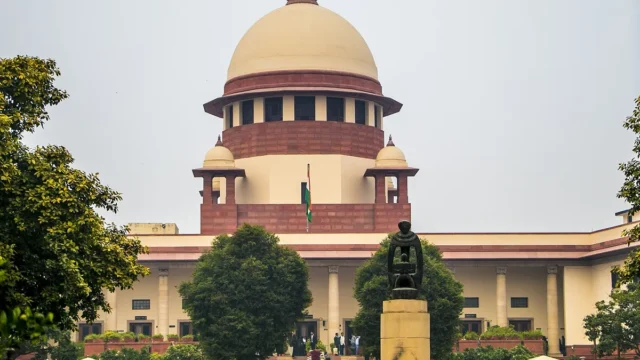
Justice Bhuyan’s remarks on voter deletions: how far can a sitting judge speak, and what is the right to vote?
On October 4, Supreme Court judge Ujjal Bhuyan said a process that strikes millions off the rolls would violate Articles 14 and 326. Former Chief Justice B.R. Gavai objected that a sitting judge should not comment on a pending matter. For you, this connects Article 326, the 1997 judicial code and the Bihar SIR ruling.
UPSC angle: Prelims: Articles 324-326, 61st Amendment, nature of the right to vote, Restatement of 1997. · Mains GS-II: judiciary, judicial accountability and electoral rolls.
26 Oct 2026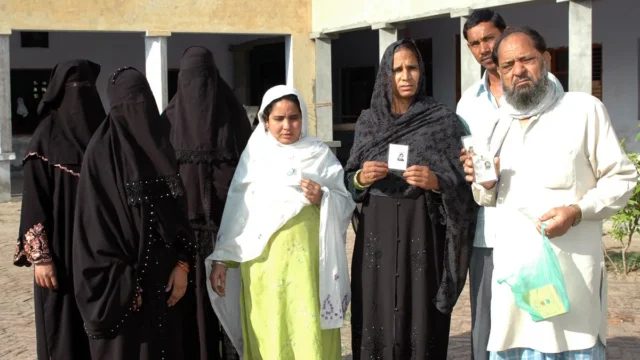
U.P. Chief Electoral Officer orders recheck of voter forms fed by computer operators after SIR errors
Uttar Pradesh's Chief Electoral Officer has ordered reverification of every electoral-roll entry made by computer operators since the post-SIR final rolls of April 10. From now, only booth-level officers may digitise forms, through the BLO App. For you, this connects Forms 6, 7 and 8, Section 32 of the 1950 Act and the Election Commission's machinery.
UPSC angle: Prelims: Forms 6/7/8, Chief Electoral Officer, Section 32 RPA 1950, State Election Commission vs ECI. · Mains GS-II: electoral reforms and integrity of rolls.
26 Oct 2026
Any voter can prosecute a candidate for a false affidavit: Supreme Court on Section 125A of the RP Act
The Supreme Court has held that any private citizen, including an ordinary voter, can file a criminal complaint against a candidate who hides information or gives false details in the nomination affidavit. A Bench of Justices Dipankar Datta and Sheel Nagu ruled that the bar in Section 195 of the CrPC, which allows only a public servant to complain for certain offences, does not apply to Section 125A of the Representation of the People Act, 1951. The ruling was reported on 24 October 2026. For you, it links three exam favourites: the voter’s right to know, candidate affidavits and electoral reform.
UPSC angle: Prelims: Sections 33A and 125A of the RP Act; Section 195 CrPC; ADR (2002), PUCL (2003). · Mains GS-II: electoral reforms, criminalisation of politics.
24 Oct 2026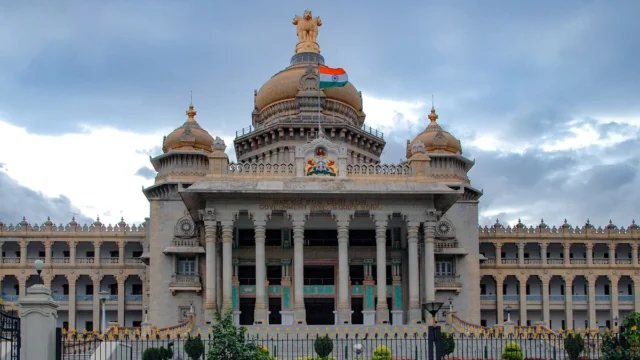
Legislative Council polls in four States: why only six States have a second chamber
Polling for 28 seats in the Legislative Councils of Uttar Pradesh, Bihar, Maharashtra and Karnataka took place on 23 October 2026, with results due on Tuesday. Only six States, these four plus Telangana and Andhra Pradesh, have a second House. Here is why these bodies exist and why they are debated. It is a high-yield Prelims area: Articles 169 and 171, who votes, and how the Council differs from the Rajya Sabha.
UPSC angle: Prelims: Articles 168, 169, 171; composition; six States. · Mains GS-II: bicameralism, State legislatures.
24 Oct 2026Learn the concept
Question text as printed in the official UPSC Civil Services (Main) question paper. The model answer is original Battle IAS work; use it to learn structure, not to memorise.
Want every PYQ in one place? See the Battle IAS PYQ Book.