
UPSC Mains 2022 GS Paper 3 Q5: model answer
UpdatedThe increase in life expectancy in the country has led to newer health challenges in the community. What are those challenges and what steps need to be taken to meet them?
What the question wants
Identify the health challenges that rising life expectancy brings and the steps needed to meet them.
How to structure it
Challenges, then steps.
- The ageing shift
- Health challenges
- Steps
How to think it through
Life expectancy ~70 years (SRS 2016–20 70.0; latest ~70.8 for 2017–21?). Elderly 10.1% of pop 2021, to ~20% by 2050 (UNFPA India Ageing Report 2023). Challenges: NCDs (diabetes, hypertension, cancer), dementia, multimorbidity, disability, mental health and loneliness, falls, out-of-pocket costs, few geriatricians, feminisation of ageing, long-term care. Steps: NPHCE, Ayushman Bharat PM-JAY extended to all 70+ (Oct 2024), HWCs (Ayushman Arogya Mandirs) NCD screening, Maintenance and Welfare of Parents and Senior Citizens Act 2007, geriatric care training, LASI data, community care.
Model answer
India's elderly population is expected to double from about 10% in 2021 to around 20% by 2050 (UNFPA India Ageing Report, 2023). A country that spent decades fighting infections now has to learn to care for long lives.
New health challenges
- Non-communicable diseases: diabetes, hypertension, heart disease and cancer.
- Multimorbidity: many elderly have two or more chronic conditions.
- Dementia and mental health problems, including loneliness.
- Disability, falls and poor eyesight or hearing.
- High out-of-pocket costs for long treatment.
- Feminisation of ageing: elderly widows are often poorer and alone.
- Very few geriatricians and long-term care homes.
Steps needed
- Ayushman Bharat PM-JAY extended to all people aged 70 and above (2024).
- NCD screening at Ayushman Arogya Mandirs.
- National Programme for Health Care of the Elderly in every district.
- Training in geriatrics; home-based and palliative care.
- Community care and the Maintenance and Welfare of Parents and Senior Citizens Act, 2007.
- Use LASI survey data to plan.
Living longer is a success; living those years in health is the next goal.
Draw: A population pyramid widening at the top by 2050.
Keywords, cases and data to drop in
elderly 10% to 20% by 2050, UNFPA India Ageing Report 2023, NCDs, multimorbidity, dementia, feminisation of ageing, PM-JAY 70+, NPHCE, Ayushman Arogya Mandir, LASI, MWPSC Act 2007.
Where most answers lose marks
- Writing only about pensions. The question is about health.
Related Mains PYQs
- What is the basic principle behind vaccine development? How do vaccines work? What approaches were adopted by the Indian vaccine manufacturers to… UPSC 2022 · GS-III
- Each year a large amount of plant material, cellulose, is deposited on the surface of Planet Earth. What are the natural processes… UPSC 2022 · GS-III
- Launched on 25th December, 2021, James Webb Space Telescope has been much in the news since then. What are its unique features… UPSC 2022 · GS-III
- How is S-400 air defence system technically superior to any other system presently available in the world? UPSC 2021 · GS-III
Fresh examples from current affairs
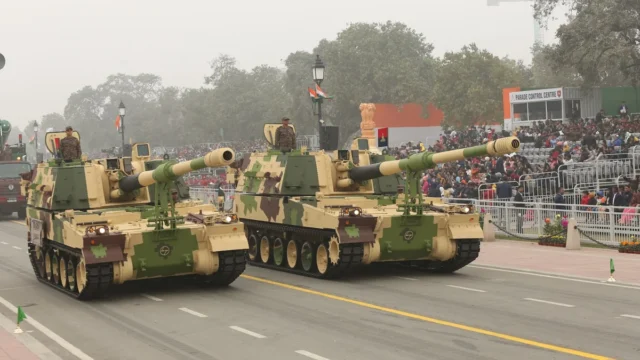
Centre approves defence deals worth ₹2.12 lakh crore
Before the armed forces can buy anything, the government must first agree the item is really needed. That first nod is called Acceptance of Necessity (AoN). The Defence Acquisition Council (DAC), chaired by Defence Minister Rajnath Singh, has given AoN to proposals worth about ₹2.12 lakh crore for the Army, Navy and Air Force. About 82% of the value is to come from Indian industry. Read it for AoN, the DAC and drones.
UPSC angle: Prelims: AoN, DAC, DAP 2020, drones and counter-drones. · Mains GS-III: defence indigenisation, security challenges.
27 Oct 2026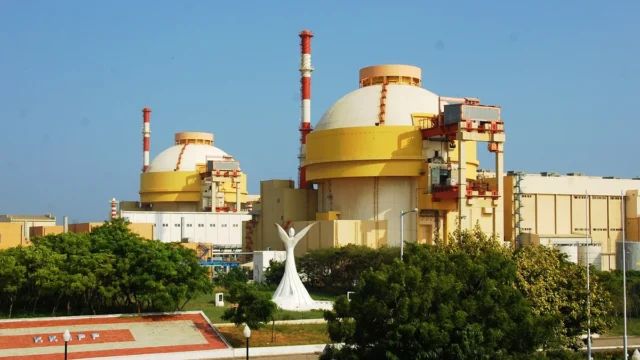
Kudankulam breach: cyber risk beyond the fence
A nuclear plant can have the best fence in the country and still leak secrets from a contractor's computer miles away. That is the lesson of the Kudankulam data breach. No reactor was hacked, but project files ended up on the dark web, the hidden part of the internet used by criminals. A researcher at MP-IDSA argues that India's cyber rules guard the plant, not the whole chain of companies that hold its data.
UPSC angle: Prelims: CERT-In vs NCIIPC, ransomware, air gap, nuclear plants and States. · Mains GS-III: cyber security of critical infrastructure (Mains 2017 asked cyber threats).
27 Oct 2026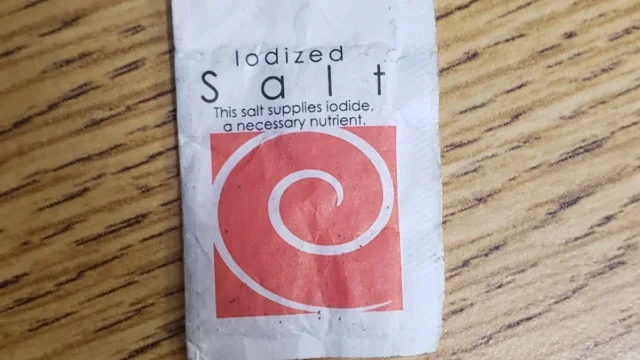
Double fortified salt: a ready answer to anaemia
Anaemia means the blood does not have enough healthy red cells or haemoglobin to carry oxygen, so a person feels tired and weak. Most of it in India comes from too little iron. Double Fortified Salt (DFS), ordinary salt that carries both iodine and iron, is a cheap fix already tested in India. A former Tata Trusts adviser argues it is being used unevenly. Read it for food fortification, Anaemia Mukt Bharat and ICDS.
UPSC angle: Prelims: Anaemia Mukt Bharat, food fortification, +F logo, ICDS, PM POSHAN. · Mains GS-II: malnutrition and welfare delivery.
27 Oct 2026
NCERT releases 20-hour AI and computational thinking module for Classes 9-12
NCERT has released a 20-hour, activity-based introductory module on computational thinking and artificial intelligence for Classes 9 to 12, developed with IIT-Madras and IIT-Jodhpur. It stresses safe and ethical use, including data privacy and spotting deepfakes. For you, this connects school education reform, digital literacy and AI governance.
UPSC angle: Prelims: NCERT, deepfakes, computational thinking. · Mains GS-II: education and human resources; GS-III: awareness in IT.
26 Oct 2026Learn the concept
Question text as printed in the official UPSC Civil Services (Main) question paper. The model answer is original Battle IAS work; use it to learn structure, not to memorise.
Want every PYQ in one place? See the Battle IAS PYQ Book.