
BioE3 Policy: Biotechnology for Economy, Environment and Employment, Biomanufacturing Hubs, Biofoundries and India’s $300 Billion Bioeconomy Goal (UPSC Notes + PYQs)
UPSC has already asked about this. Read the story with these questions in mind.
What BioE3 is about
Think of a brewery. Yeast eats sugar and turns out alcohol. Now replace the yeast with an engineered microbe and the alcohol with a plastic substitute, a vaccine, an enzyme for detergents or a protein that tastes like milk. That, in short, is biomanufacturing: using living cells as tiny factories. The BioE3 policy, notified by the Department of Biotechnology (DBT) after Cabinet approval on 24 August 2024, is India’s first policy built around this idea. Its name spells out three goals: grow the economy, protect the environment and create employment.
Earlier biotech policy in India focused on vaccines, generic biologics and GM crops. BioE3 widens the lens. It treats biology as a general-purpose manufacturing technology that can replace chemistry based on petroleum, cut emissions and spread jobs beyond big cities. It also pairs biology with data: artificial intelligence now designs proteins and predicts which genetic changes will make a microbe more productive, so the policy funds both labs and computing.
- Economy$300 bn bioeconomy by 2030
- EnvironmentGreen chemicals, less carbon
- EmploymentJobs beyond the metros
- HealthAffordable biotherapeutics
The six thematic sectors
The policy picks six areas where India has a base and where the global market is growing fast:
| Sector | What it covers | Example |
|---|---|---|
| Bio-based chemicals and enzymes | Chemicals, polymers and enzymes made by microbes instead of from oil | Bioplastics, industrial enzymes for textiles and detergents |
| Functional foods and smart proteins | Nutrition-rich foods, alternative proteins | Precision-fermented milk proteins, millet-based foods |
| Precision biotherapeutics | Advanced medicines tailored to patients | Gene and cell therapies, mRNA vaccines, monoclonal antibodies |
| Climate-resilient agriculture | Crops and inputs that cope with heat, drought and pests | Genome-edited rice, biofertilisers, biopesticides |
| Carbon capture and utilisation | Biology that traps carbon and turns it into products | Algae converting CO2 into fuels or feed |
| Futuristic marine and space research | Biology of the sea and of space missions | Marine enzymes, microbes for life support in space |
The list matters for Prelims, because a question may ask which of these is a BioE3 sector. Note that the last item links BioE3 to the Deep Ocean Mission and to ISRO’s human spaceflight plans.
How it will work
BioE3 is not a single subsidy scheme. It builds infrastructure that start-ups, universities and companies can share:
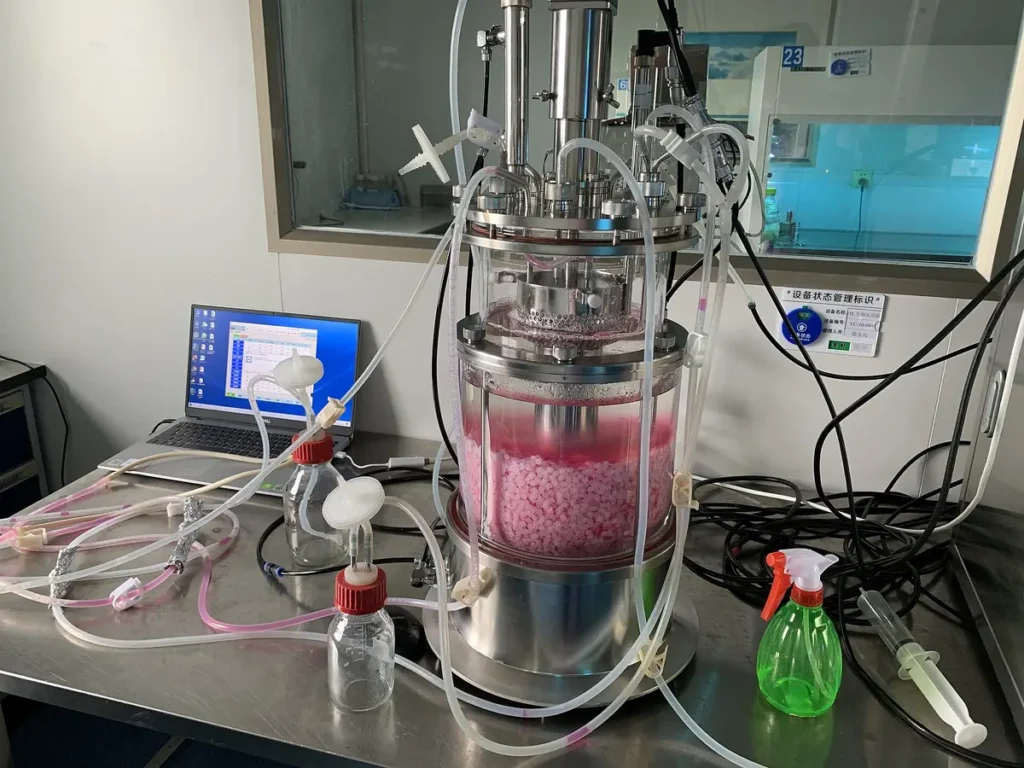
- Biomanufacturing hubs: pilot and pre-commercial plants where a firm that has a working process in a flask can scale up to thousands of litres without buying its own fermenters. The step from lab to factory, often called the “valley of death”, is where most Indian biotech ideas stall.
- Bio-AI hubs: centres that combine biological data with AI and high-end computing for tasks such as protein design and strain engineering.
- Biofoundries: highly automated labs that run the design, build, test and learn cycle quickly, often with robots, so that thousands of microbial variants can be tested.
The policy also promises to align regulation with these technologies, link the hubs with States and industrial clusters, and train a skilled workforce. In 2025 DBT announced the first set of biomanufacturing and Bio-AI hubs and invited States to sign up; several States, including some in the North-East, have since drafted their own biotech policies around BioE3.
- 1Idea in a lab or start-up
- 2Design in a biofoundry with Bio-AI tools
- 3Scale-up in a biomanufacturing hub
- 4Regulatory approval
- 5Commercial plant and market
India’s bioeconomy in numbers
India’s bioeconomy, the value of goods and services built on biology, has grown quickly. Industry estimates put it at about $10 billion in 2014, about $137 billion in 2022 and around $165 billion in 2024, roughly 4% of GDP. The target is $300 billion by 2030. The bioeconomy is usually split into four parts:
| Segment | Share (approx.) | Main items |
|---|---|---|
| Bio-industrial | Largest, close to half | Biofuels such as ethanol, enzymes, bio-based chemicals |
| Bio-pharma | About a third | Vaccines, biosimilars, diagnostics |
| Bio-agri | Small | Bt cotton, biofertilisers, biopesticides |
| Bio-IT and research services | Small | Clinical trials, bioinformatics, contract research |
India is among the world’s largest vaccine makers and supplies a large share of the world’s vaccines by volume. The number of biotech start-ups has grown from about 50 a decade ago to over 10,000, many backed by BIRAC, DBT’s public sector enterprise set up in 2012 to support early-stage innovators.
Why the policy matters
- Economy: global biomanufacturing is growing fast and countries such as the US and China have their own national bioeconomy strategies. India wants a share of this market rather than only cheap generic production.
- Environment: microbes work at room temperature and pressure, use renewable feedstocks such as crop residue and sugar, and can turn waste into products. This supports India’s net-zero by 2070 goal and its Mission LiFE message.
- Employment: biomanufacturing can be spread to tier-2 and tier-3 towns and rural areas, close to farm feedstocks, creating skilled jobs outside metros.
- Health security: the Covid-19 pandemic showed the value of making vaccines and drug ingredients at home. Precision biotherapeutics, such as India’s own CAR-T cell therapy approved in 2023, can make advanced treatment far cheaper.
- Strategic autonomy: dependence on imports for key enzymes, fermentation inputs and active pharmaceutical ingredients is a risk in a world of supply chain shocks.
Links with other missions
BioE3 does not stand alone. It sits beside the National Biopharma Mission (2017), which supports biosimilars, vaccines and medical devices; GenomeIndia, which sequenced 10,000 genomes from across India’s population groups and released the data in 2024; the Anusandhan National Research Foundation, which funds research; the IndiaAI Mission, which provides computing; and the National Policy on Biofuels, which drives ethanol blending. Genome-edited rice varieties released by ICAR in May 2025 show where climate-resilient agriculture under BioE3 can lead.
Challenges
- Low research spending: India spends well under 1% of GDP on research and development, and private spending is thin.
- Scale-up gap: pilot plants, fermentation capacity and contract manufacturing are scarce, so start-ups go abroad to scale.
- Regulation: approvals for GM and genome-edited products, novel foods and cell therapies can be slow or unclear, involving several bodies such as GEAC, FSSAI and CDSCO.
- Feedstock: cheap sugar and biomass compete with food and fodder needs.
- Skills: bioprocess engineers and data scientists who understand biology are few.
- Biosafety and ethics: engineered organisms, gene therapies and large genetic databases raise concerns about safety, consent and data privacy.
- Patents and finance: weak patient capital and a slow patent system discourage long research projects.
- Low R&D spending
- Few scale-up and fermentation plants
- Slow or unclear regulation
- Shortage of bioprocess skills
- Little patient capital
Way forward
Create clear, time-bound and science-based rules for genome-edited and fermentation-based products; fund shared scale-up plants through public-private partnerships; use public procurement, for example bioplastics for government use, to create early demand; build State bio-clusters near feedstocks; train bioprocess engineers through ITIs and universities; protect genetic data with strong privacy safeguards under the Digital Personal Data Protection Act; and set measurable targets so that the policy is judged by plants built and products sold, not by announcements. A well-run BioE3 can make India a supplier of green chemicals and affordable medicines to the Global South.
PYQ trend
Prelims asks about biotech applications, GM crops, genome projects and agencies such as GEAC. Mains GS-III asks how biotechnology can help farmers, energy security and health; BioE3 is a ready, current example for such answers.
BioE3 Policy: UPSC angle
For UPSC CSE
Prelims: sectors, institutions, biotech terms. Mains GS-III: science and technology, biotechnology, industrial policy, environment.
BioE3 Policy UPSC PYQs (Prelims)
Questions UPSC has actually asked, from the official papers. Pick an option to check yourself.
Which of the following statements with regard to GenomeIndia Project is/are correct ?
– 1. It is a part of the Human Genome Project.
– 2. The project is funded by the Department of Biotechnology (DBT), Government of India.
– 3. Its primary aim is to build a catalogue of genetic diversity of the Indian population.
Select the answer using the code given below :
GenomeIndia (2020) is funded by the DBT. It sequenced 10,000 genomes from Indian communities to map the country’s genetic variation, and the data was released in 2025. The international Human Genome Project was a separate effort that ended in 2003. Answer as per the official UPSC key · Battle IAS PYQ bankAnswer (b) & why
Mycorrhizal biotechnology has been used in rehabilitating degraded sites because mycorrhiza enables the plants to
– 1. resist drought and increase absorptive area
– 2. tolerate extremes of pH
– 3. resist disease infestation
Select the correct answer using the codes given below.
Mycorrhiza is a fungus living with plant roots. Its threads extend the absorbing area of roots, helping with water (drought) and nutrients, help plants tolerate harsh pH, and protect roots from pathogens. So all three are correct. Answer as per the official UPSC key · Battle IAS PYQ bankAnswer (d) & why
Mains PYQs on this topic
Questions from the official UPSC Mains papers (2023-2026 in the Battle IAS Mains bank), newest first. Each links to a model answer.
- UPSC Mains 2026 · GS Paper III · Q5 · 10 marks
Explain by giving two examples, how biotechnology has helped the Indian farmers in processing their perishable crops.
- UPSC Mains 2025 · GS Paper III · Q6 · 10 marks
How can India achieve energy independence through clean technology by 2047 ? How can biotechnology can play a crucial role in this endeavour ?
- UPSC Mains 2024 · GS Paper III · Q5 · 10 marks
What is the present world scenario of intellectual property rights with respect to life materials? Although, India is second in the world to file patents, still only a few have been commercialized. Explain the reasons behind this less commercialization.
- UPSC Mains 2023 · GS Paper III · Q6 · 10 marks
Discuss several ways in which microorganisms can help in meeting the current fuel shortage.
Quick quiz
BioE3 stands for
Economy, Environment and Employment.Answer (b)
Which ministry or department is nodal for BioE3?
DBT under the Ministry of Science and Technology.Answer (b)
A biofoundry is
It runs design-build-test-learn cycles at speed.Answer (b)
FAQs
What is the BioE3 policy?
A 2024 Union policy, led by the Department of Biotechnology, to promote high-performance biomanufacturing for economic growth, environmental benefit and jobs.
What are the six thematic sectors of BioE3?
Bio-based chemicals and enzymes, functional foods and smart proteins, precision biotherapeutics, climate-resilient agriculture, carbon capture and utilisation, and marine and space research.
What is biomanufacturing?
Making products such as chemicals, materials, food ingredients and medicines using living cells, usually microbes, as factories.
How big is India’s bioeconomy?
Around $165 billion in 2024, roughly 4% of GDP, with a target of $300 billion by 2030.
What is the difference between a biofoundry and a biomanufacturing hub?
A biofoundry designs and tests engineered organisms quickly at small scale; a biomanufacturing hub provides pilot and pre-commercial plants to scale proven processes up.
How does BioE3 help the environment?
Biology-based processes use renewable feedstocks and mild conditions, can replace petroleum-based chemicals and plastics, and can capture carbon.
Spotted an error? Tell us. We correct within 48 hours.
Image: Habin Zhang, Wikimedia Commons, CC BY-SA 4.0
How to use this in Mains
If asked: UPSC Mains 2026, GS-III: Explain by giving two examples, how biotechnology has helped the Indian farmers in processing their perishable crops.
Quote: “Environment: microbes work at room temperature and pressure, use renewable feedstocks such as crop residue and sugar, and can turn waste into products.”
Use it: Use it as the environment angle in your body.
In the news
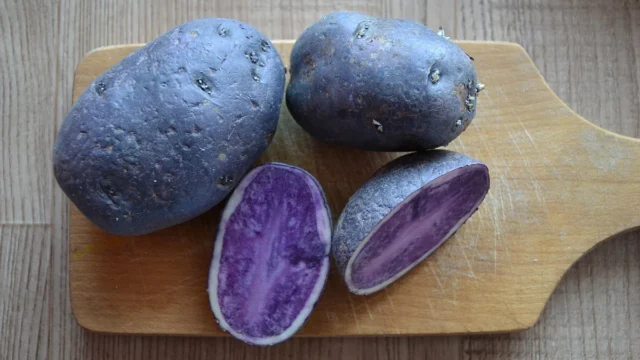
Kufri Jamunia: ICAR-CPRI’s purple potato to fight hidden hunger
A PIB backgrounder of 18 October 2026 puts the spotlight on Kufri Jamunia, a purple-fleshed potato bred by ICAR’s Central Potato Research Institute and released in 2024. It has nearly twice the Vitamin C of a common potato and several times more zinc and iron, along with antioxidants called anthocyanins. The idea is clever: instead of asking people to change what they eat, make the food they already eat more nutritious. That is biofortification.
18 Oct 2026
First commercial bio-based PLA plastic under BioE3: Balrampur Chini Mills pilot
On 24 September 2026 the Department of Biotechnology launched the commercial use of bio-based biodegradable plastic made of Polylactic Acid (PLA) under the BioE3 framework. A ₹75 crore BIRAC grant supports a 100 TPA pilot R&D facility for PLA and co-polymers by Balrampur Chini Mills at Kumbhi, Uttar Pradesh.
24 Sep 2026
7th National Formulary of India launched; new Biovigilance Programme approved
On 21 September 2026 the Health Ministry launched the 7th edition of the National Formulary of India, with 653 drugs, and announced that the Government has approved a Biovigilance Programme of India. Under it, the Indian Pharmacopoeia Commission will monitor adverse events linked to medicines and biological products used in organ and tissue transplantation.
21 Sep 2026
Health Ministry advisory: stem cell therapy only for approved indications; autism use only in trials
On 16 September 2026 the Health Ministry told States and UTs that stem cell therapy may be given as standard care only for conditions on the Ministry's approved list. For autism, any stem cell use must stay inside approved clinical trials. The advisory follows a Supreme Court judgment of 30 January 2026 in Yash Charitable Trust v. Union of India.
17 Sep 2026