
UPSC Mains 2022 GS Paper 3 Q13: model answer
What are the main bottlenecks in upstream and downstream process of marketing of agricultural products in India?
What the question wants
Identify the main bottlenecks in the upstream and downstream processes of marketing agricultural products in India.
How to structure it
Upstream, then downstream.
- The chain
- Upstream bottlenecks
- Downstream bottlenecks
- Way forward
How to think it through
Upstream = from farm to the first point of sale or processing: production planning, inputs, aggregation, grading, storage at farm, credit, information. Downstream = from processor or mandi to consumer: logistics, cold chain, wholesale and retail, intermediaries, branding, standards, exports. Fixes: FPOs, e-NAM, AIF, cold chains, contract farming, warehouse receipts.
Model answer
In agricultural marketing, upstream covers everything from the farmer's decision on what to grow until the produce reaches its first buyer, and downstream covers everything from that buyer to the consumer's plate. India loses value at both ends.
Upstream bottlenecks
- Production without market planning: farmers sow what sold well last year, causing gluts.
- Tiny, scattered lots: 86% small and marginal holdings and little aggregation.
- No grading or sorting at the farm gate.
- Farm-level storage is missing, forcing sale at harvest.
- Credit pressure: loans due at harvest force distress sales.
- Information gaps on prices and quality standards.
- Input quality: fake seeds and pesticides that reduce marketable output.
Downstream bottlenecks
- Long chains of intermediaries in APMC mandis; high commission and fees.
- Few mandis, far from many villages.
- Cold chain and transport gaps: few reefer trucks and ripening chambers.
- Weak processing linkage: processors cannot find steady supply of the right quality.
- Limited retail reach and branding for farm products.
- Export barriers: pesticide residue rules and traceability.
- Delayed payments to farmers.
- Food safety gaps: no traceability from field to retail shelf.
- Price volatility passed down to farmers when city demand shifts.
Way forward
- FPOs for aggregation and bargaining (10,000 FPOs scheme).
- e-NAM and e-NWR warehouse receipts.
- Agriculture Infrastructure Fund for pack houses and storage.
- Contract farming under fair rules; Operation Greens for perishables.
- Price forecasting and market advisories through Agri Stack.
- Kisan Rail and air cargo for high-value perishables.
- Crop planning with buyers before sowing, so supply follows demand.
- Traceability standards for exports.
When the upstream is organised by FPOs and the downstream by fair markets, the farmer finally earns from both ends.
Draw: A chain split into upstream (farm to first buyer) and downstream (buyer to consumer) with bottlenecks marked.
Keywords, cases and data to drop in
upstream, downstream, aggregation, grading, farm-gate storage, distress sale, intermediaries, cold chain, FPOs, e-NAM, e-NWR, AIF, Operation Greens.
Where most answers lose marks
- Mixing up upstream and downstream. Define them first, then keep the points separate.
Related Mains PYQs
- Explain by giving two examples, how biotechnology has helped the Indian farmers in processing their perishable crops. UPSC 2026 · GS-III
- Examine the scope of the food processing industries in India. Elaborate the measures taken by the government in the food processing industries… UPSC 2025 · GS-III
- Elaborate the scope and significance of the food processing industry in India. UPSC 2022 · GS-III
- What are the challenges and opportunities of food processing sector in the country? How can income of the farmers be substantially increased… UPSC 2020 · GS-III
Fresh examples from current affairs
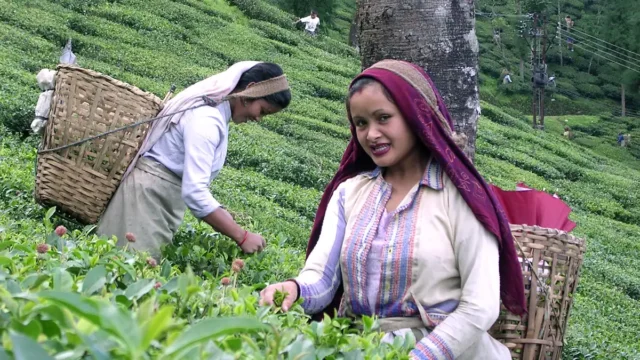
FSSAI proposes residue limits for acetamiprid and imidacloprid in tea
On 17 October 2026 FSSAI explained draft limits for two insecticides in tea: 20 ppm for acetamiprid and 50 ppm for imidacloprid. The draft, published in the Gazette on 16 October, amends the rules on contaminants, toxins and residues. India’s proposed acetamiprid limit is lower than Japan’s 30 ppm and the USA’s 50 ppm.
UPSC angle: Prelims: MRL, neonicotinoids, Insecticides Act 1968, FSS Act 2006. · Mains GS-III: pesticide regulation and food safety.
17 Oct 2026
Backgrounder: makhana, from wetland crop to superfood
A PIB Backgrounder of 19 August 2026 traces makhana's rise from a Bihar wetland crop to a global superfood. India is the largest producer, with 80,590 tonnes in 2025-26 as per second advance estimates. A National Makhana Board was launched in Bihar in September 2025, and a ₹476.03 crore Central Sector Scheme runs from 2025-26 to 2030-31.
UPSC angle: Prelims: makhana facts.
19 Aug 2026
Codex adopts three Indian-led spice standards: large cardamom, coriander, vanilla
The Codex Alimentarius Commission adopted three global standards, for large cardamom, coriander and vanilla, at its 49th session (CAC49) in Geneva from 6 to 10 July 2026, the Commerce Ministry said on 16 July. They were finalised by the India-hosted Codex Committee on Spices and Culinary Herbs. India will also co-chair a new working group.
UPSC angle: Prelims: Codex.
16 Jul 2026
PMFME crosses 2 lakh credit-linked beneficiaries
The Pradhan Mantri Formalisation of Micro Food Processing Enterprises (PMFME) Scheme has sanctioned loans to more than two lakh micro food processing enterprises, MoFPI said on 11 July 2026. Project investment exceeds ₹20,300 crore. Nearly 90% of beneficiaries are first-generation entrepreneurs and 44% are women; the scheme has created nearly 11 lakh jobs.
UPSC angle: Prelims: PMFME.
11 Jul 2026Learn the concept
Question text as printed in the official UPSC Civil Services (Main) question paper. The model answer is original Battle IAS work; use it to learn structure, not to memorise.
Want every PYQ in one place? See the Battle IAS PYQ Book.