
Punjab farm fires: why Tarn Taran and Amritsar account for 72% of stubble burning so far
Punjab recorded 574 farm fires between September 15 and October 24, and 414 of them, or 72%, were in just two Majha districts, Tarn Taran and Amritsar. Farmers there harvest short-duration paddy early and hurry to sow green peas or potatoes before wheat. For you, this connects stubble burning, cropping patterns and the CAQM.
- Period
- 15 September to 24 October 2026
- Fires in Punjab
- 574 (561 in the same period of 2025; 1,678 in 2024)
- Two districts
- 414 fires (72%): Tarn Taran 270, Amritsar 144
- Region
- Majha, north-west Punjab
- Third crop
- Green peas or potatoes after short-duration paddy, before wheat
- Machines
- About 1.25 lakh crop-residue management machines in the State
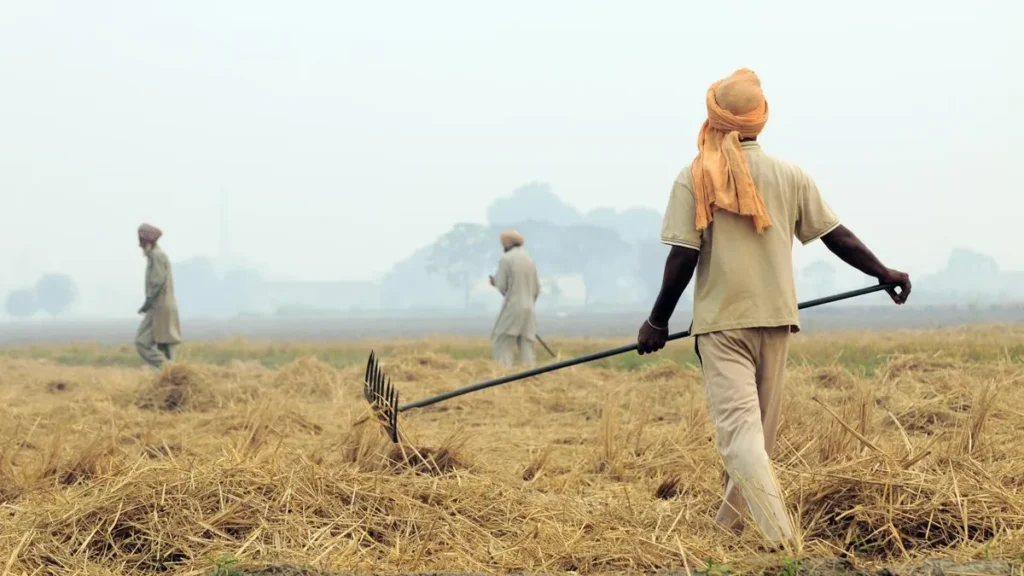
Farm fires in Punjab: what happened?
Stubble fires usually peak in early November. This year the early count is dominated by two border districts, and the reason lies in the crop calendar rather than a lack of machines.
- Punjab recorded 574 farm fires between September 15, when satellite monitoring begins each year, and October 24. This is marginally above last year’s 561 for the same period but well below 1,678 in 2024.
- Of these, 414 (72%) were in Tarn Taran and Amritsar, making the Majha region the State’s biggest hotspot so far.
- In Majha, farmers grow short-duration paddy and Basmati varieties such as Pusa 1509, harvest in September and squeeze in a third crop of green peas or potatoes before wheat. Peas are a 60-day crop.
- A senior Punjab Agriculture Department official has said that farmers racing to sow the third crop often do not want to lose even a day arranging machinery, although both districts have enough machines.
Why does farm fires in Punjab matter?
- Air quality: Stubble smoke worsens winter pollution in the region.
- Crop calendar: A third crop squeezes the time to clear fields.
- Policy design: Machinery must reach farmers on the exact days they need it.
What can Prelims ask on farm fires in Punjab?
- Satellite monitoring of Punjab farm fires starts on 15 September each year.
- Majha: north-west Punjab, including Tarn Taran and Amritsar.
- CAQM: statutory body for air quality in NCR and adjoining areas (2021 Act).
- Zero tillage lets wheat be sown without burning the previous crop’s residue.
How to write about farm fires in Punjab in Mains
Practice question (10 marks, 150 words): Stubble burning persists even where residue management machinery is available. Examine the reasons with reference to Punjab and suggest remedies.
- Intro: 574 fires, 72% in Tarn Taran and Amritsar.
- Reason: short-duration paddy, third crop, tight sowing window.
- Gaps: timing of machine access, cost of hiring, awareness.
- Remedies: helpdesks, bale supply chains, zero tillage, crop planning.
- Conclusion: fix the calendar, not only the equipment.
Ready lines for your answer
- Of Punjab's 574 farm fires between September 15 and October 24, 414 (72%) were in Tarn Taran and Amritsar, where a third crop of peas or potatoes leaves little time to clear paddy residue.
- With about 1.25 lakh residue machines in the State, the gap is timely access and the crop calendar, not just equipment.
Quotable data pointPunjab: 574 farm fires (Sept 15-Oct 24, 2026) against 561 in 2025 and 1,678 in 2024.
Exam angle
Prelims: CAQM, zero tillage, crop residue management, Majha-Doaba-Malwa. · Mains GS-III: air pollution, cropping patterns and farm practices.
Practice MCQs
Original practice questions (not PYQs).
Consider the following statements about farm fires in Punjab in 2026:
1. Tarn Taran and Amritsar, which account for most fires so far, lie in the Majha region.
2. The early fires are linked to farmers clearing fields for green peas or potatoes after short-duration paddy.
3. Satellite monitoring of farm fires in Punjab begins on October 1 each year.
Which of the statements given above are correct?
Answer (a) & explanation
Satellite monitoring begins on September 15 each year.
Questions students ask about this
How many farm fires has Punjab recorded?
574 between September 15 and October 24, 2026.
Which districts lead?
Tarn Taran (270) and Amritsar (144), together 414 or 72%.
Why are fires early in Majha?
Farmers harvest short-duration paddy early and rush to sow green peas or potatoes before wheat.
What is CAQM?
A statutory body for air quality management in the NCR and adjoining areas.