
No prosecution for deleted voters filing Form 6: SC
Thousands of people in Mumbai and Pune lost their names from the voters’ list because their old buildings were being rebuilt and they had moved out for a while. To get back on the list they must fill Form 6, the form for new voters, and they feared being punished for it. The Supreme Court has told them not to worry. Read it for Forms 6, 7 and 8, ‘ordinary residence’, and the difference between the two Representation of the People Acts.
- Assurance
- “Nobody will be prosecuted”, CJI Surya Kant
- Next hearing
- November 5
- Karnataka deletions
- 1.07 crore out of 5.54 crore
- New-voter requests
- Only 7,87,534 in Karnataka
UPSC has already asked about this. Read the story with these questions in mind.
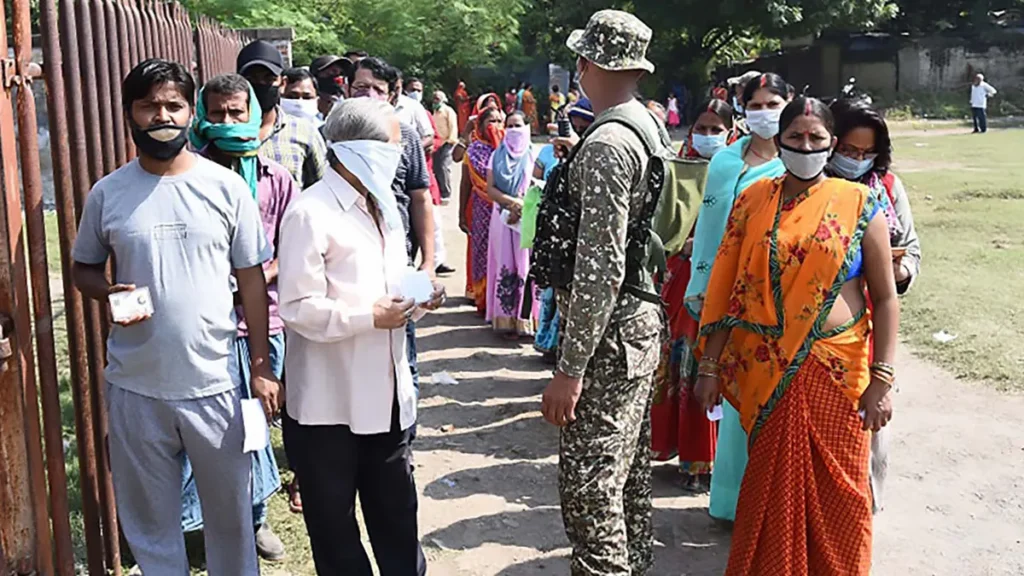
Deleted voters and Form 6: what happened?
Imagine your old building is being rebuilt. You move to a rented flat for a year, and when the officials come to check the voters’ list, you are ‘absent’. Your name is struck off. Now, to vote again, you must apply as if you were a brand-new voter, and the law punishes an existing voter who poses as a fresh one. That was the trap. The Supreme Court has now lifted the fear.
- Chief Justice of India Surya Kant said orally (in court, not in a written order): “Do not worry. Nobody will be prosecuted.” The challenge to the Maharashtra deletions will be heard on November 5.
- About 3,500 redevelopment projects in Mumbai and 1,500 in Pune left residents marked ‘absent’ during the SIR (Special Intensive Revision, a fresh house-to-house check of the voters’ list).
- Senior advocate Arvind Datar asked for a separate form only for voters deleted in the SIR, so they do not have to pose as new voters.
- Karnataka published its final roll after a three-month drive: 1.07 crore names deleted out of 5.54 crore. The break-up: 80.62 lakh shifted or not found, 16.39 lakh dead, over 7 lakh duplicates and 3.83 lakh ‘Others’.
- Only 7,87,534 applications for adding names came in. No figure has yet been given for foreigners or ineligible voters found.
What is the electoral roll, and how does a name get on or off it?
The electoral roll is simply the official list of voters for an area. Your name is on the roll of the place where you are ‘ordinarily resident’, which means where you normally live (Section 19 of the Representation of the People Act, 1950). That is why moving out, even for a short time, can lead to deletion.
Three forms do most of the work. Form 6 adds a new voter. Form 7 is used to object to a name or ask for its deletion. Form 8 is for shifting your address, correcting an entry or replacing your voter ID card (EPIC).
The right to vote comes from Article 326, which gives every citizen aged 18 or above a vote. The Supreme Court has called it a constitutional and statutory right, not a Fundamental Right.
RP Act, 1950 versus RP Act, 1951
| Point | RP Act, 1950 | RP Act, 1951 |
|---|---|---|
| Main job | Preparing electoral rolls; allocation of seats | Conducting elections; qualifications and disqualifications |
| Key sections | Section 19 (ordinary residence), Section 32 (official duty on rolls) | Section 33(7) (at most two seats), election petitions |
| Today’s link | Why redevelopment led to deletions | Who can contest and how results are challenged |
Which laws and Articles apply?
- Article 326: adult suffrage at 18.
- Article 324: the ECI controls the preparation of rolls.
- Section 19, RP Act 1950: registration where a person is ordinarily resident.
- Section 33(7), RP Act 1951: a candidate can contest from at most two constituencies (since 1996).
Why does the Form 6 relief matter?
| Angle | What to note |
|---|---|
| Exclusion | In Karnataka, deletions were about 13 times the requests to add names; the error runs one way. |
| Burden on citizen | Deleting a name is quick; getting it back needs time, papers and courage. |
| Urban renters and migrants | People who move often are hit hardest by the ‘residence’ rule. |
| Court’s role | An oral assurance helps now, but a written rule or a new form would be firmer. |
What are the problems with the Form 6 relief?
- Notice gaps: many people did not know they had been deleted until it was too late.
- Wrong category: people who only shifted are treated like people who do not exist.
- Opaque ‘Others’: 3.83 lakh deletions in Karnataka are not explained.
- Fear of the law: an honest voter can look like an offender when filing Form 6.
What should be done next on the Form 6 relief?
- Give notice and a hearing, with written reasons, before every deletion.
- Treat redevelopment cases through Form 8 (shifting) or a dedicated restore form.
- Publish constituency-wise deletion data by category so parties and citizens can check.
- Run special camps for re-enrolment before the next election.
What can Prelims ask on the Form 6 relief?
- Form 6: inclusion; Form 7: objection or deletion; Form 8: shifting, correction, EPIC replacement.
- Right to vote: a constitutional and statutory right, not a Fundamental Right (UPSC 2017).
- RP Act 1950 = rolls; RP Act 1951 = conduct of elections.
- Section 33(7): contesting from at most two constituencies.
- National Voters’ Day: 25 January.
How to write about the Form 6 relief in Mains
Practice question (15 marks, 250 words): Cleaning electoral rolls is necessary, but it must not shut out genuine voters. Examine with reference to recent special intensive revisions.
- Intro: the Supreme Court’s assurance to deleted voters in Maharashtra.
- Why deletions happen: the ‘ordinary residence’ rule and house-to-house checks.
- Evidence of one-way error: Karnataka’s 1.07 crore deletions against 7.87 lakh additions.
- Fixes: notice and hearing, Form 8 for shifting, open deletion data.
- Conclusion: a clean roll must also be a complete roll.
Ready lines for your answer
- “Old residential buildings are undergoing redevelopment for new flats. As a result, residents are shifted out. They number in thousands” (Arvind Datar in the Supreme Court).
- Notice before deletion, shifting instead of striking off, and open deletion data can keep rolls both clean and complete.
Quotable data pointKarnataka's final roll: 1.07 crore names deleted out of 5.54 crore, against only 7,87,534 inclusion applications.
Exam angle
Prelims: Forms 6/7/8, Article 326, RP Act 1950 vs 1951, Section 33(7). · Mains GS-II: electoral rolls, exclusion and electoral reforms.
Practice MCQs
Original practice questions (not PYQs).
Under the Representation of the People Act, 1950, a person is entitled to be registered in the electoral roll of the constituency in which he or she:
Answer (c) & explanation
Section 19 of the RP Act, 1950 ties registration to ordinary residence; this is why residents shifted out for redevelopment were marked 'absent' and deleted.
Consider the following statements:
1. The right to vote in India flows from Article 326 of the Constitution.
2. Electoral rolls are prepared under the Representation of the People Act, 1951.
3. Since 1996, a candidate cannot contest a Lok Sabha general election from more than two constituencies.
How many of the above statements are correct?
Answer (b) & explanation
Statements 1 and 3 are correct. Electoral rolls fall under the RP Act, 1950; the 1951 Act covers the conduct of elections. Section 33(7) of the 1951 Act caps contests at two seats.
Questions students ask about this
Will a voter deleted in the SIR be punished for filing Form 6?
No. The Chief Justice said orally that nobody will be prosecuted; the full challenge will be heard on November 5.
What is Form 6 used for?
Form 6 is the application to add a new voter's name to the electoral roll.
Why were people in Mumbai and Pune deleted?
Their buildings were under redevelopment, so they had moved out and were marked absent at their old address.
Is the right to vote a Fundamental Right?
No. It flows from Article 326 and the RP Acts; the Supreme Court treats it as a constitutional and statutory right.