
Rules amended to allow E100 in flex-fuel vehicles
Ethanol is an alcohol made from sugarcane, grain and other crops, and it can be mixed with petrol. The Ministry of Road Transport and Highways (MoRTH) has changed the Central Motor Vehicles Rules, 1989 to allow E100, fuel that is 100% ethanol, in flex-fuel vehicles. Read it for what E20, E85 and E100 mean, who needs to switch (no one, yet) and the National Policy on Biofuels.
- Ministry
- Road Transport and Highways
- Rules changed
- Rule 115 and Rule 115E, CMV Rules 1989
- New fuel
- E100 (pure ethanol), alongside E85
- Today’s default
- E20 since April 2025
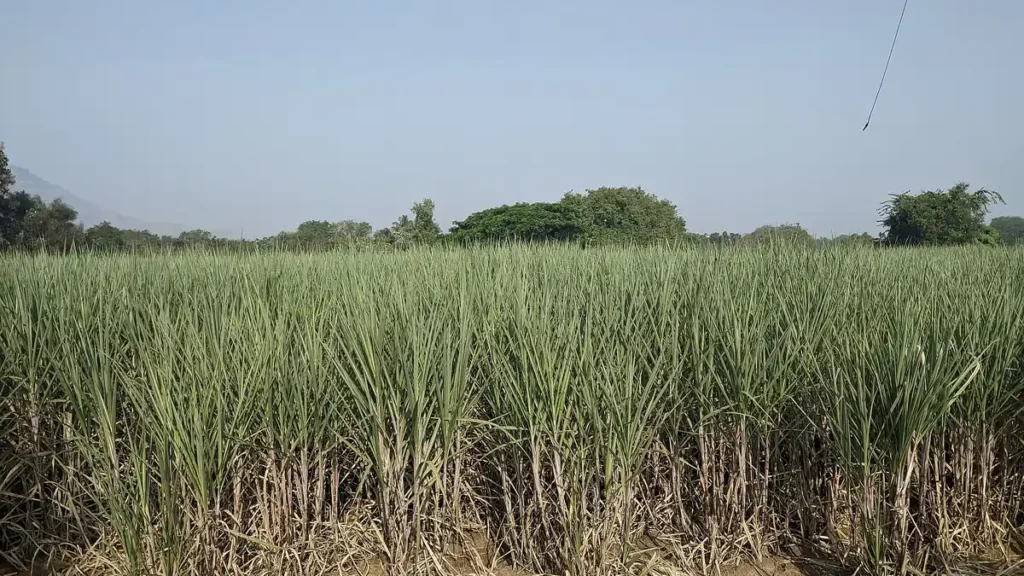
E100 fuel: what changed?
Every litre of ethanol in your tank is a litre of crude oil India does not have to import, and a little extra income for a farmer. Now the rules allow cars and bikes that can run on pure ethanol.
- MoRTH amended Rule 115 (emission standards, the legal limit on pollution) and Rule 115E (emission testing); E100 now sits alongside E85.
- Only for flex-fuel: E85 or E100 is meant for vehicles built as flex-fuel by the maker. Owners of existing vehicles need not switch or modify, now or later.
- Check the sticker: a vehicle marked E10 or E20-compatible is not fit for E85. The rules now refer to E20 instead of E10.
- E20 has been the default fuel at pumps since April 2025; specifications for E22, E25, E27 and E30 were notified in May 2026.
- The ICCT (International Council on Clean Transportation) calls it a certification pathway, “an enabling step, not a market outcome”: the door is open, but buyers still need cars and pumps.
What are E20, E85, E100 and flex-fuel vehicles?
The number after ‘E’ is the share of ethanol in the fuel. E20 means 20% ethanol and 80% petrol. E85 means 85% ethanol. E100 is pure ethanol.
A flex-fuel vehicle (FFV) has an engine and fuel system that can run on petrol, any blend of ethanol and petrol, or pure ethanol. Brazil has used such cars widely for years.
India’s National Policy on Biofuels, 2018, amended in 2022, brought the 20% blending target forward. It allows ethanol from sugarcane juice, molasses, damaged grain, maize, cassava, rotten potatoes and sugar beet. Second-generation (2G) ethanol is made from crop waste like straw.
Ethanol blends at a glance
| Fuel | Ethanol share | Which vehicles |
|---|---|---|
| E10 | 10% | Older petrol vehicles |
| E20 | 20% | Default since April 2025; E20-compatible vehicles |
| E85 | 85% | Flex-fuel vehicles only |
| E100 | 100% | Flex-fuel vehicles only (newly allowed) |
Which laws and Articles apply?
- Central Motor Vehicles Rules, 1989: Rule 115 (emission standards) and Rule 115E (emission testing).
- Motor Vehicles Act, 1988: the parent law for these rules.
- National Policy on Biofuels, 2018 (amended 2022).
- BIS standards and notified specifications for E22, E25, E27 and E30 (May 2026).
Why does E100 fuel matter?
| Angle | What to note |
|---|---|
| Energy security | Less crude oil import, smaller import bill. |
| Farmers | Surplus sugar and damaged grain find a buyer. |
| Clean air | 2G ethanol from straw can also reduce stubble burning. |
| Reality check | Without flex-fuel models and pumps, the rule stays on paper. |
What are the problems with E100 fuel?
- Food, water and fuel: more cane and grain for fuel strains water-short States and food supply.
- Ethanol gives less energy per litre than petrol, so mileage drops.
- Few flex-fuel models and E100 pumps today.
- Confusion among owners about which fuel suits their vehicle.
What should be done next on E100 fuel?
- Price E100 so that cost per km is lower than petrol.
- Clear stickers and pump labels for fuel compatibility.
- Push 2G ethanol from crop waste to save food and water.
- Incentives for flex-fuel models and E100 pumps.
What can Prelims ask on E100 fuel?
- E20 = 20% ethanol + 80% petrol; E100 = pure ethanol.
- Biofuel feedstocks allowed: cassava, damaged wheat, rotten potatoes, sugar beet (UPSC 2020).
- The USA, not Brazil, is the largest ethanol producer (UPSC 2025).
- Bagasse is a biomass fuel; molasses is used for ethanol (UPSC 2013).
- Flex-fuel vehicle: runs on petrol, any blend or pure ethanol.
How to write about E100 fuel in Mains
Practice question (15 marks, 250 words): Ethanol blending can improve India’s energy security but has trade-offs. Discuss in the light of the recent permission for E100 in flex-fuel vehicles.
- Intro: MoRTH amendment, E100 with E85.
- Opportunities: imports, farm income, cleaner air.
- Challenges: food-water-fuel, mileage, vehicles and pumps.
- Way forward: price per km, labels, 2G ethanol, incentives.
- Conclusion: an enabling step that needs a market.
Ready lines for your answer
- “This is an enabling step, not a market outcome” (Amit Bhatt, ICCT).
- “This notification does not require owners of existing vehicles to switch to E85 or modify their vehicles either at present or in the future” (MoRTH).
Quotable data pointE20 has been the default fuel since April 2025; specifications for E22, E25, E27 and E30 were notified in May 2026.
Exam angle
Prelims: E20/E85/E100, flex-fuel vehicles, National Policy on Biofuels feedstocks. · Mains GS-III: energy security and biofuels.
Practice MCQs
Original practice questions (not PYQs).
'E100' fuel refers to:
Answer (b) & explanation
E100 is pure ethanol; E20 is 20% ethanol and 80% petrol. MoRTH has now allowed E100 for flex-fuel vehicles under Rules 115 and 115E of the CMVR, 1989.
Questions students ask about this
What is E100 fuel?
Fuel that is 100% ethanol, now allowed for flex-fuel vehicles under the amended motor vehicle rules.
Do I need to change my car for E100?
No. The rule does not require owners of existing vehicles to switch or modify; E85 and E100 are only for vehicles built as flex-fuel.
What does E20 mean?
Petrol mixed with 20% ethanol; it has been the default fuel at pumps since April 2025.
What is a flex-fuel vehicle?
A vehicle built to run on petrol, any ethanol-petrol blend, or pure ethanol.