
Uttar Pradesh makes boat registration mandatory on its rivers
On 27 October 2026 the State Cabinet approved the Uttar Pradesh Inland Vessel Rules, 2026. Every boat and steamer on 11 major rivers must now be registered, passengers and boatmen will be insured, and an Inland Water Authority will watch over river transport. Read it for the Inland Vessels Act, 2021 and the Constitution’s waterway entries.
- Approved
- 27 Oct 2026, U.P. Cabinet
- Covers
- 11 rivers, incl. Ganga, Yamuna, Saryu, Ghaghra
- Fee
- ₹50 for a traditional boat
- Parent law
- Inland Vessels Act, 2021
U.P.’s new boat rules: what happened?
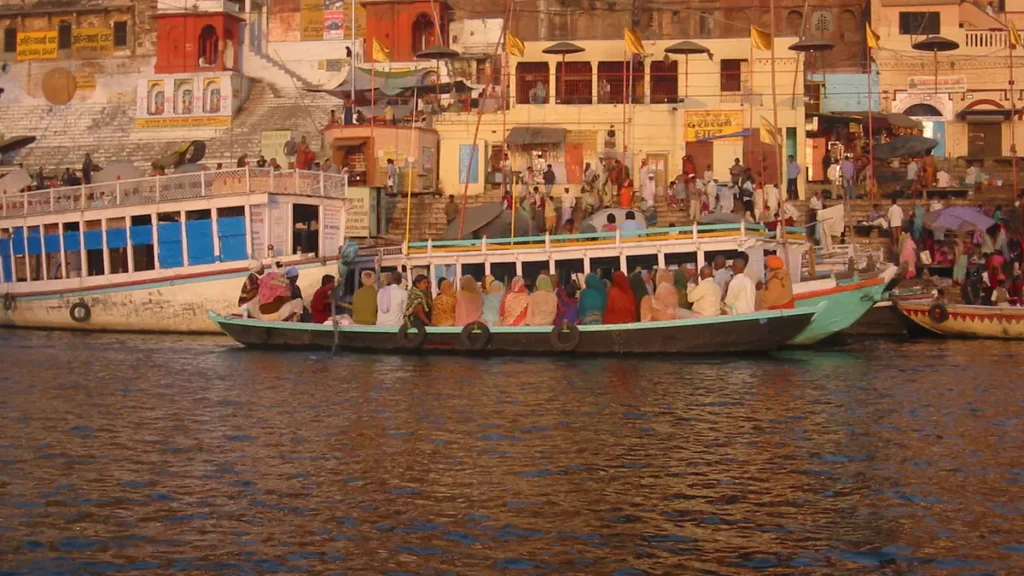
At a crowded ghat in Varanasi or at the Sangam in Prayagraj, you step into a wooden boat without asking who owns it or whether it is safe. Often nobody knows. U.P. now wants every boat counted.
- The U.P. Cabinet, chaired by Chief Minister Yogi Adityanath, approved the Uttar Pradesh Inland Vessel Rules, 2026 on 27 October.
- Registration is now compulsory for all boats and steamers, with or without an engine, on 11 major rivers, including the Ganga, Yamuna, Saryu and Ghaghra.
- A traditional (non-mechanised) boat pays a ₹50 fee. For engine boats, the fee depends on how many passengers or how much cargo they carry.
- Passengers and boatmen will both be insured. Small boatmen in the unorganised sector (informal work, no fixed employer) had no cover before.
- An Inland Water Authority, headed by the Transport Minister, will oversee river transport.
- The rules replace the U.P. Inland Vessel Rules, 2002. Existing boats get 90 days to meet the new standards once the rules are notified.
What is the Inland Vessels Act, 2021?
An inland vessel is any boat, ship or barge that runs on rivers, canals, lakes or backwaters, not on the sea.
Parliament passed the Inland Vessels Act, 2021 to replace the Inland Vessels Act, 1917. It gives one set of rules for the whole country, so a vessel registered in one State can run in any other. Its main parts came into force on 7 June 2022.
The Act covers two kinds of vessels. Mechanically propelled vessels (run by an engine) follow central rules on registration, survey, crew and insurance. Non-mechanically propelled vessels (rowed or poled boats) are left to the States, which must enrol them and give each a number.
U.P.’s rules are made under this Act. The draft will first be published for public objections under Section 107.
Engine boats vs traditional boats under the new rules
| Point | Mechanised vessels | Traditional boats |
|---|---|---|
| Examples | Steamers, factory-made motor boats | Wooden rowing boats, even if a motor is fitted |
| Registration fee | Varies with passenger or cargo capacity | ₹50 |
| Chapters of the rules | 1 to 14 | 15 (Chapter 16 covers both) |
| Insurance | Passengers and crew | Passengers and boatmen |
Which laws and constitutional entries apply?
- Inland Vessels Act, 2021: the central law; States make rules for non-mechanised boats.
- Union List, Entry 24: shipping and navigation on national waterways, for mechanically propelled vessels.
- State List, Entry 13: inland waterways and traffic on them, subject to the Union and Concurrent Lists.
- Concurrent List, Entry 32: engine vessels on inland waterways and carriage of passengers and goods.
- National Waterways Act, 2016: declared 111 national waterways. NW-1 runs on the Ganga from Haldia to Prayagraj.
Why does U.P.’s new boat rules matter?
| Angle | What to note |
|---|---|
| Safety | Overloaded, unlisted boats are a major cause of drowning in river accidents. |
| Welfare | A list of boatmen lets the State give them insurance, life jackets and scheme benefits. |
| Cheap transport | Water transport moves goods with less fuel and pollution than roads. |
What are the problems with U.P.’s new boat rules?
- Lakhs of boatmen are poor and may avoid paperwork.
- Transport officers already handle road vehicles; staff may be short.
- Rules on paper do not stop overloading without regular inspection.
What should be done next on U.P.’s new boat rules?
- Register boats at camps on the ghats, using simple mobile apps.
- Give free life jackets with registration.
- Fix and display the passenger limit on every boat.
- Train boatmen in rescue and first aid, with the SDRF (State Disaster Response Force).
What can Prelims ask on U.P.’s new boat rules?
- Inland Vessels Act, 2021 replaced the 1917 Act; one registration valid across India.
- Non-mechanised boats are enrolled by State governments.
- Inland waterways: Union List Entry 24, State List Entry 13, Concurrent List Entry 32.
- NW-1: Ganga, Haldia to Prayagraj; managed by the Inland Waterways Authority of India (IWAI).
- U.P. rules cover 11 rivers, incl. Ganga, Yamuna, Saryu, Ghaghra.
How to write about U.P.’s new boat rules in Mains
Practice question (UPPCS GS-V, 8 marks, 125 words): Unregulated boat operations put lives at risk on India’s rivers. Examine how Uttar Pradesh’s Inland Vessel Rules, 2026 address boat safety and the welfare of boatmen.
- Intro: Cabinet approval on 27 Oct 2026; registration on 11 rivers.
- Legal base: Inland Vessels Act, 2021; State role for non-mechanised boats.
- Gains: safety, insurance, a database of boatmen, river tourism.
- Gaps: poverty, staff shortage, crowd and flood seasons.
- Conclusion: counting boats is step one; regular checks save lives.
Ready lines for your answer
- “Until now, there was no such comprehensive regulatory framework for boats and vessels operating in the state's waters” (Transport Minister Dayashankar Singh, 27 Oct 2026).
- Registration plus insurance turns an invisible, informal boatman into a worker the State can protect.
Quotable data point11 rivers covered; ₹50 fee for traditional boats; 90 days for existing boats to comply.
Photo: boats at Dashashwamedh Ghat on the Ganga, Varanasi. By csoghoian (Flickr), via Wikimedia Commons, CC BY-SA 2.0; cropped.

Exam angle
Prelims: Inland Vessels Act 2021, Seventh Schedule entries on inland waterways, NW-1. · Mains GS-II/III: transport safety, informal workers, federalism.
Practice MCQs
Original practice questions (not PYQs).
With reference to the Inland Vessels Act, 2021, consider the following statements:
1. It replaced the Inland Vessels Act, 1917.
2. Non-mechanically propelled boats are enrolled by State governments.
3. A vessel registered under it can run only in the State where it is registered.
Which of the statements given above is/are correct?
Answer (b) & explanation
The 2021 Act replaced the 1917 Act and leaves the enrolment of non-mechanised boats to the States. Statement 3 is wrong: registration under the Act is valid across India.
Under the Seventh Schedule, 'inland waterways and traffic thereon', subject to the Union and Concurrent Lists, is found in:
Answer (b) & explanation
Entry 13 of the State List covers inland waterways and traffic on them, subject to List I (national waterways, Entry 24) and List III (Entry 32).
Questions students ask about this
Is boat registration mandatory in Uttar Pradesh?
Yes. Under the U.P. Inland Vessel Rules, 2026, approved on 27 October 2026, all boats and steamers on 11 major rivers must be registered, with or without an engine.
What is the registration fee for a boat in U.P.?
₹50 for a traditional non-mechanised boat. For engine boats, the fee depends on passenger or cargo capacity.
What is the Inland Vessels Act, 2021?
A central law that replaced the 1917 Act. It sets one national system for registering, surveying and insuring inland vessels, and lets States enrol non-mechanised boats.
Who will register boats in U.P.?
Assistant Regional Transport Officers at the district level and Motor Vehicle Inspectors at the tehsil level, under a new Inland Water Authority headed by the Transport Minister.
What happens to boats already running?
They get 90 days from the date the rules come into force to meet the new standards.