
Delhi-NCR bans building work from November 5
Every winter, Delhi’s air turns toxic when smoke from farm fires and firecrackers is trapped in cold, still air. This year the Centre is acting before the worst weeks: building and demolition work in Delhi-NCR is banned from 5 to 20 November, and offices must keep half their staff at home. Read it to revise the Commission for Air Quality Management, the Air Quality Index and why winter smog forms.
- Ban
- Building and demolition, 5–20 November
- Offices
- At least 50% work from home
- Ordered by
- Commission for Air Quality Management
- Exempt
- Metro, railways, airports, hospitals
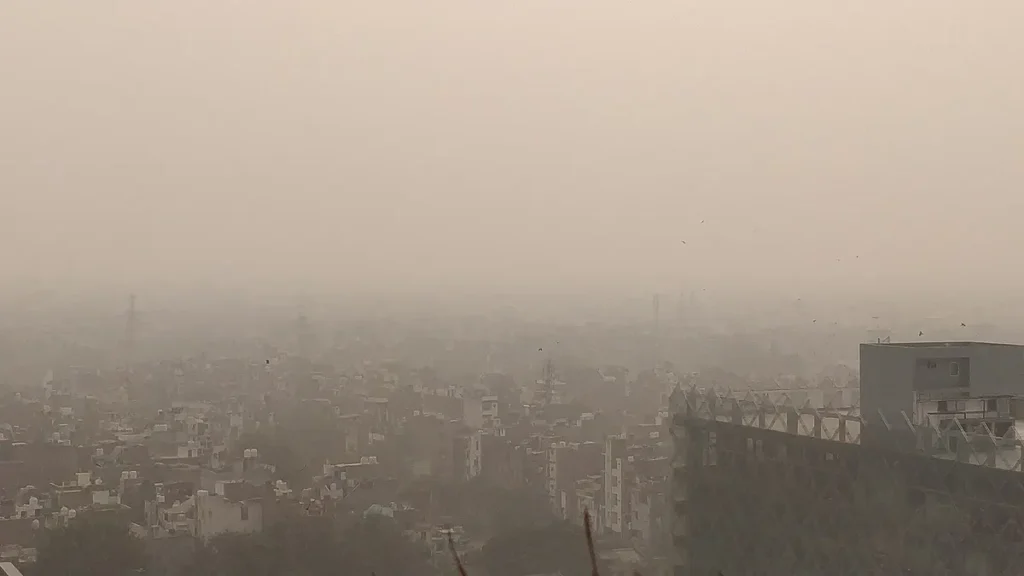
The Delhi-NCR curbs: what happened?
Dust from building sites, smoke from vehicles and crackers, and stubble smoke from the fields all arrive in the same few weeks. The idea this time is to cut what can be cut before the air turns ‘severe’.
- The Commission for Air Quality Management in the National Capital Region and Adjoining Areas (CAQM) issued the order on Friday night.
- Dust-raising construction and demolition is banned in Delhi and nearby areas from 5 to 20 November. This includes highways, flyovers, power lines, pipelines and telecom work.
- Offices must keep at least half their staff working from home to cut traffic.
- Railways, metro, airports, inter-State bus terminals, hospitals, water supply and sanitation, and national security and defence projects are exempt.
- Environment Minister Bhupender Yadav called this “the peak time” for pollution, as Deepavali firecrackers and paddy stubble burning peak together.
Why does Delhi’s air turn toxic every winter?
In winter, the air near the ground becomes cold and heavy, and winds slow down. A warm layer above acts like a lid. This is called temperature inversion, and it traps smoke and dust close to the ground.
At the same time, farmers in Punjab and Haryana burn paddy stubble to clear fields quickly for wheat, and the smoke drifts towards Delhi. Firecrackers, vehicles, road dust, building dust and industry add to it.
The CAQM was set up under the Commission for Air Quality Management in National Capital Region and Adjoining Areas Act, 2021. It can issue binding orders across Delhi, Punjab, Haryana, Rajasthan and Uttar Pradesh.
The National Air Quality Index, launched in 2014, turns readings of eight pollutants into one number with six colour bands, from ‘good’ to ‘severe’.
Which pollutants does the Air Quality Index count?
| Group | Pollutants | Note |
|---|---|---|
| Particles | PM2.5, PM10 | Main winter problem |
| Gases | Nitrogen dioxide, sulphur dioxide, carbon monoxide, ozone, ammonia | From vehicles, industry, farms |
| Metal | Lead | Eighth pollutant; carbon dioxide is NOT included |
Which laws and Articles apply?
- Article 21: the right to life includes the right to clean air, as courts have held.
- Commission for Air Quality Management in National Capital Region and Adjoining Areas Act, 2021: CAQM’s binding powers.
- Air (Prevention and Control of Pollution) Act, 1981: India’s main law on air pollution.
- National Clean Air Programme (2019): city action plans to cut particle pollution.
Why does the Delhi-NCR curbs matter?
| Angle | What to note |
|---|---|
| Health | Polluted air harms lungs and hearts, especially of children and the old. |
| Governance | Shows a regional body acting across many States. |
| Economy | Work bans hit daily-wage building workers. |
| Farm policy | Stubble burning links air quality to paddy farming. |
What are the problems with the Delhi-NCR curbs?
- Daily-wage workers lose income during building bans.
- Short bans do not fix root causes like stubble burning and vehicle smoke.
- Enforcing the order across many districts is hard.
- Pollution from outside the region is not controlled by these curbs.
What should be done next on the Delhi-NCR curbs?
- Pay building workers from the construction welfare fund during bans.
- Give farmers machines and bio-decomposers so they need not burn straw.
- Expand clean public transport and electric vehicles.
- Plan for the whole ‘airshed’, since polluted air does not stop at State borders.
What can Prelims ask on the Delhi-NCR curbs?
Prelims probability: Expect a question on the Air Quality Index: it counts eight pollutants such as PM2.5, PM10, nitrogen dioxide and ozone, but not carbon dioxide.
- Air Quality Index: eight pollutants (PM2.5, PM10, NO2, SO2, CO, ozone, ammonia, lead); not carbon dioxide.
- CAQM: statutory body under the 2021 Act; covers NCR and adjoining areas.
- Temperature inversion traps pollutants near the ground in winter.
- Air (Prevention and Control of Pollution) Act, 1981.
- National Clean Air Programme launched in 2019.
How to write about the Delhi-NCR curbs in Mains
Practice question (15 marks, 250 words): Every winter, Delhi-NCR faces severe air pollution. Examine the causes and evaluate the measures such as construction bans and work from home recently ordered by the Commission for Air Quality Management.
- Intro: ban from 5 to 20 November; 50% work from home.
- Causes: stubble, crackers, vehicles, dust, temperature inversion.
- Strengths: early action, quick cut in dust and traffic.
- Limits: workers’ income, root causes untouched, enforcement.
- Conclusion: emergency curbs buy time; year-round action cleans air.
Ready lines for your answer
- Clean air needs year-round action, not just winter bans.
- Polluted air does not stop at State borders.
Quotable data pointConstruction ban from 5 to 20 November and at least 50% work from home across Delhi-NCR.
Photo: Prami.ap90, CC BY-SA 4.0, via Wikimedia Commons
Exam angle
Prelims: AQI pollutants, CAQM Act 2021, NCAP, temperature inversion. · Mains GS-III: air pollution, regional governance.
Practice MCQs
Original practice questions (not PYQs).
Which of the following is NOT counted in India's Air Quality Index?
Answer (c) & explanation
The Air Quality Index counts eight pollutants, including PM2.5, PM10, ozone and nitrogen dioxide. Carbon dioxide is not one of them.
Consider the following statements:
1. The Commission for Air Quality Management has ordered a ban on dust-raising construction in Delhi-NCR from 5 to 20 November.
2. Gurugram and Ghaziabad are among the areas covered by the work-from-home rule.
3. Offices in Delhi and nearby districts must keep at least half their staff working from home.
How many of the above statements are correct?
Answer (c) & explanation
All three are correct. Railways, metro, airports, hospitals and defence projects are exempted from the ban.
Which of the following is NOT one of the pollutants counted in India's National Air Quality Index?
Answer (c) & explanation
The Index counts eight pollutants, including ozone, ammonia and lead. Carbon dioxide is not one of them.
Questions students ask about this
What has the CAQM ordered for Delhi-NCR?
A ban on dust-raising building and demolition work from 5 to 20 November, and at least 50% work from home in offices.
Which projects are exempt from the ban?
Railways, metro, airports, inter-State bus terminals, hospitals, water supply and sanitation, and national security and defence projects.
How many pollutants does the Air Quality Index count?
Eight: PM2.5, PM10, nitrogen dioxide, sulphur dioxide, carbon monoxide, ozone, ammonia and lead.
Why is winter pollution worse in Delhi?
Cold, still air and temperature inversion trap smoke and dust near the ground, just when stubble burning and firecrackers peak.