
Supreme Court: pay freed bonded labourers in a week
The Supreme Court says the State’s duty to bonded labourers does not end with their rescue. It told the Centre to make sure money reaches freed workers within seven days and to consider revising the rehabilitation scheme. Read it to revise Articles 23 and 24, the Bonded Labour System (Abolition) Act, 1976 and the role of the NHRC.
- Bench
- Justices Vikram Nath, Aparesh Kumar Singh
- Aid
- Within 7 days
- Scheme review
- Within 3 months
- Law
- Bonded Labour Act, 1976
The bonded labour order: what happened?
Rescue is only the first step. A freed worker with no money often falls back into debt and bondage.
- The Supreme Court told the Centre to make sure money reaches freed bonded labourers within seven days.
- The Centre must consider revising the rehabilitation scheme within three months.
- States and Union Territories must apply the revised procedure of 14 May within six months.
- Extra guidelines will be framed with the National Human Rights Commission in three months.
What is bonded labour?
Bonded labour is forced work to repay a debt, often passed from parents to children. Brick kilns, farms and quarries are common places.
Article 23 bans forced labour and Article 24 bans child labour in factories, mines and hazardous work. Both are Fundamental Rights, not Directive Principles.
The Bonded Labour System (Abolition) Act, 1976 frees bonded workers, cancels their debts and makes District Magistrates responsible.
What must happen after a complaint?
| Step | Time limit |
|---|---|
| Verify the complaint | About a day |
| Rescue | About a day |
| Release certificate | About a day |
| Money to the worker | Within 7 days |
Which laws and Articles apply?
- Article 23: ban on forced labour and human trafficking.
- Article 24: ban on child labour in hazardous work.
- Bonded Labour System (Abolition) Act, 1976.
- Article 21: right to live with dignity.
Why does bonded labour rehabilitation matter?
| Angle | What to note |
|---|---|
| Rights | Articles 23 and 24 are Fundamental Rights. |
| Rehabilitation | Money stops workers falling back into debt. |
| Federalism | States must act within set time limits. |
| NHRC | Rights body helps frame guidelines. |
What are the problems with bonded labour rehabilitation?
- Release certificates are often delayed.
- Many bonded workers are never identified.
- Money is often paid late or partly.
- Officials rarely punish employers.
What should be done next on bonded labour rehabilitation?
- Track every case online from rescue to payment.
- Hold District Magistrates accountable.
- Link freed workers to housing, land and jobs.
- Run surveys to find hidden bonded labour.
What can Prelims ask on bonded labour rehabilitation?
Prelims probability: Expect a question on Articles 23 and 24: the ban on forced labour and child labour is a Fundamental Right, not a Directive Principle.
- Article 23: ban on forced labour.
- Article 24: ban on child labour in hazardous work.
- Bonded Labour System (Abolition) Act, 1976.
- These are Fundamental Rights, not Directive Principles.
- NHRC to help frame guidelines.
How to write about bonded labour rehabilitation in Mains
Practice question (15 marks, 250 words): Rescue without rehabilitation fails bonded labourers. Discuss in light of the Supreme Court’s recent order.
- Intro: the order.
- Constitutional base: Articles 21, 23, 24.
- Gaps in rehabilitation.
- Court’s time limits.
- Conclusion: dignity after rescue.
Ready lines for your answer
- Freedom without money is only half a freedom.
- The State's duty begins, not ends, with rescue.
Quotable data pointAid to reach freed workers within seven days.
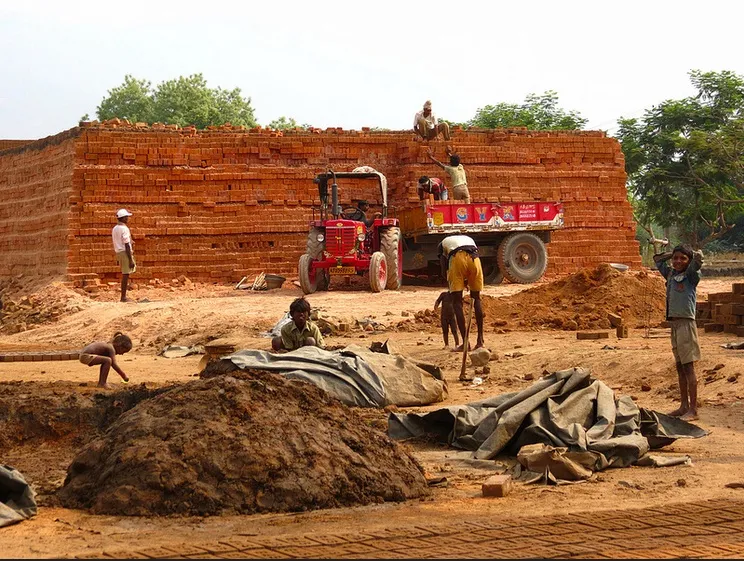
Photo: Flickr user Apoorva Jinka, CC BY 2.0, via Wikimedia Commons
Exam angle
Prelims: Articles 23 and 24, Bonded Labour Act, 1976. · Mains GS-II: vulnerable sections.
Practice MCQs
Original practice questions (not PYQs).
Consider the following statements:
1. Article 23 of the Constitution prohibits traffic in human beings, begar and other forms of forced labour.
2. Article 24 prohibits the employment of children below 14 years in factories, mines or other hazardous work.
3. The Bonded Labour System (Abolition) Act was enacted in 1986.
How many of the above statements are correct?
Answer (b) & explanation
Statements 1 and 2 are correct. The Bonded Labour System (Abolition) Act was enacted in 1976.
Questions students ask about this
What did the Supreme Court order?
Money must reach freed bonded labourers within seven days, and the Centre must consider revising the rehabilitation scheme within three months.
Which Articles ban forced and child labour?
Article 23 bans forced labour and Article 24 bans child labour in hazardous work.
Which law abolished bonded labour?
The Bonded Labour System (Abolition) Act, 1976.
Are Articles 23 and 24 Fundamental Rights?
Yes. They are part of the Right against Exploitation.