
Ghee costs more as dairies run short of milk fat
Ghee prices have jumped this festive season. Amul’s cow ghee went from ₹695 to ₹735 a litre, and Karnataka’s Nandini from ₹715 to ₹850. India makes plenty of milk, but it is short of milk fat. Read it to revise dairy economics, Operation Flood and the Rashtriya Gokul Mission.
- Milk output 2025
- 216.5 million tonnes
- Butter price
- ₹348 → ₹537 a kg since Oct 2023
- Buffalo share of milk
- About 45% (57% in 2000-01)
- Amul cow ghee
- ₹695 → ₹735 a litre
Ghee prices: what happened?
India is the world’s biggest milk producer. So why is your Diwali ghee costing more?
- Amul raised cow ghee from ₹695 to ₹735 a litre on 2 November; Nandini went from ₹715 to ₹850.
- Since October 2023, butter prices rose 54.3% (₹348 to ₹537 a kg), but skimmed milk powder rose only 18%.
- That gap shows the real shortage is of fat, not milk.
- Milk output rose from 165.1 million tonnes in 2016 to 216.5 million tonnes in 2025, but growth may slow to 2% by 2027 as El Niño (a warming of the Pacific that often weakens India’s monsoon) hits fodder.
Why is milk fat short?
Milk has two valuable parts: fat (used for butter and ghee) and solids-not-fat (used for milk powder).
Buffalo milk is richer in fat than cow milk. But buffaloes now give about 45% of India’s milk, down from 57% in 2000-01, as farmers shift to high-yield cross-bred cows.
Other reasons: Goods and Services Tax (GST) on ghee and butter was cut to 5% in September 2025, which raised demand; food-safety crackdowns on fake ghee; record exports; and slower milk growth. Prices may ease after Diwali.
How dairy prices moved
| Item | Change |
|---|---|
| Butter (since Oct 2023) | +54.3% |
| Skimmed milk powder | +18% |
| Amul cow ghee | ₹695 → ₹735 a litre |
| Nandini ghee | ₹715 → ₹850 |
Which schemes and laws apply?
- Operation Flood (1970): led by the National Dairy Development Board under Verghese Kurien; made India the top milk producer.
- Rashtriya Gokul Mission (2014): improves native cattle breeds and milk yield.
- Food Safety and Standards Act, 2006: sets purity standards and fights adulteration, including fake ghee.
- Animal husbandry is a State subject, but the Centre funds national missions.
Why does the ghee price rise matter?
| Angle | What to note |
|---|---|
| Inflation | Food prices hit household budgets. |
| Rural income | Dairy is a key income for small farmers. |
| Nutrition | Fat and protein sources for millions. |
| Prelims | Operation Flood, Gokul Mission, milk data. |
What are the problems with the ghee price rise?
- Buffalo numbers and fat-rich milk share are falling.
- Fodder shortages raise costs, worse in El Niño years.
- Fake ghee hurts trust and honest makers.
- Exports can tighten home supply in lean months.
What should be done next on the ghee price rise?
- Improve fodder supply and fodder banks.
- Support buffalo and native breeds with better genetics.
- Strict, regular testing for adulterated ghee.
- Plan exports around domestic supply needs.
What can Prelims ask on the ghee price rise?
Prelims probability: Medium. Past-question trend: Rashtriya Gokul Mission (2025) and the Food Safety and Standards Act (2018). Freshness: festive-season ghee price rise. Static link: Operation Flood, El Niño and fodder. Testable fact: India produced about 216.5 million tonnes of milk in 2025; buffaloes give about 45%.
- India: world’s largest milk producer.
- Operation Flood began in 1970 under the NDDB.
- Rashtriya Gokul Mission: launched 2014.
- National Milk Day: 26 November (Verghese Kurien’s birth anniversary).
- GST on ghee and butter cut to 5% in September 2025.
How to write about the ghee price rise in Mains
Practice question (15 marks, 250 words): India is the largest producer of milk yet faces a shortage of milk fat. Explain the reasons and suggest measures.
- Intro: ghee price rise, butter +54%.
- Causes: buffalo decline, fodder, demand, exports.
- Effects: prices, nutrition, trust.
- Measures: fodder, breeds, testing.
- Conclusion: from quantity to quality of milk.
Ready lines for your answer
- India has solved milk quantity; the next goal is milk quality and fat.
- Fodder security is the hidden base of dairy security.
Quotable data pointMilk 216.5 million tonnes (2025); butter +54.3% since October 2023; buffalo share about 45%.
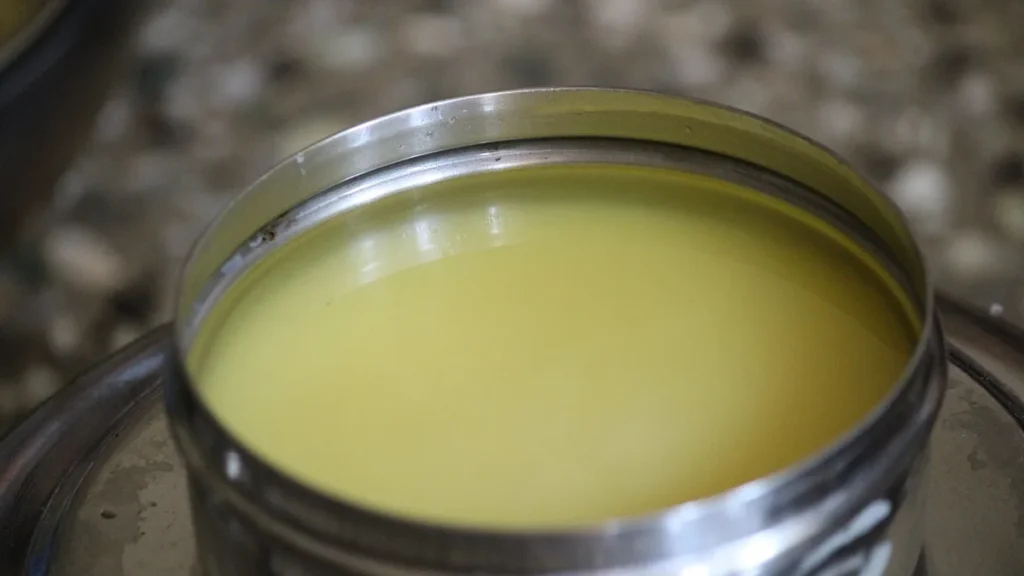
Photo: Phadke09, CC BY-SA 4.0, via Wikimedia Commons
Exam angle
Prelims: Operation Flood, Gokul Mission. · Mains GS-III: animal husbandry, food inflation.
Practice MCQs
Original practice questions (not PYQs).
The Rashtriya Gokul Mission, launched in 2014, mainly aims at:
Answer (d) & explanation
The Rashtriya Gokul Mission (December 2014) works on developing and conserving indigenous breeds and raising milk productivity.
Consider the following statements:
1. India is the world's largest producer of milk.
2. Operation Flood was launched in 1970 by the National Dairy Development Board.
3. Ghee is made by heating butter or cream to remove its water content.
How many of the above statements are correct?
Answer (c) & explanation
All three are correct.
Questions students ask about this
Why is ghee costlier now?
Dairies are short of milk fat, while festive demand, lower GST and exports have pushed demand up.
Is India short of milk?
Not really. Output keeps rising; the shortage is of fat.
Why does buffalo milk matter?
It has more fat than cow milk, and its share in India's milk has fallen to about 45%.
Will prices fall?
They may ease after Diwali, the report says.
What was Operation Flood?
A 1970 programme by the National Dairy Development Board that built milk cooperatives and made India the top milk producer.