
Draft rules to register allied and healthcare workers
The National Commission for Allied and Healthcare Professions, under the Union Health Ministry, has released draft rules for the provisional registration of allied and healthcare workers — the laboratory technicians, physiotherapists, nutritionists, operation-theatre and emergency technicians, radiology staff, optometrists, occupational therapists and health informatics staff who support doctors and nurses. Practitioners who meet set criteria can register for now, then move to regular registration through bridge courses, supervised clinical training and qualifying exams. Comments are invited till 4 December. Read it to revise how health professions are regulated under the 2021 Act.
- Body
- National Commission for Allied and Healthcare Professions, under the Union Health Ministry
- What is new
- Draft rules for provisional registration
- Who is covered
- Lab technicians, physiotherapists, nutritionists, OT and emergency staff, radiology, optometrists and others
- Comments
- Public comments invited till 4 December
Allied healthcare draft rules: what happened?
The people who run the lab, the theatre and the rehabilitation room are being brought under a single national register, starting with a provisional one.
- The National Commission for Allied and Healthcare Professions, under the Union Health Ministry, has released draft rules for the provisional registration of allied and healthcare workers.
- These are the workers who support doctors and nurses: laboratory technicians, physiotherapists, nutritionists, operation theatre and emergency technicians, radiology staff, optometrists, occupational therapists and health informatics staff.
- Practitioners who meet set criteria can register for now. Then, through bridge courses, supervised clinical training and qualifying exams, they can move to regular registration.
- An online system will check credentials and issue certificates. The Commission has invited comments from the public by 4 December.
How are allied health professions regulated?
Doctors are regulated by the National Medical Commission and nurses by their own councils. For years, many allied professions had uneven State rules, or none at all, even though they handle diagnostics, therapy and emergency care.
The National Commission for Allied and Healthcare Professions Act, 2021 created a national regulator and grouped these jobs into about ten categories of professions. Medical and allied professions sit in the Concurrent List, so both the Union and the States can make law.
Provisional registration is a halfway house. It lets people who are already trained and at work come onto a roll now, while bridge courses and exams raise everyone to a common standard for full registration.
A national, online register is also meant to make it harder to practise with fake certificates, and easier for hospitals and patients to check who is qualified.
How registration is meant to work
| Step | What it does |
|---|---|
| Provisional registration | For practitioners who already meet set criteria |
| Bridge courses and supervised training | Close gaps in education and clinical practice |
| Qualifying exams | Gate to regular, full registration |
| Online credentials | Certificates issued after an online check |
Which law and list apply?
- National Commission for Allied and Healthcare Professions Act, 2021.
- About ten categories of allied and healthcare professions under the Commission.
- Medical professions in the Concurrent List.
- Draft rules for provisional registration; comments till 4 December.
Why does registration of allied and healthcare workers matter?
| Angle | What to note |
|---|---|
| Health | Quality of care depends as much on technicians and therapists as on doctors. |
| Social justice | A national register can raise standards for a large, often overlooked workforce. |
| Federalism | Health professions are in the Concurrent List, so States remain in the picture. |
| Prelims | 2021 Act, NCAHP, ten categories, Concurrent List, comments till 4 December. |
What are the problems with registration of allied and healthcare workers?
- Bridge courses and exams must be affordable and available across States, or the provisional roll will become a dead end.
- An online system is only as strong as the documents it is asked to verify.
- States will still have to staff and fund training if a national standard is to mean anything on the ground.
- Overlaps with existing State councils and hospital hiring rules will need a clean transition.
What should be done next on registration of allied and healthcare workers?
- Close the comment window on 4 December and notify clear, simple rules.
- Publish the list of recognised qualifications and the path from provisional to regular registration.
- Work with States on training seats, exam centres and a common digital register.
- Align hospital privilege and public recruitment with the new register once it is live.
What can Prelims ask on registration of allied and healthcare workers?
Prelims probability: Low. No past Prelims question on this commission. Still a fresh draft with a few testable facts: the 2021 Act, 10 categories of professions, and medical professions in the Concurrent List.
- National Commission for Allied and Healthcare Professions Act, 2021.
- Draft rules for provisional registration; comments till 4 December.
- About ten categories, including lab technicians, physiotherapists and emergency staff.
- Path to regular registration: bridge courses, supervised training, qualifying exams.
- Medical professions are in the Concurrent List.
How to write about registration of allied and healthcare workers in Mains
Practice question (15 marks, 250 words): Draft rules have been proposed for the provisional registration of allied and healthcare professionals. Discuss why a national framework is needed for this workforce and the challenges in moving from a provisional roll to regular registration.
- Intro: NCAHP draft rules; comments till 4 December.
- Who allied workers are, and why they matter to care.
- The 2021 Act, ten categories and the Concurrent List.
- Provisional registration, bridge courses and exams.
- Way forward: State capacity, honest credentials and a usable register.
Ready lines for your answer
- A hospital is only as safe as the technician at the bench and the therapist in the ward.
- A national register is a standard, not a shortcut.
Quotable data pointNCAHP Act 2021; draft provisional rules; comments till 4 December; about ten professional categories.
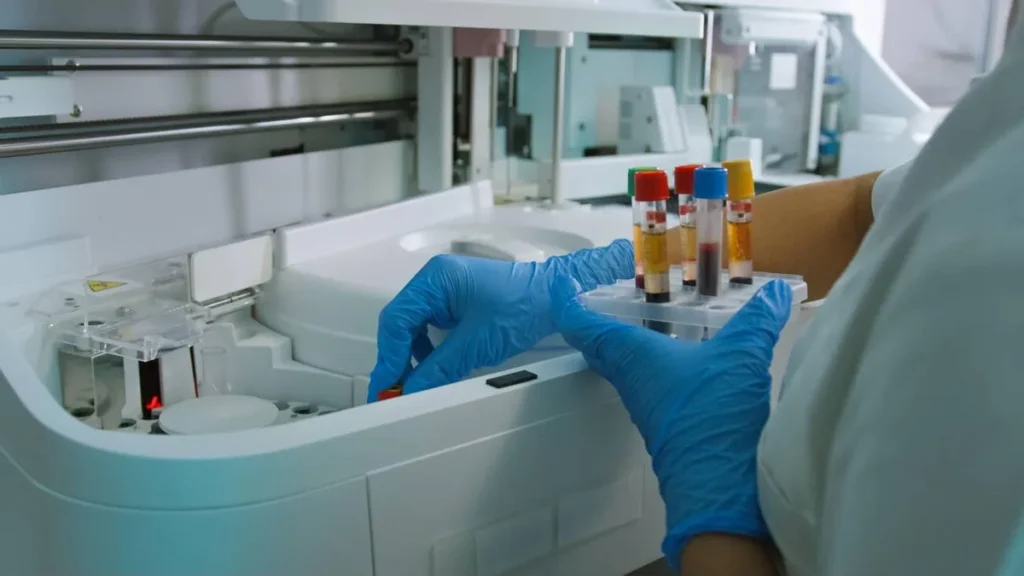
Photo: Goleisureintl, CC BY 4.0, via Wikimedia Commons
Exam angle
Prelims: 2021 Act, ten categories, Concurrent List, 4 December deadline. · Mains GS-II: health workforce and social justice.
Practice MCQs
Original practice questions (not PYQs).
Under the Seventh Schedule of the Constitution, 'legal, medical and other professions' fall in the:
Answer (b) & explanation
Legal, medical and other professions are in the Concurrent List (Entry 26), while public health and hospitals are in the State List.
The National Commission for Allied and Healthcare Professions, which has issued draft rules for provisional registration, was set up under an Act of:
Answer (a) & explanation
It was set up under the National Commission for Allied and Healthcare Professions Act, 2021. The National Medical Commission Act is of 2019 and the nursing commission law of 2023.
Questions students ask about this
What has been released?
Draft rules for the provisional registration of allied and healthcare workers, by the National Commission for Allied and Healthcare Professions. Comments are due by 4 December.
Who counts as an allied or healthcare worker here?
Among others, laboratory technicians, physiotherapists, nutritionists, operation-theatre and emergency technicians, radiology staff, optometrists, occupational therapists and health informatics staff.
What is the 2021 Act?
The National Commission for Allied and Healthcare Professions Act, 2021, which created a national regulator and grouped these jobs into about ten categories.
How does provisional registration become regular?
Through bridge courses, supervised clinical training and qualifying exams, after an online check of credentials.
Why does the Concurrent List matter?
Medical professions are in the Concurrent List, so both the Union and the States can make law on them.