
Reserve Bank nod paves way for Paytm wallet return
The Reserve Bank of India has given in-principle approval to Paytm Payments Services, a Paytm company, to issue prepaid payment instruments. These include digital wallets in which users store money in advance. More than two and a half years ago, the Reserve Bank had stopped Paytm Payments Bank from taking deposits, wallet top-ups and electronic toll tag payments. It cancelled that bank’s licence in April 2026. The new approval is not final: the company must first pass a system audit, including a cyber security audit, before it gets a certificate to restart wallets. Paytm was once India’s biggest digital wallet, and its return could bring more competition to digital payments. Read it to revise payments banks, wallets and the Payment and Settlement Systems Act, 2007.
- What was approved
- In-principle nod to issue prepaid payment instruments
- Who got it
- Paytm Payments Services
- Earlier action
- Paytm Payments Bank licence cancelled in April 2026
- What is still needed
- A system audit, including cyber security
Paytm gets a nod to revive wallets: what happened?
A wallet holds money you have already paid in, ready for a ride or a bill. For more than two years Paytm could not top those wallets up; the Reserve Bank has now opened the door a little, but not all the way.
- The Reserve Bank of India has given in-principle approval to Paytm Payments Services, a Paytm company, to issue prepaid payment instruments. These include digital wallets in which users store money in advance.
- More than two and a half years ago, the Reserve Bank had stopped Paytm Payments Bank from taking deposits, wallet top-ups and electronic toll tag payments.
- It cancelled that bank’s licence in April 2026.
- The approval is not final. The company must first pass a system audit, including a cyber security audit, before it gets a certificate to restart wallets.
- Paytm was once India’s biggest digital wallet. Its return could bring more competition to digital payments.
What are prepaid instruments, and how do they differ from a payments bank?
A prepaid payment instrument (PPI) is a wallet, card or voucher in which money is stored in advance and then used to pay. The Reserve Bank authorises issuers under the Payment and Settlement Systems Act, 2007.
A payments bank is a different licence. It can take deposits up to ₹2 lakh per customer and offer payments and remittances, but it cannot give loans. Paytm Payments Bank held that licence until it was stopped and then cancelled.
An in-principle approval is only the first step. A final certificate usually follows only after the Reserve Bank is satisfied on systems, governance and cyber security.
Payments bank and prepaid wallet
| Feature | What it means |
|---|---|
| Prepaid payment instrument | Money stored in advance in a wallet, card or voucher |
| Payments bank | Deposits up to ₹2 lakh; payments allowed; lending not allowed |
| In-principle approval | First nod only; a final certificate needs a system audit |
Which laws and rules apply?
- Payment and Settlement Systems Act, 2007: regulation of payment systems and prepaid instruments.
- Reserve Bank guidelines on prepaid payment instruments and on payments banks.
- Payments banks cannot lend and can hold deposits only up to ₹2 lakh per customer.
- Cyber security and system-audit conditions attached to authorisation.
Why does the Paytm wallet approval matter?
| Angle | What to note |
|---|---|
| Economy | A large wallet’s possible return could sharpen competition in digital payments. |
| Regulation | Shows how the Reserve Bank can stop, cancel and later re-authorise a payments business. |
| Security | A cyber security audit is a condition, not an afterthought. |
| Prelims | PSS Act 2007, ₹2 lakh cap, no lending by payments banks, PPI meaning. |
What are the problems with the Paytm wallet approval?
- The nod is only in principle; wallets cannot restart until the audit is cleared.
- Users may confuse a Paytm company approval with a revival of the cancelled payments bank.
- Past supervisory concerns mean trust will return only if systems are demonstrably safer.
- Competition will help only if consumer protection and know-your-customer rules stay tight.
What should be done next on the Paytm wallet approval?
- Complete the system and cyber security audit before any public relaunch.
- Explain clearly to users that this is a PPI licence, not a revival of the payments bank.
- Keep strict limits, grievance redress and audit trails on wallet balances.
- Use the return of a large player to lower costs without weakening safeguards.
What can Prelims ask on the Paytm wallet approval?
Prelims probability: Medium. Payments banks were asked in 2016 and the Unified Payments Interface in 2026. Fresh: a big wallet may return. Testable facts: ₹2 lakh deposit cap, no lending by payments banks, the 2007 payments law.
- Prepaid payment instruments: wallets, cards or vouchers loaded in advance.
- Payment and Settlement Systems Act, 2007.
- Payments banks: deposit cap of ₹2 lakh; no lending.
- Paytm Payments Bank licence cancelled in April 2026.
- In-principle approval is not a final certificate.
How to write about the Paytm wallet approval in Mains
Practice question (15 marks, 250 words): The Reserve Bank has given in-principle approval for a major firm to issue prepaid payment instruments after cancelling a related payments bank licence. Distinguish wallets from payments banks and discuss the regulatory issues involved.
- Intro: in-principle PPI nod to Paytm Payments Services.
- Concepts: PPI, payments bank, ₹2 lakh cap, no lending, 2007 Act.
- Background: restrictions and April 2026 licence cancellation.
- Issues: cyber security, consumer trust, competition.
- Way forward: audit first, clear communication, tight safeguards.
Ready lines for your answer
- An in-principle nod is a door left ajar, not a licence already in the pocket.
- A wallet is not a bank; the rules, and the risks, are different.
Quotable data pointIn-principle PPI approval to Paytm Payments Services; Paytm Payments Bank licence cancelled April 2026; audit still required.
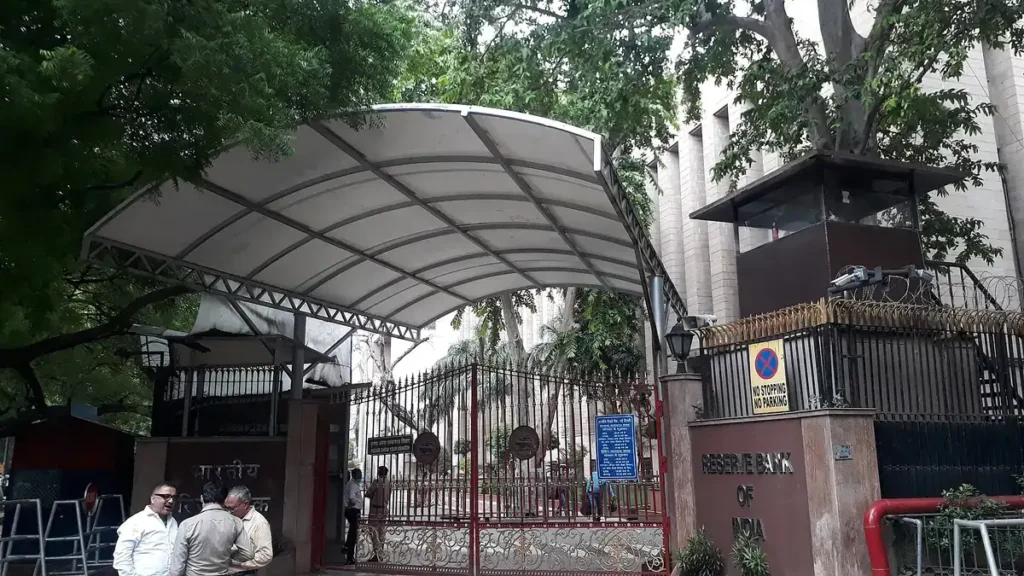
Photo: Pinakpani, CC BY-SA 4.0, via Wikimedia Commons
Exam angle
Prelims: PPI, payments banks, ₹2 lakh cap, Payment and Settlement Systems Act, 2007. · Mains GS-III: regulation of digital payments.
Practice MCQs
Original practice questions (not PYQs).
Consider the following statements:
1. Payments banks can lend money to customers.
2. Payments banks can accept deposits of up to ₹2 lakh per customer.
3. Payments banks can issue debit cards.
How many of the above statements are correct?
Answer (b) & explanation
Statements 2 and 3 are correct. Payments banks cannot lend and cannot issue credit cards.
Prepaid payment instruments such as digital wallets need authorisation under which law?
Answer (a) & explanation
Every payment system, including prepaid payment instruments, needs Reserve Bank authorisation under the Payment and Settlement Systems Act, 2007.
Questions students ask about this
What did the Reserve Bank approve?
In-principle approval for Paytm Payments Services to issue prepaid payment instruments, including digital wallets.
Can Paytm start wallets again today?
No. It must first pass a system audit, including a cyber security audit, and then get a final certificate.
What happened to Paytm Payments Bank?
The Reserve Bank had earlier stopped it from taking deposits, wallet top-ups and electronic toll payments, and cancelled its licence in April 2026.
What is a prepaid payment instrument?
A wallet, card or voucher in which money is stored in advance and then used to pay.
Can a payments bank give loans?
No. It can take deposits up to ₹2 lakh per customer and offer payments, but it cannot lend.