
Reserve Bank of India: History, Structure, Functions, Monetary Policy Committee, Surplus Transfer and the Autonomy Debate (UPSC Notes + PYQs)
UPSC has already asked about this. Read the story with these questions in mind.
- Prelims 2021Consider the following statements: The Governor of the Reserve Bank of India (RBI) is appointed by the Central Government. …Solve it below ↓
- Prelims 2021In India, the central bank's function as the 'lender of last resort' usually refers to which of the following?Solve it below ↓
See all 5 PYQs
- Prelims 2023Which one of the following activities of the Reserve Bank of India is considered to be part of 'sterilization'?Solve it below ↓
- Prelims 2019The Chairmen of public sector banks are selected by theSolve it below ↓
- Prelims 2017Which of the following statements is/are correct regarding the Monetary Policy Committee (MPC) ?Solve with answer →
Origins
The Hilton Young Commission (Royal Commission on Indian Currency and Finance, 1926) recommended a separate central bank, distinct from the government and from the Imperial Bank of India. The RBI Act was passed in 1934, and the Bank began work on 1 April 1935 in Calcutta, moving its central office to Bombay in 1937. It began as a shareholders’ bank. After independence it was nationalised on 1 January 1949 under the RBI (Transfer to Public Ownership) Act, 1948. The Banking Regulation Act, 1949 gave it powers over commercial banks.
- 1926Hilton Young Commission
- 1934RBI Act
- 1935RBI begins, 1 April
- 1949Nationalised; Banking Regulation Act
- 1982NABARD carved out
- 2016MPC and inflation targeting
- 2019Jalan Committee on reserves
Structure
- Central Board of Directors: the Governor, up to four Deputy Governors, four directors from the four Local Boards (Mumbai, Kolkata, Chennai, New Delhi), ten directors nominated by the Union government, and two government officials.
- All of the Governor, Deputy Governors and nominated directors are appointed by the Union government; the Governor’s term is up to five years and can be extended.
- Committees of the Board include the Board for Financial Supervision (1994) and the Board for Regulation and Supervision of Payment and Settlement Systems.
- Sanjay Malhotra became the 26th Governor in December 2024.
Functions
| Function | Main law and tools |
|---|---|
| Monetary authority | RBI Act (Chapter IIIF, 2016): MPC, repo rate, CRR, OMOs, standing deposit facility |
| Regulator and supervisor | Banking Regulation Act, 1949; RBI Act Chapter IIIB for NBFCs |
| Currency issuer | Section 22: sole right to issue banknotes; ₹1 notes and coins are issued by the Government and distributed by RBI |
| Banker and debt manager to government | Centre by statute; States by agreement; ways and means advances |
| Manager of foreign exchange | FEMA, 1999; forex reserves |
| Payment systems | Payment and Settlement Systems Act, 2007; NPCI promoted in 2008 |
| Development role | Priority sector lending, financial inclusion, NABARD and EXIM Bank were born from RBI departments |
It is also the lender of last resort: it gives emergency liquidity to banks facing a temporary crisis, a point Prelims 2021 tested.
Monetary Policy Committee
Following the Urjit Patel Committee (2014), the RBI Act was amended in 2016 to adopt flexible inflation targeting. The Government, in consultation with RBI, sets the target every five years: 4% CPI inflation with a band of 2-6%. A six-member MPC (three from RBI including the Governor, who has a casting vote, and three external members appointed by the Government) fixes the repo rate, meeting at least four times a year. If inflation stays outside the band for three straight quarters, RBI must report to the Government with reasons and remedies, as it did in November 2022.
- 1Government sets 4% ± 2% CPI target
- 2MPC of six meets (at least four times a year)
- 3Majority vote; Governor has casting vote
- 4Repo rate announced with resolution
- 5Minutes published within 14 days
Surplus transfer and reserves
RBI earns income from interest on government securities and foreign assets and from forex operations. After keeping reserves, it transfers its surplus to the Government under Section 47. The Bimal Jalan Committee (2019) on the Economic Capital Framework set a Contingency Risk Buffer of 5.5-6.5% of the balance sheet and led to a transfer of ₹1.76 lakh crore that year. In 2025 the framework was reviewed and the range widened to 4.5-7.5%; RBI transferred a record of about ₹2.69 lakh crore for 2024-25.
The autonomy debate
Section 7 of the RBI Act lets the Government give directions to RBI “in the public interest” after consulting the Governor. It was not used until 2018, when the Government began consultations under it amid disagreements over reserves, lending curbs on weak banks and liquidity for NBFCs. Governor Urjit Patel resigned in December 2018. The episode shows the balance at the heart of central banking: elected governments answer to voters, but a central bank needs independence to keep inflation credible. Supporters of RBI autonomy point to research linking independent central banks with lower inflation; others argue that monetary policy should support growth and jobs too.
Issues and way forward
- Dual regulation of cooperative banks (RBI and States) weakened oversight until the 2020 amendment to the Banking Regulation Act.
- Failures such as PMC Bank (2019) and Yes Bank (2020) tested supervision.
- Fast growth of fintech and digital lending raises consumer protection concerns.
- Climate risk and cyber risk are new supervisory areas.
Clear legal limits on Section 7, a consultative but independent MPC, stronger supervision and data-driven regulation of fintech are the way ahead.
PYQ trend
Prelims repeatedly asks RBI functions: sterilisation (2023), lender of last resort (2021), Governor’s appointment and Section 7 (2021), selection of PSB chairmen (2019). Mains GS-III asks monetary policy and banking regulation.
RBI: UPSC angle
For UPSC CSE
Prelims: functions, laws, MPC, Section 7. Mains GS-III: monetary policy, autonomy, regulation.
RBI UPSC PYQs (Prelims)
Questions UPSC has actually asked, from the official papers. Pick an option to check yourself.
Consider the following statements :
– 1. The Governor of the Reserve Bank of India (RBI) is appointed by the Central Government.
– 2. Certain provisions in the Constitution of India give the Central Government the right to issue directions to the RBI in public interest.
– 3. The Governor of the RBI draws his power from the RBI Act.
Which of the above statements are correct?
The RBI Act, 1934 creates the Bank and its Central Board. Under Section 8 the Central Government appoints the Governor, and the Governor’s powers flow from the Act. The government’s power to give directions to the RBI in public interest is in Section 7 of the same Act, not in the Constitution. The Constitution does not mention the RBI at all. Answer as per the official UPSC key · Battle IAS PYQ bankAnswer (c) & why
In India, the central bank's function as the 'lender of last resort' usually refers to which of the following?
– 1. Lending to trade and industry bodies when they fail to borrow from other sources
– 2. Providing liquidity to the banks having a temporary crisis
– 3. Lending to governments to finance budgetary deficits
Select the correct answer using the code given below.
As lender of last resort, the RBI gives emergency funds to a sound bank that faces a sudden shortage of cash, so that panic does not spread to other banks. The Marginal Standing Facility is one such window. Lending to government is its role as banker to government, and it does not lend to trade or industry directly. Answer as per the official UPSC key · Battle IAS PYQ bankAnswer (b) & why
Which one of the following activities of the Reserve Bank of India is considered to be part of 'sterilization'?
When the RBI buys dollars to stop the rupee rising, it releases rupees into the system. To soak up that extra money it sells government securities in open market operations. Neutralising the effect of forex operations on money supply in this way is called sterilization. The other options are routine RBI functions. Answer as per the official UPSC key · Battle IAS PYQ bankAnswer (a) & why
The Chairmen of public sector banks are selected by the
From 2016 the Banks Board Bureau recommended the names of chairmen, MDs and whole-time directors of public sector banks; the government then made the appointment. In 2022 the BBB was replaced by the Financial Services Institutions Bureau (FSIB), which does the same job. Answer as per the official UPSC key · Battle IAS PYQ bankAnswer (a) & why
Mains PYQs on this topic
No UPSC Mains question from 2023-2026 is directly on this topic. Older papers (2013-2022) will be added as the Mains bank grows.
Quick quiz
The RBI was nationalised in
On 1 January 1949.Answer (c)
Who has the casting vote in the MPC?
The Governor votes and has a casting vote in a tie.Answer (b)
Which committee recommended flexible inflation targeting?
The Urjit Patel Committee, 2014.Answer (b)
FAQs
Who appoints the RBI Governor?
The Union government.
Does RBI issue ₹1 notes?
No. ₹1 notes and coins are issued by the Government; RBI puts them into circulation.
What is Section 7?
A provision letting the Government give directions to RBI in public interest after consulting the Governor.
How is RBI’s surplus transferred?
Under Section 47, after provisions decided under the Economic Capital Framework.
What is the inflation target?
4% CPI inflation, with a tolerance band of 2-6%.
Spotted an error? Tell us. We correct within 48 hours.
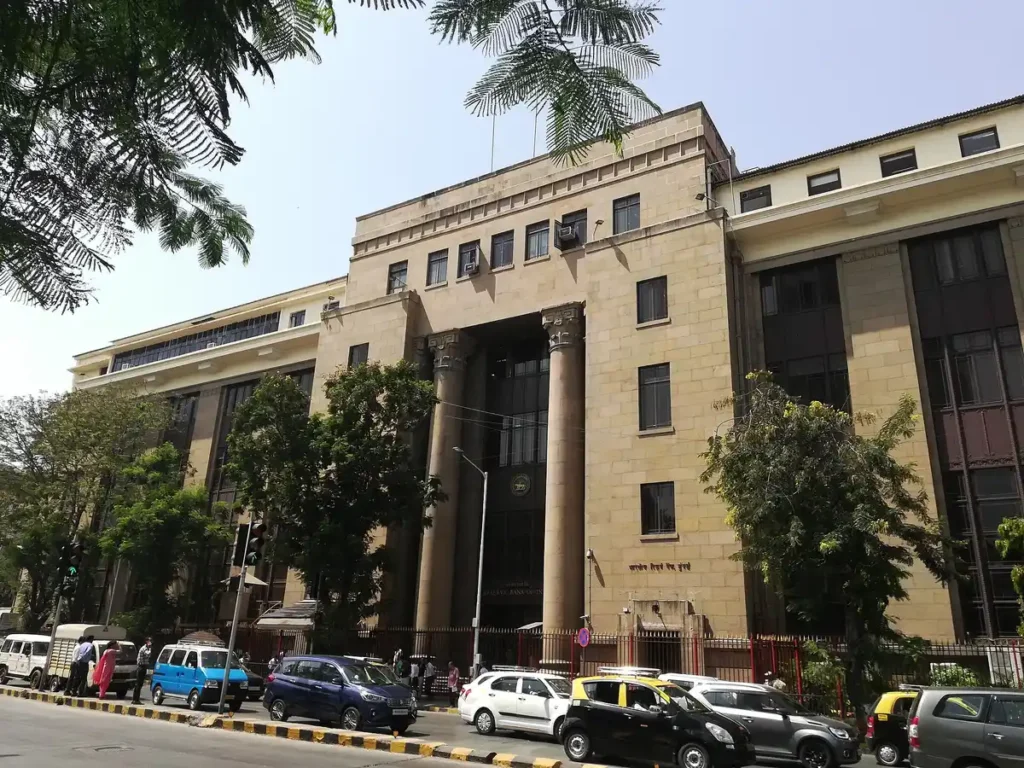
Image: Anurag Vijay 03, Wikimedia Commons, CC BY-SA 4.0
How to use this in Mains
If asked: How autonomous is the RBI? Discuss with reference to Section 7 of the RBI Act. (GS-III)
Quote: “Section 7 of the RBI Act lets the Government give directions to RBI “in the public interest” after consulting the Governor.”
Use it: Open with this provision; it frames the autonomy debate.
In the news
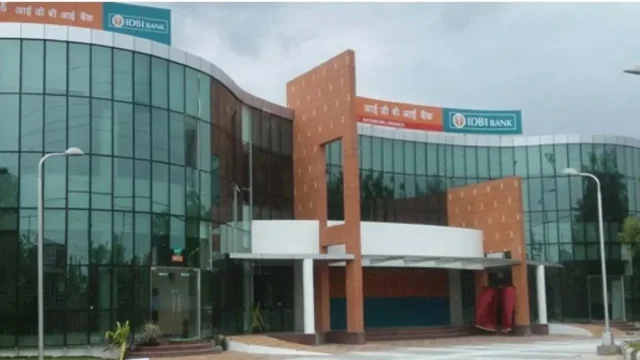
IDBI Bank strategic sale: Fairfax arm wins 60.72% stake for ₹52,878 crore
On 14 October 2026 the Cabinet Committee on Economic Affairs approved 10955230 Canada Inc., a Fairfax Financial Holdings entity, as strategic buyer of 60.72% of IDBI Bank for about Rs. 52,878 crore. The Government sells 30.48% and LIC 30.24%. The winning bid of Rs. 81 a share beat the Rs. 75.99 benchmark.
14 Oct 2026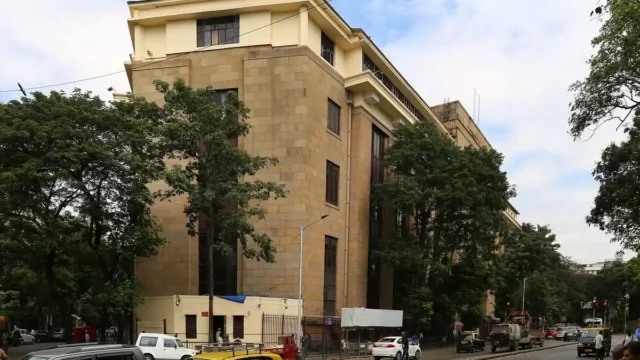
RBI tightens forex derivative rules and opens a dollar window for oil companies
On 10 October 2026 RBI issued two circulars to curb speculation in the rupee: cancelled INR forex derivatives cannot be rebooked, the no-proof hedging limit falls from USD 100 million to USD 5 million, and banks must keep a 20% cash reserve on large dollar-buying hedges. RBI also opened a dollar window for three public sector oil companies.
10 Oct 2026
H2 FY27 borrowing: ₹7.86 lakh crore, including ₹15,000 crore sovereign green bonds
On 25 September 2026 the Government, in consultation with the RBI, said it will borrow ₹7,86,000 crore through dated securities in the second half of 2026-27, using 23 weekly auctions. This includes ₹15,000 crore of Sovereign Green Bonds. Full-year dated borrowing is now put at ₹15,99,506 crore, below the Budget Estimate.
25 Sep 2026
CGTMSE credit-guarantee cover goes live on TReDS for MSE invoice discounting
On 25 September 2026 the MSME Ministry said CGTMSE guarantee cover is now live on TReDS, the RBI-regulated platforms where small firms sell their unpaid invoices. Available on M1xchange, RXIL and DTX (KredX), it covers 75% of the defaulted amount when both buyer and seller are Micro or Small Enterprises.
25 Sep 2026