
Unified Payments Interface (UPI): How It Works, NPCI, Digital Public Infrastructure, Growth, Going Global, Concentration Risk and Fraud (UPSC Notes + PYQs)
UPSC has already asked about this. Read the story with these questions in mind.
- Prelims 2017Which of the following is a most likely consequence of implementing the 'Unified Payments Interface (UPI)' ?Solve it below ↓
- Prelims 2018With reference to digital payments, consider the following statements: BHIM app allows the user to transfer money to anyone with a UPI-enabled bank account.…Solve it below ↓
See all 5 PYQs
- Prelims 2026Which one of the following statements about Unified Payments Interface (UPI) and Central Bank Digital Currency (Digital Rupee) is not correct ?Solve it below ↓
- Prelims 2026Which one of the following best describes the key objective of India's 'Open Network for Digital Commerce' (ONDC) initiative ?Solve it below ↓
- Prelims 2017Consider the following statements: National Payments Corporation of India (NPCI) helps in promoting the financial inclusion in the country. …Solve with answer →
Before UPI
For most of India’s history after independence, paying someone meant cash or a cheque. Cards needed costly machines that small shops would not install. The RBI-backed Payment and Settlement Systems Act, 2007 set up a legal frame for payment systems, and in 2008 the RBI and the Indian Banks’ Association promoted the National Payments Corporation of India as a not-for-profit company owned by banks. NPCI built a chain of shared systems: the National Financial Switch for ATMs, the RuPay card in 2012, IMPS (Immediate Payment Service) in 2010, which allowed instant transfers at any hour, and Aadhaar-enabled payments. UPI, launched as a pilot on 11 April 2016 and opened to the public that August, sat on top of IMPS and made it easy to use.
How a UPI payment works
A user links one or more bank accounts to a UPI app and creates a Virtual Payment Address (such as name@bank) and a PIN. When she scans a shop’s QR code and approves the payment, the app sends the request to NPCI’s UPI switch, which asks her bank to debit her account and the shop’s bank to credit its account. Both happen within seconds, around the clock. Banks then settle the net amounts among themselves through their accounts with the RBI several times a day.
Three design choices explain its success. It is interoperable: any app works with any bank, so a Paytm user can pay a PhonePe user. It is open: banks and fintech firms can build apps on it, while NPCI runs the common rails. And it is free for users: since January 2020 the Government has set the merchant discount rate on UPI and RuPay debit cards at zero, paying banks a small incentive for low-value merchant payments instead.
- 1Payer scans QR or enters VPA
- 2App sends request to NPCI's UPI switch
- 3Payer's bank debits the account
- 4Payee's bank credits the account
- 5Banks settle net amounts through RBI
Growth in numbers
UPI processed under 20 lakh transactions in its first full month. Demonetisation in November 2016, cheap mobile data after 2016 and the push for contactless payments during COVID-19 drove growth. In August 2025 it crossed 20 billion transactions in a month, worth over ₹24 lakh crore. It handles over four-fifths of India’s digital payments by volume, and international studies have put India’s share of the world’s real-time payments at close to half. Over 600 banks are live on UPI, and the typical transaction is small, a sign that it is used for daily purchases at tea stalls and vegetable carts.
Features added over time
| Feature | Year | What it does |
|---|---|---|
| BHIM app | 2016 | NPCI’s own reference app |
| UPI AutoPay | 2020 | Recurring payments such as subscriptions and SIPs |
| UPI 123PAY | 2022 | UPI on feature phones through IVR, missed calls and sound-based payments |
| UPI Lite | 2022 | Small payments without PIN from an on-device wallet |
| RuPay credit cards on UPI | 2023 | Pay with a credit card through UPI |
| Credit lines on UPI | 2023 | Pre-sanctioned bank loans usable through UPI |
| UPI Circle | 2024 | Delegated payments for family members |
UPI as digital public infrastructure
UPI is one layer of what India calls digital public infrastructure (DPI), the “India Stack”: Aadhaar for identity, UPI for payments and DigiLocker and the Account Aggregator system for consent-based data sharing. With Jan Dhan accounts, this JAM trinity lets the Government send benefits directly to bank accounts. Other open networks follow the same idea, such as the Open Network for Digital Commerce (ONDC), which aims to let any buyer app reach any seller, so that a few large platforms do not dominate e-commerce. During its G20 presidency in 2023, India promoted DPI as a model for the Global South, and the G20 adopted a framework on it.
- AadhaarIdentity
- UPIPayments
- DigiLockerDocuments
- Account AggregatorConsent-based data
- ONDCOpen commerce
UPI goes global
NPCI International Payments Ltd (NIPL), set up in 2020, takes UPI abroad. UPI or RuPay-based payments now work in Bhutan, Nepal, Sri Lanka, Mauritius, the UAE, Singapore, France and several other countries. The link between UPI and Singapore’s PayNow (February 2023) was the first to allow real-time cross-border remittances between two fast-payment systems. NIPL also helps countries such as Namibia and Peru build their own UPI-like systems. These links cut the cost of remittances, of which India is the world’s largest recipient, and extend India’s soft power.
Issues
- Concentration: two apps, PhonePe and Google Pay, both foreign-owned or backed, handle over 80% of transactions. NPCI proposed a 30% cap on any app’s share, but the deadline has been extended to the end of 2026.
- Who pays for the rails? With zero MDR, banks and apps earn little from UPI; the Government’s incentive scheme is small. Payment firms argue this is unsustainable for building fraud controls and reaching rural areas.
- Fraud: scams through fake collect requests, screen-sharing apps and “digital arrest” calls have grown. The RBI and NPCI use AI-based risk scores, device binding and limits on new users.
- Outages: a few disruptions in 2025 showed how much the economy now depends on one system.
- Digital divide: older people, women in rural areas and those without smartphones use it less.
UPI and the digital rupee
The RBI’s Central Bank Digital Currency, the e-rupee, began pilots in 2022. It is different from UPI. UPI moves money between bank accounts; the e-rupee is itself money, a digital form of currency issued by the RBI and held in a wallet. The two now work together: users can pay with the e-rupee by scanning UPI QR codes. Prelims 2026 tested this difference.
- Payment system
- Moves money between bank accounts
- Run by NPCI
- Appears in bank statements
- Money itself, issued by RBI
- Held in a digital wallet
- Liability of the RBI
- Wallet-to-wallet transfer
Way forward
Bring in more app competition and smaller players, give banks a fair way to recover the costs of running UPI safely, keep investing in fraud detection and consumer grievance redress, expand credit on UPI carefully to avoid a debt trap, and keep building international links so that UPI becomes a common rail for remittances.
PYQ trend
Prelims asked about UPI in 2017, BHIM and digital payments in 2018, and UPI versus the digital rupee and ONDC in 2026. Mains GS-III asks about digital payments, financial inclusion and DPI.
UPI: UPSC angle
For UPSC CSE
Prelims: NPCI, features, CBDC, ONDC. Mains GS-III: digital payments, financial inclusion, DPI and its global role.
UPI UPSC PYQs (Prelims)
Questions UPSC has actually asked, from the official papers. Pick an option to check yourself.
Which of the following is a most likely consequence of implementing the 'Unified Payments Interface (UPI)' ?
UPI (2016) moves money straight from one bank account to another through a phone, using a virtual address. There is no need to load money first into a mobile wallet. Subsidies go through DBT on the Aadhaar Payment Bridge, not UPI, and the other options are exaggerated. Answer as per the official UPSC key · Battle IAS PYQ bankAnswer (a) & why
With reference to digital payments, consider the following statements :
– 1. BHIM app allows the user to transfer money to anyone with a UPI-enabled bank account.
– 2. While a chip-pin debit card has four factors of authentication, BHIM app has only two factors of authentication.
Which of the statements given above is/are correct ?
BHIM is NPCI’s UPI app; it can pay anyone whose bank account is on UPI. A chip-and-PIN card uses two factors: something you have (the card) and something you know (the PIN). BHIM uses three: the registered phone and device binding, the UPI PIN, and the bank-linked identity. So statement 2 is wrong. Answer as per the official UPSC key · Battle IAS PYQ bankAnswer (a) & why
Which one of the following statements about Unified Payments Interface (UPI) and Central Bank Digital Currency (Digital Rupee) is not correct ?
UPI only moves bank money from one account to another; the deposit is a liability of the bank. The e-rupee is like a currency note in digital form: it is a direct liability of the RBI, not of a commercial bank. So (d) is wrong. The other three correctly describe how wallet-to-wallet e-rupee payments differ from UPI. Answer as per the official UPSC key · Battle IAS PYQ bankAnswer (d) & why
Which one of the following best describes the key objective of India's 'Open Network for Digital Commerce' (ONDC) initiative ?
ONDC is a DPIIT initiative (2021-22). It is an open set of rules, like UPI for shopping: a buyer on one app can buy from a seller listed on another app. This interoperability lets small sellers reach buyers without joining one giant platform. It does not control, replace or force any payment mode on private players. Answer as per the official UPSC key · Battle IAS PYQ bankAnswer (c) & why
Mains PYQs on this topic
No UPSC Mains question from 2023-2026 is directly on this topic. Older papers (2013-2022) will be added as the Mains bank grows.
Quick quiz
UPI was developed by
The National Payments Corporation of India.Answer (c)
UPI 123PAY is meant for
It brings UPI to feature phones.Answer (b)
Which country’s fast-payment system was the first linked with UPI for real-time remittances?
Singapore’s PayNow, February 2023.Answer (b)
FAQs
Who runs UPI?
NPCI, a not-for-profit company promoted by the RBI and banks, regulated by the RBI.
Is UPI free?
Yes for users. The merchant discount rate on UPI has been zero since January 2020.
What is the difference between UPI and the digital rupee?
UPI is a payment system that moves bank money; the digital rupee is currency issued by the RBI and held in a wallet.
What is the market share cap?
An NPCI rule limiting any single app to 30% of UPI volume; its deadline has been extended to the end of 2026.
Where can UPI be used abroad?
In Bhutan, Nepal, Sri Lanka, Mauritius, the UAE, Singapore, France and some other countries, through NPCI International.
Spotted an error? Tell us. We correct within 48 hours.
How to use this in Mains
If asked: UPI is India's most successful digital public infrastructure, but it faces sustainability challenges. Discuss. (GS-III)
Quote: “Who pays for the rails? With zero MDR, banks and apps earn little from UPI; the Government’s incentive scheme is small.”
Use it: Your key challenge line: who pays for the rails.
In the news
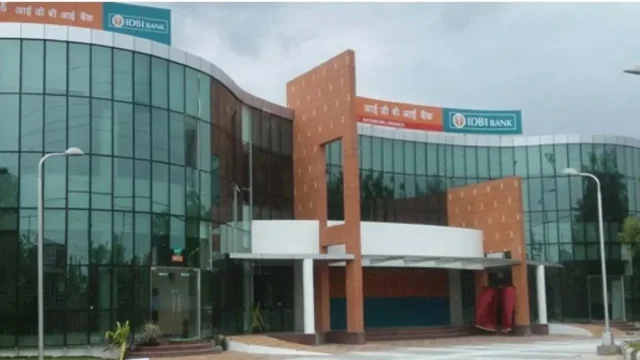
IDBI Bank strategic sale: Fairfax arm wins 60.72% stake for ₹52,878 crore
On 14 October 2026 the Cabinet Committee on Economic Affairs approved 10955230 Canada Inc., a Fairfax Financial Holdings entity, as strategic buyer of 60.72% of IDBI Bank for about Rs. 52,878 crore. The Government sells 30.48% and LIC 30.24%. The winning bid of Rs. 81 a share beat the Rs. 75.99 benchmark.
14 Oct 2026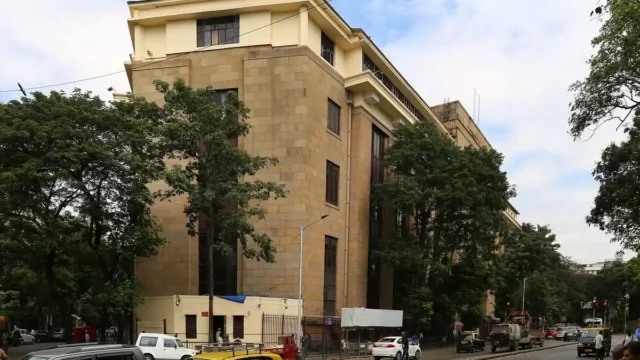
RBI tightens forex derivative rules and opens a dollar window for oil companies
On 10 October 2026 RBI issued two circulars to curb speculation in the rupee: cancelled INR forex derivatives cannot be rebooked, the no-proof hedging limit falls from USD 100 million to USD 5 million, and banks must keep a 20% cash reserve on large dollar-buying hedges. RBI also opened a dollar window for three public sector oil companies.
10 Oct 2026
H2 FY27 borrowing: ₹7.86 lakh crore, including ₹15,000 crore sovereign green bonds
On 25 September 2026 the Government, in consultation with the RBI, said it will borrow ₹7,86,000 crore through dated securities in the second half of 2026-27, using 23 weekly auctions. This includes ₹15,000 crore of Sovereign Green Bonds. Full-year dated borrowing is now put at ₹15,99,506 crore, below the Budget Estimate.
25 Sep 2026
CGTMSE credit-guarantee cover goes live on TReDS for MSE invoice discounting
On 25 September 2026 the MSME Ministry said CGTMSE guarantee cover is now live on TReDS, the RBI-regulated platforms where small firms sell their unpaid invoices. Available on M1xchange, RXIL and DTX (KredX), it covers 75% of the defaulted amount when both buyer and seller are Micro or Small Enterprises.
25 Sep 2026