
India to put €7 million into Italy’s Elettra research centre
India will put more than €7 million (about ₹73 crore) over five years from 2026-27 into the Elettra 2.0 programme in Trieste, Italy. Union Science Minister Jitendra Singh announced it during a visit on 13 November. Elettra is a synchrotron, a machine that speeds up electrons to nearly the speed of light to make very bright light for studying matter. Two older beamlines built with Indian money will be replaced by two new ones: one for studying protein crystals and one for materials under high pressure. Indian scientists have used Elettra since 1998. India is its second-largest user after Italy, with about 1,100 experiment proposals. Read it to revise what a synchrotron does, Indus-2 at Indore, and India’s big-science partnerships.
- Investment
- More than €7 million (about ₹73 crore) over five years from 2026-27
- Where
- Elettra 2.0 synchrotron, Trieste, Italy
- New beamlines
- One for protein crystals; one for materials under high pressure
- India’s use
- A user since 1998; second-largest after Italy; about 1,100 experiment proposals
What has India committed to at Elettra, and why?
A machine that makes light brighter than a hospital X-ray is not a luxury for a large country. It is how proteins, new materials and industrial samples are seen at the scale that matters.
- India will put more than €7 million (about ₹73 crore) over five years from 2026-27 into the Elettra 2.0 programme in Trieste, Italy. Union Science Minister Jitendra Singh announced it during a visit on 13 November.
- Elettra is a synchrotron, a machine that speeds up electrons to nearly the speed of light to make very bright light for studying matter.
- Two older beamlines built with Indian money will be replaced by two new ones: one for studying protein crystals and one for materials under high pressure.
- Indian scientists have used Elettra since 1998. India is its second-largest user after Italy, with about 1,100 experiment proposals.
What is a synchrotron, and what does India already have?
A synchrotron is a ring-shaped particle accelerator. Electrons are sped up to nearly the speed of light. As they bend around the ring they give off very bright light, from infrared to X-rays. That light is channelled down beamlines to instruments that can look at the structure of a protein, a battery material or a sample under high pressure.
India already has a synchrotron of its own: Indus-2, at the Raja Ramanna Centre for Advanced Technology in Indore. Using Elettra as well is not a substitute for Indus-2. It gives Indian groups access to beamlines and methods that complement what is available at home, and to a user community they have worked with since 1998.
The two new beamlines — protein crystals, and materials under high pressure — match two busy fields: structural biology (including drug design) and the study of matter in extreme conditions, which matters for geology, energy materials and manufacturing.
The commitment also sits in a wider pattern of big-science partnerships. India is an associate member of the European Organization for Nuclear Research (CERN) in Geneva. Paying into a facility abroad, and sending users there, is how a country stays inside experiments that no single laboratory can fund alone.
Elettra and India’s own facility
| Point | Elettra, Trieste | Indus-2, Indore |
|---|---|---|
| What it is | A synchrotron (Elettra 2.0 upgrade) | India’s synchrotron at the Raja Ramanna Centre for Advanced Technology |
| India’s role | User since 1998; second-largest after Italy; about 1,100 proposals | National facility, used by Indian groups at home |
| New Indian money | More than €7 million over five years from 2026-27, for two new beamlines | Separate national funding, not this announcement |
| New beamlines | Protein crystals; materials under high pressure | — |
Which partnerships and institutions matter?
- The Elettra 2.0 programme in Trieste is an international user facility; India’s contribution is for two new beamlines, replacing older ones built with Indian money.
- Indus-2 at the Raja Ramanna Centre for Advanced Technology, Indore, is India’s own synchrotron.
- India is an associate member of the European Organization for Nuclear Research (CERN).
- Union Science Ministry announcements of this kind are executive commitments, implemented through laboratory-to-laboratory agreements.
Why does the Elettra investment matter?
| Angle | What to note |
|---|---|
| Science and technology | A synchrotron is a classic prelims object: what it does, where Indus-2 is, and why beamlines matter. |
| International relations | A five-year payment into an Italian facility is a science partnership, not a one-off visit. |
| Health and industry | Protein crystals and high-pressure materials are of use in drug design and in advanced manufacturing. |
| Prelims | Synchrotron; Elettra in Trieste; Indus-2 at Indore; user since 1998; associate membership of CERN; €7 million from 2026-27. |
What are the problems with the Elettra investment?
- €7 million over five years is modest by the standards of big science; it will only matter if the two beamlines are built on time and stay open to Indian users.
- Access at a foreign facility depends on travel, visas and allocation of experiment time, which can squeeze younger groups.
- India still needs to keep investing in Indus-2 and in domestic beamlines, so that Elettra remains a complement, not a crutch.
- A visit-and-announce model can fade unless a public report later shows how many Indian experiments actually ran on the new lines.
What should be done next on the Elettra investment?
- Write a clear access rule so that universities and younger groups, not only large laboratories, can use the new beamlines.
- Pair the foreign beamlines with training at Indus-2, so that skills come home.
- Publish a yearly count of Indian experiment-days at Elettra, against the 1,100-proposal history.
- Keep the CERN associate membership and other big-science partnerships under the same strategic umbrella, not as separate souvenirs.
What can Prelims ask on the Elettra investment?
Prelims probability: Medium. No direct past question, but science facilities abroad are asked often. Testable facts: what a synchrotron does, Indus-2 at Indore, India as associate member of the European nuclear research body.
- A synchrotron speeds up electrons to nearly the speed of light to make very bright light for studying matter.
- Elettra is in Trieste, Italy; India will put more than €7 million (about ₹73 crore) into Elettra 2.0 over five years from 2026-27.
- Two new beamlines: protein crystals, and materials under high pressure.
- Indian scientists have used Elettra since 1998; India is the second-largest user after Italy, with about 1,100 experiment proposals.
- Indus-2 at Indore is India’s own synchrotron. India is an associate member of CERN.
How to write about the Elettra investment in Mains
Practice question (15 marks, 250 words): India has committed more than €7 million to the Elettra synchrotron in Italy. Explain what a synchrotron is and discuss the value of such international science partnerships for India.
- Open with the 13 November announcement: more than €7 million over five years from 2026-27, and the two new beamlines.
- Explain a synchrotron in one or two plain sentences, and name Indus-2 at Indore as India’s own facility.
- Note the long relationship: users since 1998, second-largest after Italy, about 1,100 experiment proposals.
- Link protein-crystal and high-pressure beamlines to biology and materials research.
- Place the commitment beside associate membership of CERN, and close with the need to keep domestic facilities strong as well.
Ready lines for your answer
- A beamline abroad is useful only if Indian users can book time on it.
- Indus-2 at home and Elettra abroad are complements, not rivals.
Quotable data pointAnnounced 13 Nov 2026: more than €7 million (about ₹73 crore) over five years from 2026-27 into Elettra 2.0, Trieste; two new beamlines (protein crystals; high-pressure materials); user since 1998; second-largest after Italy; about 1,100 proposals; Indus-2 at Indore.
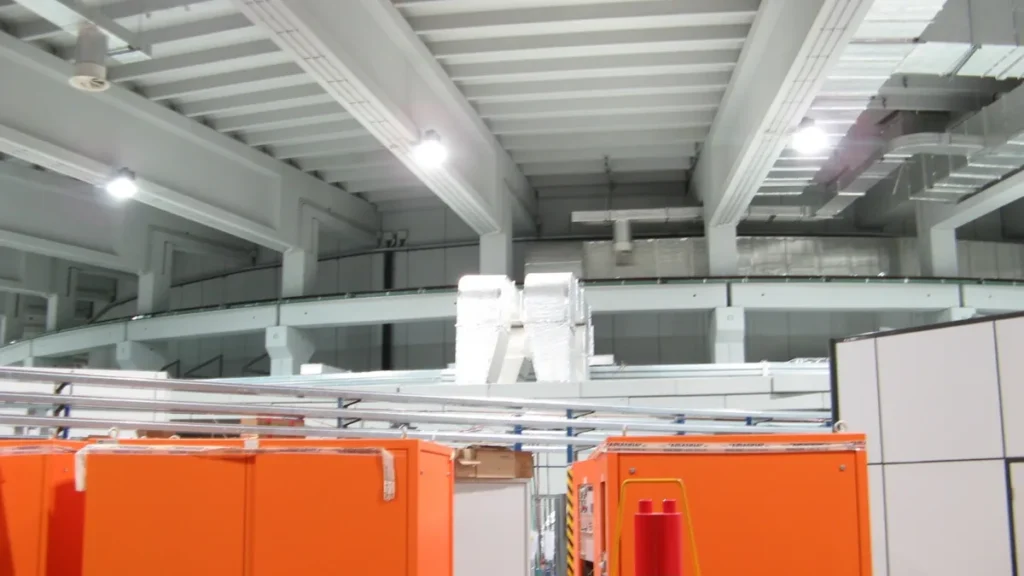
Photo: Betta27, Public domain, via Wikimedia Commons
Exam angle
Prelims: what a synchrotron does, Indus-2 at Indore, India as associate member of CERN. · Mains GS-III: science collaboration and research infrastructure.
Practice MCQs
Original practice questions (not PYQs).
Elettra in Trieste, Italy, in which India has committed over €7 million, is a
Answer (a) & explanation
Elettra is a synchrotron: electrons are accelerated to nearly the speed of light, giving very bright light used to study the structure of matter.
Questions students ask about this
How much will India put into Elettra, and for how long?
More than €7 million, about ₹73 crore, over five years from 2026-27.
What is a synchrotron?
A machine that speeds up electrons to nearly the speed of light to make very bright light, which is used to study the structure of matter.
What will the two new beamlines do?
One will be used to study protein crystals, and the other to study materials under high pressure.
How long have Indian scientists used Elettra?
Since 1998. India is the second-largest user after Italy, with about 1,100 experiment proposals.
What is Indus-2?
India’s own synchrotron, at the Raja Ramanna Centre for Advanced Technology in Indore.