
India–Nepal train to link Janakpur Dham and Ayodhya
Indian Railways has approved a new weekly train between Janakpur Dham in Nepal and Ayodhya in Uttar Pradesh. Janakpur is revered as the birthplace of Sita, and Ayodhya as the birthplace of Ram. The train will cover about 604 km up to Ayodhya Cantonment. It will stop at Jaynagar, Madhubani, Sitamarhi, Raxaul, Narkatiaganj, Gorakhpur, Basti, Mankapur and Ayodhya Dham. It will leave Janakpur on Saturdays and Ayodhya Cantonment on Mondays. The government says it will help pilgrims, tourists, students and traders, and bring border communities closer. Both countries discussed this rail link in June. Read it to revise India–Nepal ties, the 1950 treaty and cross-border rail.
- Route
- Janakpur Dham (Nepal) to Ayodhya Cantonment, about 604 km
- Frequency
- Weekly: leaves Janakpur on Saturdays and Ayodhya Cantonment on Mondays
- Stops
- Jaynagar, Madhubani, Sitamarhi, Raxaul, Narkatiaganj, Gorakhpur, Basti, Mankapur and Ayodhya Dham
- Discussed
- The rail link was discussed by both countries in June
What has been approved on the Janakpur–Ayodhya rail link?
Two towns linked in an epic are now to be linked by a weekly train — a 604-kilometre journey that is as much about pilgrims as it is about a border that people already cross every day.
- Indian Railways has approved a new weekly train between Janakpur Dham in Nepal and Ayodhya in Uttar Pradesh. Janakpur is revered as the birthplace of Sita, and Ayodhya as the birthplace of Ram.
- The train will cover about 604 km up to Ayodhya Cantonment. It will stop at Jaynagar, Madhubani, Sitamarhi, Raxaul, Narkatiaganj, Gorakhpur, Basti, Mankapur and Ayodhya Dham.
- It will leave Janakpur on Saturdays and Ayodhya Cantonment on Mondays.
- The government says it will help pilgrims, tourists, students and traders, and bring border communities closer. Both countries discussed this rail link in June.
How do India and Nepal already connect by rail, and why do these two towns matter?
India and Nepal share an open border under the Treaty of Peace and Friendship, 1950. Nationals of each country may live and work in the other. Rail and road links are the everyday face of that arrangement, not only a diplomatic talking point.
A cross-border rail line already runs from Jaynagar in Bihar to Kurtha and onward towards Janakpur. Extending a passenger service through to Ayodhya builds on that line rather than inventing a new corridor from scratch.
Janakpur is in Nepal’s south, and is revered as Sita’s birthplace. Ayodhya is revered as Ram’s birthplace. Together they sit on what is often called the Ramayana Circuit — a pilgrimage and tourism map that now also has a railway timetable.
The stops tell a geography lesson: Jaynagar, Madhubani, Sitamarhi, Raxaul and Narkatiaganj lie on the Bihar–Nepal belt; Gorakhpur, Basti, Mankapur and Ayodhya Dham take the train into eastern Uttar Pradesh, ending at Ayodhya Cantonment.
The weekly service at a glance
| Point | Detail |
|---|---|
| Ends | Janakpur Dham (Nepal) and Ayodhya Cantonment (Uttar Pradesh) |
| Distance | About 604 km |
| Days | Leaves Janakpur on Saturdays; leaves Ayodhya Cantonment on Mondays |
| Bihar-belt stops | Jaynagar, Madhubani, Sitamarhi, Raxaul, Narkatiaganj |
| Uttar Pradesh stops | Gorakhpur, Basti, Mankapur, Ayodhya Dham (terminus: Ayodhya Cantonment) |
Which treaties, lines and policies apply?
- Treaty of Peace and Friendship, 1950, between India and Nepal: open border and reciprocal rights to live and work.
- Indian Railways’ approval of a weekly international passenger service on an existing cross-border corridor.
- The Jaynagar–Kurtha line, the present cross-border rail link towards Janakpur.
- The Ramayana Circuit as a pilgrimage and tourism framework linking Janakpur and Ayodhya.
Why does the Janakpur–Ayodhya train matter?
| Angle | What to note |
|---|---|
| International relations | A weekly train is a visible, people-to-people step in India–Nepal ties, after talks in June. |
| Culture | Janakpur and Ayodhya are paired in the Ramayana; the train turns that pairing into a timetable. |
| Infrastructure | Cross-border rail, built on the Jaynagar–Kurtha line, is as much about trade and students as about pilgrims. |
| Prelims | 1950 treaty; Janakpur as Sita’s birthplace; Jaynagar–Kurtha line; 604 km; Saturday/Monday weekly service; named stops. |
What are the problems with the Janakpur–Ayodhya train?
- A weekly service may be too thin if demand from pilgrims and traders is daily, especially in the peak season.
- An international train needs smooth immigration, customs and a reliable slot; a delay at the border can wipe out the gain.
- Towns on the route will benefit only if station facilities and local road links are ready, not only if the train is announced.
- India–Nepal ties have had political ups and downs; a train cannot by itself settle those, though it can keep people moving.
What should be done next on the Janakpur–Ayodhya train?
- Publish a clear timetable, fare and document checklist for passengers crossing the border on this service.
- Match the weekly frequency to demand, and be ready to add a second service in the pilgrimage season if needed.
- Upgrade stations on the route, especially the border and terminus stations, for pilgrims, students and goods.
- Keep the June understanding on the table as a regular item in bilateral talks, so that operations do not stall.
What can Prelims ask on the Janakpur–Ayodhya train?
Prelims probability: Medium. Nepal links were asked in 2016 and 2026 (border bridges). Testable facts: the 1950 treaty, Janakpur as Sita’s birthplace, the Jaynagar–Kurtha line, towns on the route.
- Treaty of Peace and Friendship, 1950, between India and Nepal.
- Janakpur is revered as Sita’s birthplace; Ayodhya as Ram’s birthplace.
- The train covers about 604 km to Ayodhya Cantonment, weekly: Saturdays from Janakpur, Mondays from Ayodhya Cantonment.
- Stops include Jaynagar, Madhubani, Sitamarhi, Raxaul, Narkatiaganj, Gorakhpur, Basti, Mankapur and Ayodhya Dham.
- The Jaynagar–Kurtha line is the existing cross-border rail link towards Janakpur.
How to write about the Janakpur–Ayodhya train in Mains
Practice question (15 marks, 250 words): A weekly train is to link Janakpur Dham in Nepal with Ayodhya. Discuss the significance of this service for India–Nepal relations and for cultural tourism.
- Open with the approval, the 604 km route to Ayodhya Cantonment, and the Saturday/Monday weekly pattern.
- Recall the 1950 Treaty of Peace and Friendship and the already running Jaynagar–Kurtha cross-border line.
- Explain why Janakpur and Ayodhya are paired on the Ramayana Circuit, and list the main stops through Bihar and eastern Uttar Pradesh.
- Note the intended users: pilgrims, tourists, students and traders, and the June talks that preceded the approval.
- Close with the operational tests: border formalities, frequency, and stations that can actually handle the traffic.
Ready lines for your answer
- A border is easier to see from a railway ticket than from a treaty text.
- Janakpur and Ayodhya were already linked in story; the train has to work in timetable.
Quotable data pointWeekly Janakpur Dham–Ayodhya Cantonment service, about 604 km; Saturdays from Janakpur, Mondays from Ayodhya Cantonment; stops at Jaynagar, Madhubani, Sitamarhi, Raxaul, Narkatiaganj, Gorakhpur, Basti, Mankapur and Ayodhya Dham; discussed in June.
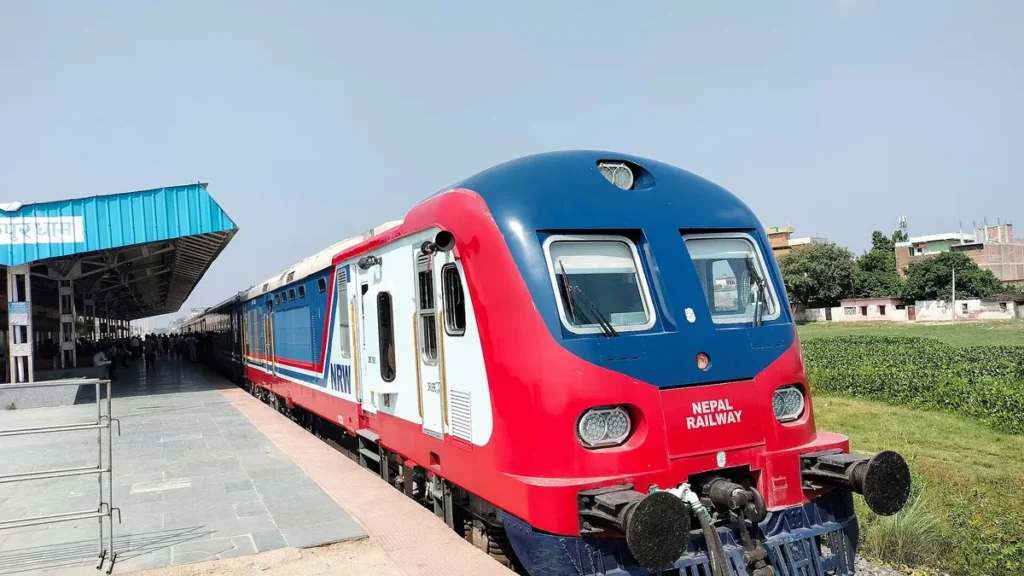
Photo: Suyash.dwivedi, CC BY-SA 4.0, via Wikimedia Commons
Exam angle
Prelims: 1950 treaty, Janakpur as Sita’s birthplace, Jaynagar–Kurtha line, towns on the route. · Mains GS-II: India and its neighbourhood.
Practice MCQs
Original practice questions (not PYQs).
Janakpur Dham in Nepal, now linked to Ayodhya by a new weekly train, is revered as the birthplace of whom?
Answer (a) & explanation
Janakpur Dham is revered as the birthplace of Sita; Ayodhya as the birthplace of Ram.
Consider the following statements:
1. The India–Nepal Treaty of Peace and Friendship was signed in 1950.
2. Uttar Pradesh shares a border with Nepal.
3. The Jaynagar–Kurtha rail line connects Bihar with the Janakpur area of Nepal.
How many of the above statements are correct?
Answer (c) & explanation
All three are correct. Five Indian States border Nepal, including Uttar Pradesh; the Jaynagar–Kurtha line resumed passenger service in 2022.
Questions students ask about this
Which two towns will the new train link?
Janakpur Dham in Nepal and Ayodhya in Uttar Pradesh, with the Indian terminus at Ayodhya Cantonment.
How long is the route, and how often will the train run?
About 604 km, once a week. It will leave Janakpur on Saturdays and Ayodhya Cantonment on Mondays.
Where will it stop?
At Jaynagar, Madhubani, Sitamarhi, Raxaul, Narkatiaganj, Gorakhpur, Basti, Mankapur and Ayodhya Dham.
Why do these two towns matter in cultural terms?
Janakpur is revered as the birthplace of Sita, and Ayodhya as the birthplace of Ram. They sit on the Ramayana Circuit.
What is the 1950 treaty?
The Treaty of Peace and Friendship between India and Nepal, which provides for an open border and reciprocal rights to live and work.