
Uttar Pradesh extends panchayat administrators’ term
The five-year term of Uttar Pradesh’s gram panchayats ended on 26 May. A day earlier, the State made the outgoing village heads administrators to run routine work. Their term as administrators ends on 26 November. On Wednesday, the State Cabinet under Chief Minister Yogi Adityanath approved an ordinance to extend it by six months. The extension is for six months, or until a special commission submits its report. This commission was set up on 18 May to study the backwardness of Other Backward Classes. Its data will decide their seat reservation in the three-tier panchayats. The State said the Legislature is not in session. So the ordinance is being issued under Article 213 of the Constitution. It amends Section 12 of the Uttar Pradesh Panchayati Raj Act, 1947 — specifically sub-section (3-A). On 14 October, the Allahabad High Court had ordered panchayat elections within three months. It said polls should follow the existing reservation, including 27% for Other Backward Classes, and that the time allowed for elections does not itself extend an administrator’s tenure beyond what the law permits. Nearly 12.58 crore voters are expected to take part. Read it to revise the 73rd Amendment, Articles 243E and 243K, ordinances and the triple test.
- The term
- Gram panchayats’ five-year term ended on 26 May; outgoing village heads were made administrators the day before; that arrangement ends on 26 November
- The ordinance
- The Cabinet has approved the Uttar Pradesh Panchayati Raj (Amendment) Ordinance, 2026, under Article 213, to extend the administrators’ term by six months or until the commission reports
- The commission
- The Uttar Pradesh State Dedicated Backward Classes Commission for Local Rural Bodies was set up on 18 May to study backwardness for reservation in the three-tier panchayats
- The court
- On 14 October the Allahabad High Court ordered elections within three months under the existing reservation, including 27% for Other Backward Classes
What has the Uttar Pradesh Cabinet approved, and why now?
Village councils are meant to have a fixed term and a timely election. In Uttar Pradesh, the elected term ended in May, administrators were put in, and the Cabinet has now reached for an ordinance to keep them on for six more months.
- The five-year term of Uttar Pradesh’s gram panchayats ended on 26 May. A day earlier, the State made the outgoing village heads administrators to run routine work. Their term as administrators ends on 26 November.
- On Wednesday, the State Cabinet under Chief Minister Yogi Adityanath approved an ordinance to extend that term by six months, or until a special commission submits its report. The State said the Legislature is not in session, so the ordinance is being issued under Article 213. It amends sub-section (3-A) of Section 12 of the Uttar Pradesh Panchayati Raj Act, 1947.
- The Uttar Pradesh State Dedicated Backward Classes Commission for Local Rural Bodies was set up on 18 May to study, with updated data, the nature and impact of backwardness for the representation of Other Backward Classes in the three-tier panchayats. It has not yet submitted its report.
- On 14 October, a division bench of the Allahabad High Court ordered the State and the State Election Commission to complete panchayat elections within three months, under the existing reservation, including 27% for Other Backward Classes. It also said the time allowed for elections does not extend an administrator’s tenure beyond the period permitted by law. Nearly 12.58 crore voters are expected to take part. In 2021, elections were held for 58,189 gram panchayats, 826 kshetra panchayats and 75 zila panchayats.
What do the 73rd Amendment and the rules on ordinances require?
The 73rd Amendment gave constitutional status to panchayats. Article 243E fixes a five-year term and requires an election before that term ends; if a panchayat is dissolved, a new body must be elected within six months. Article 243K vests the conduct of panchayat elections in the State Election Commission. Long rule by administrators sits uneasily with that design.
Article 213 allows a Governor to issue an ordinance when the State Legislature is not in session and immediate action is needed. An ordinance has the force of law, but it must later be laid before the Legislature. The Cabinet’s own note relies on this article, and on an amendment of Section 12(3-A) of the 1947 Act.
Reservation for Other Backward Classes in local bodies is governed by the Supreme Court’s triple test: a dedicated commission, reservation based on that commission’s data, and a total reservation cap, commonly applied as 50%. The State says the May commission is still at work. The High Court, however, said elections should go ahead under the existing reservation, including 27% for Other Backward Classes, and that pending inquiry is not a reason to treat those seats as open.
The court also drew a hard line on tenure: the time given to complete elections does not, by itself, stretch an administrator’s posting beyond what the statute allows. That is why the Cabinet is amending the statute by ordinance, rather than treating the court deadline as an automatic extension.
The panchayat timeline in Uttar Pradesh
| Date or fact | What happened |
|---|---|
| 18 May 2026 | Dedicated Backward Classes Commission for Local Rural Bodies set up |
| 25–26 May 2026 | Outgoing gram pradhans made administrators; elected term ended on 26 May |
| 14 October 2026 | Allahabad High Court ordered elections in three months under existing reservation, including 27% for Other Backward Classes |
| 26 November 2026 | Administrators’ present term ends |
| Cabinet decision, 18 November 2026 | Ordinance to extend the term by six months, or until the commission reports, under Article 213 |
Which Articles, the State Act and court directions apply?
- Article 243E fixes a five-year term for panchayats and requires timely elections; Article 243K gives the State Election Commission charge of those elections.
- Article 213 allows a State ordinance when the Legislature is not in session and immediate action is needed.
- The ordinance would amend sub-section (3-A) of Section 12 of the Uttar Pradesh Panchayati Raj Act, 1947.
- The Allahabad High Court’s 14 October order requires elections within three months under the existing reservation, including 27% for Other Backward Classes, and says that deadline does not itself extend an administrator’s legal tenure.
Why does the ordinance extending panchayat administrators’ term in Uttar Pradesh matter?
| Angle | What to note |
|---|---|
| Prelims | Articles 243E, 243K and 213; a six-month extension; 27% Other Backward Classes reservation; the 14 October High Court order. |
| Local government | The elected term ended on 26 May; administrators were appointed the day before; that arrangement ends on 26 November unless the law is changed. |
| Reservation | A dedicated commission was set up on 18 May; the triple test requires data, but the High Court said polls should not wait by converting reserved seats into open ones. |
| Constitutional process | An ordinance under Article 213 is being used because the Legislature is not in session. |
What are the problems with the ordinance extending panchayat administrators’ term in Uttar Pradesh?
- Repeated extensions of administrators weaken the 73rd Amendment’s promise of elected local government.
- An ordinance can fill a gap only for a time; it still has to go to the Legislature, and it does not itself complete the election.
- If the commission’s report is slow, a six-month window can close again without a poll or a lawful new quota.
- The High Court’s line — that an election timetable does not stretch an administrator’s tenure — will remain in tension with any further delay.
What should be done next on the ordinance extending panchayat administrators’ term in Uttar Pradesh?
- The State should fix a firm timetable for the commission and for the State Election Commission, rather than rely on another extension later.
- Elections under the existing reservation, as the High Court directed, would restore elected bodies while the data work continues.
- Keep the testable facts straight: Articles 243E, 243K and 213, the 26 May and 26 November dates, and 27% reservation for Other Backward Classes.
- Readers should be able to tell an ordinance under Article 213 from a court-ordered election schedule.
What can Prelims ask on the ordinance extending panchayat administrators’ term in Uttar Pradesh?
Prelims probability: High. Panchayat provisions are a Prelims favourite: the 73rd Amendment in 2011 and ordinances in 2025. This the State story ties both together. Testable facts: Article 243E, Article 243K, Article 213, the triple test.
- Uttar Pradesh’s gram panchayat term ended on 26 May 2026; outgoing village heads were made administrators the day before, and that term ends on 26 November.
- The Cabinet has approved an ordinance under Article 213 to extend the administrators’ term by six months, or until the dedicated commission reports, by amending Section 12(3-A) of the Uttar Pradesh Panchayati Raj Act, 1947.
- The Uttar Pradesh State Dedicated Backward Classes Commission for Local Rural Bodies was set up on 18 May and has not yet reported.
- On 14 October the Allahabad High Court ordered elections within three months under the existing reservation, including 27% for Other Backward Classes.
- Article 243E fixes the term and requires timely elections; Article 243K gives the State Election Commission charge of panchayat polls; the triple test governs Other Backward Classes reservation in local bodies.
How to write about the ordinance extending panchayat administrators’ term in Uttar Pradesh in Mains
Practice question (15 marks, 250 words): Uttar Pradesh has extended the term of panchayat administrators through an ordinance while a dedicated commission studies backwardness for reservation. Examine the constitutional mandate for timely panchayat elections and discuss how it can be balanced with fair reservation for Other Backward Classes.
- Open with the dates: term ended 26 May, administrators till 26 November, and a Cabinet ordinance for six more months or until the commission reports.
- State the constitutional rules: Article 243E on the term and timely elections, Article 243K on the State Election Commission, and Article 213 on ordinances.
- Explain the 18 May commission and the Supreme Court’s triple test, beside the High Court’s 14 October order to hold polls under the existing 27% reservation.
- Note that the court said an election timetable does not itself extend an administrator’s tenure beyond the law.
- Close with the need for a firm deadline, so that reservation data and elected local government are not traded off indefinitely.
Ready lines for your answer
- A panchayat without an election is an administrative arrangement, not local self-government.
- Reservation and a timely poll are both constitutional goals; one should not be used to put the other off without a limit.
Quotable data pointThe Indian Express, Lucknow, 19 November 2026: Cabinet approval of the Uttar Pradesh Panchayati Raj (Amendment) Ordinance, 2026, under Article 213, amending Section 12(3-A); administrators’ term ending 26 November; commission set up on 18 May; Allahabad High Court order of 14 October.
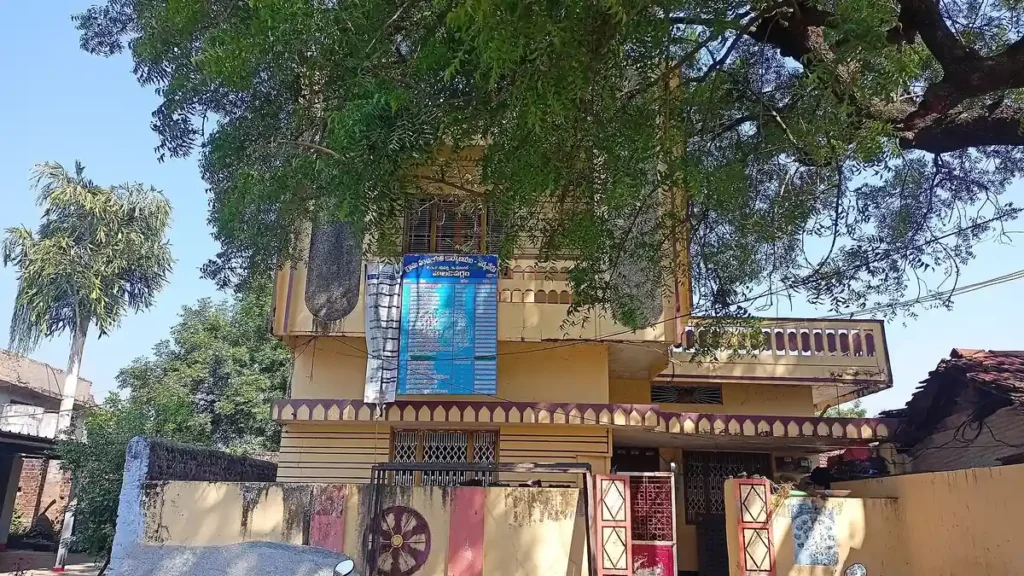
Photo: KINNERA ARAVIND, CC BY-SA 4.0, via Wikimedia Commons
Exam angle
Prelims: Article 243E, Article 243K, Article 213, and the triple test. · Mains GS-II: timely panchayat elections, ordinances, and how reservation for Other Backward Classes should be fixed without emptying local self-government.
Practice MCQs
Original practice questions (not PYQs).
The Uttar Pradesh Cabinet approved the Uttar Pradesh Panchayati Raj (Amendment) Ordinance, 2026 to be promulgated under
Answer (a) & explanation
Article 213 empowers the Governor to promulgate ordinances when the State Legislature is not in session. Article 123 is the President's power.
Consider the following statements:
1. Article 243E gives panchayats a term of six years.
2. Elections to panchayats are conducted by the District Collector.
3. The 73rd Amendment added Part IXA to the Constitution.
How many of the above statements are correct?
Answer (d) & explanation
None is correct. Article 243E fixes a five-year term; panchayat elections are conducted by the State Election Commission under Article 243K; the 73rd Amendment added Part IX (Part IXA was added by the 74th Amendment for municipalities).
Questions students ask about this
What has the Cabinet approved?
An ordinance, under Article 213, to extend the term of gram panchayat administrators by six months, or until the dedicated backward classes commission submits its report.
When did the elected term end, and when do the administrators’ present postings end?
The five-year term ended on 26 May 2026. Outgoing village heads were made administrators the day before. That arrangement ends on 26 November.
Why does the State say an ordinance is needed?
The Legislature is not in session, and the Cabinet says immediate legal provision is needed to keep administrative continuity.
What did the Allahabad High Court say on 14 October?
It ordered the State and the State Election Commission to complete elections within three months, under the existing reservation, including 27% for Other Backward Classes. It also said that timetable does not itself extend an administrator’s tenure beyond the law.
Which constitutional Articles should be revised with this story?
Article 243E on the term and timely elections, Article 243K on the State Election Commission, and Article 213 on State ordinances. The triple test governs Other Backward Classes reservation in local bodies.