
India and Bangladesh begin 91st review of the Ganges water treaty
With the 30-year Ganges Water Sharing Treaty due to expire on 12 December 2026, India and Bangladesh began the 91st routine meeting of their Joint Committee in Dhaka on Sunday, 22 November 2026. The two-day meeting is about how the 1996 treaty is being implemented and how water-sharing is being monitored, not about renewing or extending the pact. The committee also finalised its annual report on implementation for 2026. Bangladesh’s side is led by Md Anwar Kadir of the Joint Rivers Commission; India’s side is led by Sharad Chandra, Commissioner (Flood Management) in the Union Ministry of Jal Shakti and a member of India’s Joint Rivers Commission. The treaty, signed on 12 December 1996, governs sharing of Ganges waters at the Farakka Barrage in West Bengal in the dry season, from 1 January to 31 May, using a formula based on 10-day river flows. When the flow at Farakka is 70,000 cusecs or less, the two countries get equal shares. Between 70,000 and 75,000 cusecs, Bangladesh receives 35,000 cusecs and India the rest. Above 75,000 cusecs, India receives 40,000 cusecs and Bangladesh the remaining water. This is the only formal bilateral water-sharing agreement between the two neighbours, who share 54 transboundary rivers. Differences over the Teesta and other common rivers remain unresolved. The previous Joint Committee meeting was in Kolkata on 22 May.
- Meeting
- 91st routine Joint Committee meeting, began in Dhaka on Sunday, 22 November 2026, and is scheduled for two days
- Treaty date
- Signed on 12 December 1996; the 30-year term ends on 12 December 2026
- Mandate
- The committee reviews implementation; renewal or extension is not part of its brief
- Farakka formula
- Equal shares at 70,000 cusecs or less; Bangladesh gets 35,000 cusecs between 70,000 and 75,000; India gets 40,000 cusecs if the flow is above 75,000
What is the Joint Committee doing in Dhaka?
The Ganges treaty turns 30 on 12 December 2026. Officials from India and Bangladesh met in Dhaka to review how it is being carried out. They are not there to decide whether the treaty itself will be renewed.
- India and Bangladesh began the 91st routine meeting of the Joint Committee in Dhaka on Sunday, 22 November 2026. The meeting is scheduled for two days.
- The 30-year Ganges Water Sharing Treaty is due to expire on 12 December 2026. The committee’s work is to review implementation of the 1996 treaty and to monitor water-sharing, not to renew or extend the pact.
- The committee also finalised its annual report on implementation for 2026, according to reports from Dhaka cited by The Tribune.
- The Bangladeshi delegation is led by Md Anwar Kadir, a member of the Joint Rivers Commission. The Indian delegation is led by Sharad Chandra, Commissioner (Flood Management) in the Union Ministry of Jal Shakti and a member of India’s Joint Rivers Commission.
- The previous meeting of the Joint Committee was in Kolkata on 22 May, when the two sides also carried out joint inspections and flow measurements downstream of the Farakka Barrage and along the feeder canal.
What does the 1996 treaty actually share, and what does it leave out?
The treaty was signed on 12 December 1996. It is the only formal bilateral water-sharing agreement between India and Bangladesh, who share 54 transboundary rivers. It covers the Ganges at the Farakka Barrage in West Bengal during the dry season, from 1 January to 31 May, using an agreed formula based on river flows measured over 10-day periods.
The formula is specific. When the flow at Farakka is 70,000 cusecs or less, the two countries receive equal shares. When the flow is between 70,000 and 75,000 cusecs, Bangladesh receives 35,000 cusecs and India gets the remainder. If the flow exceeds 75,000 cusecs, India receives 40,000 cusecs and Bangladesh receives the remaining water.
The Joint Committee is a technical body. It monitors implementation, looks at operational issues and reports data to the two governments. Decisions on renewal or extension rest with the political leadership of the two countries. That is why the approaching expiry date makes this meeting important, even though renewal is not on the agenda in Dhaka.
Differences over the Teesta and other common rivers remain unresolved. Those rivers are not settled by this treaty, and this meeting should not be read as a Teesta negotiation.
How Ganges water is shared at Farakka in the dry season
| Flow at Farakka | How it is shared |
|---|---|
| 70,000 cusecs or less | The two countries receive equal shares |
| Between 70,000 and 75,000 cusecs | Bangladesh receives 35,000 cusecs; India gets the remainder |
| Above 75,000 cusecs | India receives 40,000 cusecs; Bangladesh receives the remaining water |
| Season covered | 1 January to 31 May, in 10-day periods |
Which arrangements and institutions are in play?
- The Ganges Water Sharing Treaty, 1996, signed on 12 December 1996, is a 30-year bilateral agreement between India and Bangladesh.
- Sharing is measured at the Farakka Barrage in West Bengal during the dry season.
- The Joint Committee under the treaty reviews implementation and reports to the two governments. It does not itself decide on renewal.
- Each side is represented through its Joint Rivers Commission. On the Indian side, the Union Ministry of Jal Shakti provides the Commissioner (Flood Management) who led this delegation.
- India and Bangladesh share 54 transboundary rivers. The Ganges treaty is the only formal bilateral water-sharing pact between them.
Why does the 91st Joint Committee meeting on the Ganges treaty matter?
| Angle | What to note |
|---|---|
| Prelims | 91st Joint Committee meeting in Dhaka; treaty signed 12 December 1996 and due to expire on 12 December 2026; Farakka dry-season formula; 54 shared rivers. |
| GS-II: neighbourhood | A technical review can keep the treaty working day to day, but it cannot by itself decide whether the pact is renewed. |
| GS-II: water sharing | The formula is flow-based and time-bound. Teesta and other common rivers remain outside this treaty. |
| State angle | The Ganges matters to the State’s river system, but the sharing point named here is Farakka in West Bengal. |
What are the problems with the 91st Joint Committee meeting on the Ganges treaty?
- The Joint Committee cannot settle renewal. If political talks lag, the treaty’s 30-year term still ends on 12 December 2026.
- A formula based on 10-day flows at one barrage does not, by itself, resolve differences on other shared rivers such as the Teesta.
- Reporting of the annual report and of delegation names comes from the Dhaka meeting as reported on 22 November; later rounds of political talks would be a separate story.
What should be done next on the 91st Joint Committee meeting on the Ganges treaty?
- Keep the testable figures exact: 91st meeting, 12 December 1996, 12 December 2026, 70,000 and 75,000 cusecs, 54 rivers, and the 1 January–31 May window.
- Do not write that the committee is negotiating a new treaty. Its mandate is implementation.
- Watch what the two governments do on renewal; that decision is not in this panel’s brief.
- Revise Farakka, the Joint Rivers Commission and why a single treaty cannot stand in for all 54 shared rivers.
What can Prelims ask on the 91st Joint Committee meeting on the Ganges treaty?
Prelims probability: High. The Farakka formula, the 12 December 1996 treaty and the Joint Committee’s limited mandate are all testable. Remember the 70,000-cusec line, the dry-season window, and that renewal is a political decision, not a technical one.
- The 91st Joint Committee meeting began in Dhaka on 22 November 2026 and is a two-day review of the 1996 treaty’s implementation.
- The Ganges Water Sharing Treaty was signed on 12 December 1996 and is due to expire on 12 December 2026.
- Renewal or extension is not part of the Joint Committee’s mandate.
- At Farakka, the two countries get equal shares when the flow is 70,000 cusecs or less; Bangladesh gets 35,000 cusecs when the flow is between 70,000 and 75,000 cusecs; India gets 40,000 cusecs when the flow is above 75,000 cusecs.
- The dry season covered by the treaty is 1 January to 31 May, measured in 10-day periods.
- India and Bangladesh share 54 transboundary rivers; this is their only formal bilateral water-sharing agreement. The previous committee meeting was in Kolkata on 22 May.
How to write about the 91st Joint Committee meeting on the Ganges treaty in Mains
Practice question (15 marks, 250 words): The 1996 Ganges Water Sharing Treaty is due to expire in December 2026. Discuss the role of the Joint Committee, the Farakka sharing formula, and the limits of a technical review when renewal is a political decision.
- Open with the 91st meeting in Dhaka on 22 November 2026 and the 12 December 2026 expiry.
- Explain the committee’s mandate: implementation, monitoring and an annual report, not renewal.
- Set out the Farakka dry-season formula, including the 70,000- and 75,000-cusec lines and the 10-day periods.
- Note that this is the only formal bilateral water-sharing pact, while 54 rivers are shared and the Teesta remains unresolved.
- Close with the point that political leadership, not the technical committee, will decide on renewal or extension.
Ready lines for your answer
- A technical committee can keep a treaty working; it cannot, by itself, renew it.
- The Farakka formula is flow-based and seasonal; it is not a settlement of every shared river.
Quotable data pointJoint Committee 91st meeting, Dhaka, 22 November 2026; treaty signed 12 December 1996 and due to expire on 12 December 2026; Farakka dry-season formula as reported by The Tribune.
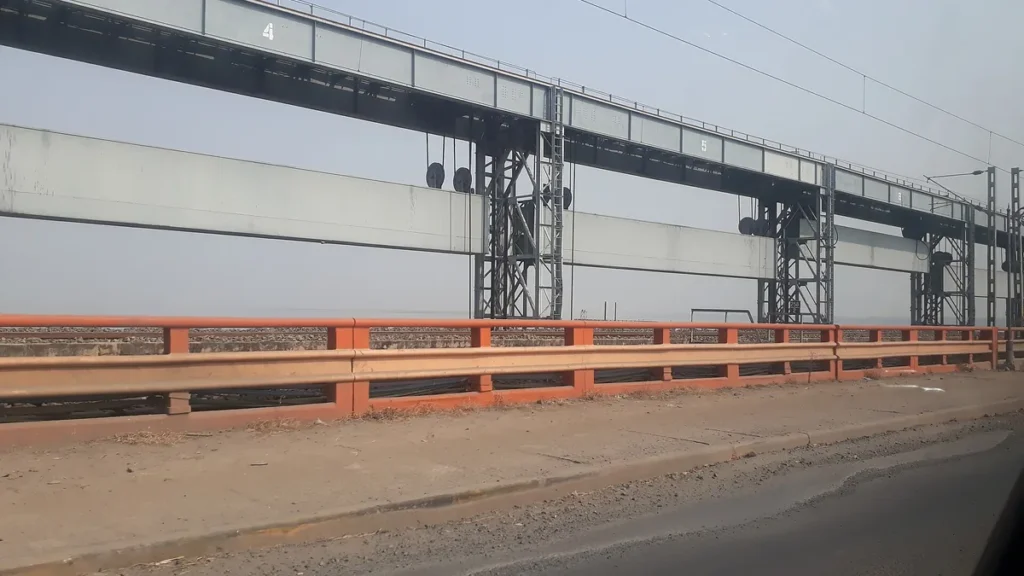
Photo: Pinakpani, CC BY-SA 4.0, via Wikimedia Commons
Exam angle
Prelims: 91st meeting in Dhaka, 12 December 1996 and 2026, the 70,000-cusec line, and 54 shared rivers. · Mains GS-II: transboundary water sharing, the limits of a technical committee, and unfinished talks on the Teesta.
Practice MCQs
Original practice questions (not PYQs).
The 91st meeting of the India–Bangladesh Joint Committee on the Ganges Water Sharing Treaty began on 22 November 2026 in
Answer (c) & explanation
The two-day 91st routine meeting began in Dhaka on Sunday, 22 November 2026. The previous meeting had been in Kolkata on 22 May.
Consider the following statements:
1. The Ganges Water Sharing Treaty was signed on 12 December 1996 and is due to expire on 12 December 2026.
2. When the flow at Farakka is 70,000 cusecs or less, India and Bangladesh receive equal shares.
3. When the flow at Farakka is above 75,000 cusecs, the two countries receive equal shares.
How many of the above statements are correct?
Answer (b) & explanation
Statements 1 and 2 are correct. When the flow is above 75,000 cusecs, India receives 40,000 cusecs and Bangladesh receives the remaining water, not equal shares.
Questions students ask about this
When does the Ganges Water Sharing Treaty expire?
On 12 December 2026. It was signed on 12 December 1996 for a 30-year term.
Is the Dhaka meeting deciding on renewal?
No. The Joint Committee reviews implementation. Renewal or extension is for the political leadership of the two countries.
Where is the water shared?
At the Farakka Barrage in West Bengal, in the dry season from 1 January to 31 May, using 10-day flow periods.
What happens when the flow at Farakka is 70,000 cusecs or less?
The two countries receive equal shares.
How many transboundary rivers do India and Bangladesh share?
54. The Ganges treaty is their only formal bilateral water-sharing agreement.