
UPSC Mains 2026 GS2 Q17: model answer
Can the constitutional mandate of rights-based welfare be effectively realised in the context of non-integrated governance and minimal public investment? Examine.
What the question wants
Show the constitutional mandate (rights-based laws, DPSPs), then examine how fragmented delivery and low public spending limit it; argue that it is possible only with convergence and adequate investment.
How to structure it
Intro: mandate (Part IV, rights-based laws). Body: constraints with evidence; examples where convergence worked; way forward. Conclusion.
- 1Constraints with evidence
- 2Examples where convergence worked
Model answer
The Constitution envisions a welfare state: Part IV directs the State to secure the right to work, education and public assistance (Article 41), health and nutrition (Article 47). Since 2005 India has turned many of these into legal rights: MGNREGA (2005), the RTE Act (2009) and the National Food Security Act (2013).
- 1DPSP aspiration (Arts. 41-47)
- 2Court reads into Art. 21
- 3Statute: MGNREGA, RTE, NFSA
- 4Delivery via DBT and JAM
- 5Gaps: exclusion errors, delays in wages
Constraints
1. Non-integrated governance
- Silos: nutrition depends on ICDS, health, water and sanitation, run by different ministries with separate budgets and data.
- Centre–State–local overlap: centrally sponsored schemes with rigid norms, and local bodies with few funds or staff (weak 'funds, functions, functionaries' devolution).
- Fragmented databases lead to exclusion errors when Aadhaar authentication or seeding fails.
2. Minimal public investment
- Public health spending is about 1.9% of GDP (Economic Survey 2024-25), against the National Health Policy 2017 target of 2.5%.
- Education spending remains below the 6% of GDP target of the NEP 2020.
- MGNREGA wage delays and under-funding weaken a demand-driven right.
Yet it can work
- Convergence models show results: the Aspirational Districts Programme uses common dashboards and district-level coordination; Tamil Nadu's and Kerala's integrated primary health systems.
- JAM (Jan Dhan–Aadhaar–Mobile) and DBT cut leakages and improved targeting.
Way forward
- Outcome budgeting across ministries; flexible funds for States and panchayats.
- Unified social registries with grievance redress and manual overrides to prevent exclusion.
- Gradually raise health and education spending to policy targets.
Conclusion: rights on paper need institutions and money to become rights in practice. Without convergence and adequate investment, the welfare mandate stays a promise.
Keywords, cases and data to drop in
Articles 41, 47 MGNREGA 2005, RTE 2009, NFSA 2013 silos funds-functions-functionaries health spend ~1.9% GDP Aspirational Districts JAM-DBT
Where most answers lose marks
- Answering only yes or no without examining both constraints.
- No data on public investment.
- Not suggesting how integration can be achieved.
Fresh examples from current affairs

CCPA acts against online sale of explosives: 3,940 sellers delisted from seven platforms
The Central Consumer Protection Authority (CCPA) said on 19 October 2026 that 3,940 sellers of regulated explosives such as ammonium nitrate, picric acid and PETN have been delisted from seven online platforms after its action. It has fined Dial4Trade and ExportersIndia ₹10 lakh per order, and other cases are under hearing or investigation.
UPSC angle: Prelims: CCPA, PESO, CPA 2019 sections, helpline 1915. · Mains GS-II/III: platform liability and security.
19 Oct 2026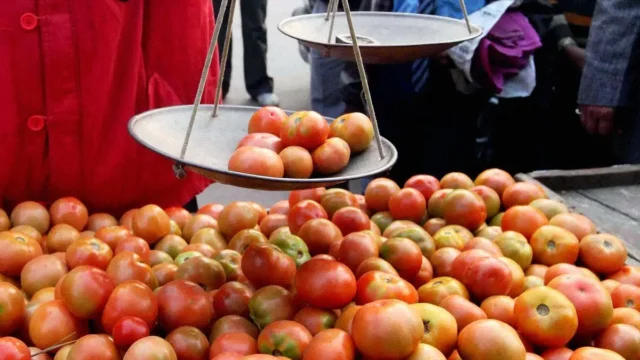
India to host 61st CIML meeting on legal metrology in New Delhi, 26–28 October
India will host the 61st meeting of the International Committee of Legal Metrology (CIML) for the first time, in New Delhi from 26 to 28 October 2026. The Department of Consumer Affairs is organising it with the International Organization of Legal Metrology (OIML), and more than 100 delegates are expected, PIB said on 19 October.
UPSC angle: Prelims: OIML, CIML, Legal Metrology Act 2009, Union List Entry 50. · Mains GS-III: standards and trade.
19 Oct 2026
NMC withdraws MSMER-2023: medical colleges lose the fixed penalty rulebook, annual disclosure stays
The National Medical Commission (NMC) has de-notified the Maintenance of Standards of Medical Education Regulations, 2023 (MSMER-2023) by a notification dated 14 October 2026, published in the Gazette on 16 October. Its fixed penalties, including seat cuts and fines of up to ₹5 lakh for false records, go with it. The Annual Disclosure Report stays.
UPSC angle: Prelims: NMC Act 2019, autonomous boards, Concurrent List Entry 25. · Mains GS-II: regulation of medical education.
19 Oct 2026
Supreme Court: no prior approval under Section 17A needed to probe a bribe demand
In a judgment of 16 October 2026, a Supreme Court Bench of Justices S.V.N. Bhatti and N.V. Anjaria held that investigating a bribe demand by a public servant does not need prior approval under Section 17A of the Prevention of Corruption Act. Asking for a bribe, the court said, is not part of discharging official duties.
UPSC angle: Prelims: Sections 7, 7A, 17A and 19 of the PC Act. · Mains GS-II/GS-IV: honest officers versus accountability.
19 Oct 2026Learn the concept
Question text as printed in the official UPSC question paper: https://www.upsc.gov.in/sites/default/files/QP-CSM-26-010926-GENERAL-STUDIES-PAPER%20-%20II.pdf The model answer is original Battle IAS work; use it to learn structure, not to memorise.