
National Sports Governance Act, 2025: National Sports Board, National Sports Tribunal, Rules for Sports Federations, Athletes’ Voice, BCCI Question and Sports Policy (UPSC Notes + PYQs)
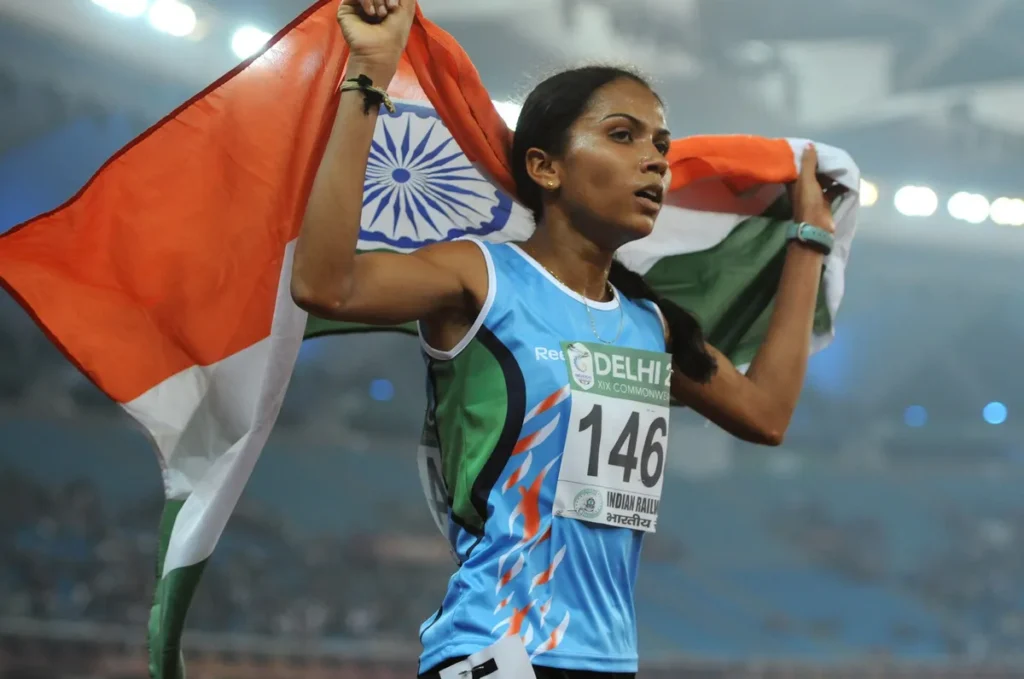
UPSC has already asked about this. Read the story with these questions in mind.
Why sport needed a law
For years, Indian sport made headlines for the wrong reasons: federations run for decades by the same officials, elections stalled in court, athletes left out of decisions, selection disputes, and allegations of sexual harassment by office-bearers that led wrestlers to protest on the streets of Delhi in 2023. Several national federations were suspended by their international bodies, and courts ended up running some of them through administrators. Athletes, who should be at the centre, often had the least say.
The government tried to fix this through the National Sports Development Code of India, 2011, which set age and tenure limits for federation officials. But the Code was only a set of guidelines, enforced through recognition and funding, and it was challenged in court repeatedly. The Delhi High Court spent over a decade hearing a case on its enforcement. The National Sports Governance Act, 2025 turns these norms into law. It was passed by Parliament in August 2025, notified on 18 August 2025, and its core provisions came into force on 1 January 2026.
Key institutions
| Institution | Role |
|---|---|
| National Sports Board (NSB) | Grants recognition to national sports bodies, monitors compliance, can suspend or de-recognise bodies for failing to hold elections or for gross financial irregularities, and can set up ad hoc panels to run a sport |
| National Sports Tribunal | Hears sports disputes such as selection, elections and disciplinary matters; a chairperson who is or has been a Supreme Court judge or a High Court Chief Justice, plus two members, chosen on the recommendation of a committee headed by the Chief Justice of India or a judge nominated by the CJI; appeals go to the Supreme Court |
| National Sports Election Panel | A roster of experienced election officers to conduct free and fair elections in sports bodies |
| Athletes’ committees | Give players a formal voice inside federations |
- National Sports BoardRecognition and regulation
- National Sports TribunalDispute resolution
- Election PanelFair elections
- AthletesCommittees and seats
Rules for sports federations
- Recognition: only bodies recognised by the NSB can use the word “national” or “India” in their names and get central funding.
- Structure: a general body and an executive committee of not more than 15 members, whose term is set by the bye-laws but cannot exceed four years.
- Inclusion: the executive committee must have at least four women, at least two sportspersons of outstanding merit and two representatives elected by the Athletes Committee.
- Age: a candidate must be at least 25 and not more than 70 on the last date of nomination; a person aged 70 to 75 may contest only if the international charters and statutes and the body’s bye-laws permit, and then serves a full term.
- Term limits: a person can hold the post of President, Secretary General or Treasurer for up to three consecutive terms, separately or in combination, followed by a mandatory cooling-off period of one term.
- Ethics: codes of ethics, conflict of interest rules and internal dispute resolution.
- Safe sport: policies to protect women, minors and all athletes from harassment and abuse.
- Transparency: a recognised body that receives grants from the Central or a State Government is a public authority under the RTI Act with respect to the use of those grants.
- 1Internal grievance mechanism of the federation
- 2National Sports Tribunal
- 3Appeal to the Supreme Court
- 4International matters to the Court of Arbitration for Sport where applicable
The BCCI question
Cricket’s governing body, the BCCI, has long stayed outside government control. It is a registered society that takes no government grants. With cricket returning to the Olympic Games in 2028, the BCCI is expected to come under the Act as the national federation for cricket and follow its governance norms. However, since RTI applies only to the use of government grants and the BCCI takes none, it stays outside RTI. This is a middle path: more accountability, but less than critics wanted.
The wider policy picture
The Act is one of several reforms in 2025:
- National Sports Policy 2025 (Khelo Bharat Niti), approved in July 2025, replaced the 2001 policy, with pillars of global excellence, sport for economic development, social development, people’s movement and education.
- National Anti-Doping (Amendment) Act, 2025 aligned India’s anti-doping law with the World Anti-Doping Code; India has had one of the highest numbers of doping violations globally.
- Khelo India, the Target Olympic Podium Scheme (TOPS) and the Fit India Movement continue.
- India will host the 2030 Commonwealth Games in Ahmedabad and is bidding for the 2036 Olympics; good governance is a condition for both.
Note that “sports” is in the State List (Entry 33). The Act therefore deals with national-level bodies that represent India internationally, drawing on Parliament’s powers over matters such as implementing international obligations, and does not directly regulate State associations.
Why it matters
- Athlete-centric governance: players get a vote and a voice, not just a medal ceremony.
- Faster justice: a specialised tribunal can decide selection and election disputes in weeks, before a competition, instead of years in courts.
- Credibility abroad: compliance with the Olympic Charter and international federations reduces the risk of suspension.
- Gender and safety: mandatory women members and safe sport rules respond to harassment scandals.
- Better use of public money: rules on accounts and recognition protect funding.
Concerns
- Autonomy: the Olympic Charter requires sports bodies to be autonomous; too much government control through the NSB could trigger action by the IOC or international federations.
- Board composition: the NSB is appointed by the Centre, so critics fear political influence over recognition and suspension.
- RTI dilution: limiting RTI to bodies that receive funds leaves out rich bodies like the BCCI.
- Age flexibility: allowing candidates up to 75 where international rules permit may let long-serving administrators stay on.
- Federalism: State sports associations and State laws remain outside, though most problems begin at that level.
- Implementation: the tribunal and board need capacity and independence to work.
- Long tenures of officials
- Few athletes in decisions
- Court cases over elections
- Weak safeguards against harassment
Way forward
Keep the NSB professional, with eminent athletes, administrators and jurists, chosen through a transparent process. Respect the autonomy required by the Olympic Charter while insisting on clean elections and audited accounts. Make athletes’ committees genuinely elected by active players. Encourage States to adopt matching laws for State associations. Fund grassroots sport, coaching and sports science, so that better governance translates into medals and mass participation. The test is whether a young athlete in a small town can trust the system to pick and support her on merit.
PYQ trend
Prelims has asked about sports awards and international sporting events. Mains GS-II can ask about statutory bodies, governance and accountability; this Act is a fresh example.
National Sports Governance Act: UPSC angle
For UPSC CSE
Prelims: institutions under the Act, sports policies, events. Mains GS-II: statutory bodies, governance, transparency; GS-I: women and society.
National Sports Governance Act UPSC PYQs (Prelims)
Questions UPSC has actually asked, from the official papers. Pick an option to check yourself.
Consider the following pairs with regard to sports awards :
– 1. Major Dhyan Chand Khel Ratna Award : For the most spectacular and outstanding performance by a sportsperson over period of last four years
– 2. Arjuna Award : For the lifetime achievement by a sportsperson
– 3. Dronacharya Award : To honour eminent coaches who have successfully trained sportspersons or teams
– 4. Rashtriya Khel Protsahan Puraskar : To recognize the contribution made by sportspersons even after their retirement
How many of the above pairs are correctly matched?
Khel Ratna honours the most outstanding performance over four years. The Arjuna Award is for consistent good performance over four years. Lifetime contribution is the Dhyan Chand Award. Dronacharya is for coaches. Rashtriya Khel Protsahan Puraskar goes to organisations and corporates that promote sport. Answer as per the official UPSC key · Battle IAS PYQ bankAnswer (b) & why
Mains PYQs on this topic
No UPSC Mains question from 2023-2026 is directly on this topic. Older papers (2013-2022) will be added as the Mains bank grows.
Quick quiz
Appeals against the National Sports Tribunal go to
Appeals lie to the Supreme Court.Answer (b)
Sports is listed in which list of the Seventh Schedule?
State List Entry 33.Answer (b)
Under the Act, the executive committee of a federation must have at least
At least four women.Answer (b)
FAQs
What is the National Sports Governance Act, 2025?
A law setting governance rules for national sports bodies, creating a National Sports Board, a National Sports Tribunal and a National Sports Election Panel.
What does the National Sports Board do?
It recognises national sports bodies, monitors compliance and can suspend or de-recognise bodies for serious lapses.
Is the BCCI covered?
It is expected to come under the Act as cricket’s national federation now that cricket is an Olympic sport, but RTI covers only the use of government grants, which the BCCI does not take.
Why do critics worry about autonomy?
The Olympic Charter requires sports bodies to be free from government interference; strong central control could invite international sanctions.
What is Khelo Bharat Niti?
The National Sports Policy 2025, which replaced the 2001 policy.
What was the National Sports Development Code, 2011?
A set of government guidelines on age, tenure and governance of sports federations, enforced through recognition and funding, now replaced in substance by the 2025 Act.
Spotted an error? Tell us. We correct within 48 hours.
Image: Ministry of Youth Affairs and Sports, Wikimedia Commons, GODL-India
How to use this in Mains
If asked: Does the National Sports Governance Act, 2025 balance athlete welfare with the autonomy of sports bodies? Examine. (GS-II)
Quote: “Autonomy: the Olympic Charter requires sports bodies to be autonomous; too much government control through the NSB could trigger action by the IOC or international federations.”
Use it: Use it as your counter-view, right after the athlete-centric benefits.
In the news

CCPA acts against online sale of explosives: 3,940 sellers delisted from seven platforms
The Central Consumer Protection Authority (CCPA) said on 19 October 2026 that 3,940 sellers of regulated explosives such as ammonium nitrate, picric acid and PETN have been delisted from seven online platforms after its action. It has fined Dial4Trade and ExportersIndia ₹10 lakh per order, and other cases are under hearing or investigation.
19 Oct 2026
India to host 61st CIML meeting on legal metrology in New Delhi, 26–28 October
India will host the 61st meeting of the International Committee of Legal Metrology (CIML) for the first time, in New Delhi from 26 to 28 October 2026. The Department of Consumer Affairs is organising it with the International Organization of Legal Metrology (OIML), and more than 100 delegates are expected, PIB said on 19 October.
19 Oct 2026
NMC withdraws MSMER-2023: medical colleges lose the fixed penalty rulebook, annual disclosure stays
The National Medical Commission (NMC) has de-notified the Maintenance of Standards of Medical Education Regulations, 2023 (MSMER-2023) by a notification dated 14 October 2026, published in the Gazette on 16 October. Its fixed penalties, including seat cuts and fines of up to ₹5 lakh for false records, go with it. The Annual Disclosure Report stays.
19 Oct 2026
Supreme Court: no prior approval under Section 17A needed to probe a bribe demand
In a judgment of 16 October 2026, a Supreme Court Bench of Justices S.V.N. Bhatti and N.V. Anjaria held that investigating a bribe demand by a public servant does not need prior approval under Section 17A of the Prevention of Corruption Act. Asking for a bribe, the court said, is not part of discharging official duties.
19 Oct 2026