
Decriminalisation of Business Laws: Jan Vishwas (Amendment of Provisions) Act, 2023, the Jan Vishwas Act, 2026 (2.0), Ease of Doing Business and Ease of Living (UPSC Notes + PYQs)
UPSC has already asked about this. Read the story with these questions in mind.
Why jail for a late form?
Imagine a small bakery in Pune that forgets to display a licence, or a factory in Ludhiana that files a return a week late. In many Indian laws, such slips could, on paper, lead to a prison term. Studies of India’s regulatory maze found that laws governing business carried more than 26,000 clauses providing imprisonment, many for technical or procedural defaults. Most of these were never used, but their presence gave inspectors a stick to wave, invited petty corruption and kept honest entrepreneurs nervous. Courts, already carrying over five crore pending cases, were burdened with trivial prosecutions.
The idea behind Jan Vishwas, which means “people’s trust”, is that the State should trust citizens and businesses by default and punish real harm, not paperwork mistakes. Criminal law should be kept for fraud, danger to life and serious damage to the environment, while minor lapses are handled with fines decided quickly by an officer, not years later by a magistrate.
- Colonial-era laws
- Duplication across Acts
- Fear-based regulation
- No periodic review
The 2023 Act
- Passed: by Parliament in July-August 2023 after scrutiny by a Joint Parliamentary Committee; received the President’s assent on 11 August 2023.
- Scope: 183 provisions in 42 Central Acts administered by 19 ministries and departments.
- Key shift: imprisonment replaced by monetary penalties for many minor offences; some offences removed altogether.
- Adjudicating officers: designated officials can impose penalties through a quick administrative process, with appeals provided.
- Indexation: fines and penalties rise by 10% of the minimum amount every three years, so they do not lose force with inflation.
- Acts covered include: the Indian Post Office Act, 1898 (later replaced), the Environment (Protection) Act, 1986, the Information Technology Act, 2000, the Copyright Act, 1957, the Patents Act, 1970, the Motor Vehicles Act, 1988, the Food Safety and Standards Act, 2006 and the Drugs and Cosmetics Act, 1940.
Jan Vishwas 2.0: from the 2025 Bill to the 2026 Act
A second bill was introduced in the Lok Sabha on 18 August 2025 and referred to a Select Committee chaired by Tejasvi Surya. The Committee reported on 13 March 2026 and recommended going much further, to cover dozens more Acts. The government withdrew the 2025 Bill on 17 March 2026 and introduced the Jan Vishwas (Amendment of Provisions) Bill, 2026, which was passed by the Lok Sabha on 1 April and the Rajya Sabha on 2 April 2026.
| Feature | 2023 Act | 2026 Act (2.0) |
|---|---|---|
| Central Acts amended | 42 | 80 |
| Repeat or first offences | Penalty | Advisory for the first contravention and warning for the second under some Acts, such as the Apprentices Act, 1961; improvement notices under the Legal Metrology Act, 2009 |
| Examples | Environment, IT, Copyright, Patents Acts | Drugs and Cosmetics Act (civil penalty instead of jail for cosmetics violations), National Highways Act, Electricity Act, Indian Succession Act, Delhi municipal and police laws |
| Indexation | Fines rise by 10% of the minimum every three years | Same rule; where an Act has its own revision method, that applies |
The 2026 Act also reforms property tax in the New Delhi Municipal Council area, with a valuation committee and a hardship committee, and removes the advertisement tax there.
- 1Lapse detected
- 2Advisory or warning for early offences (2.0)
- 3Penalty by adjudicating officer
- 4Appeal to higher authority
- 5Fine indexed every three years
Decriminalise, not deregulate
A common confusion in answers is to treat Jan Vishwas as removing rules. It does not. The obligation, for example to keep records or file a return, remains. What changes is the consequence for breaking it. A table makes the shift clear:
| Earlier | Now |
|---|---|
| Criminal prosecution in court | Administrative penalty by an adjudicating officer |
| Possible jail term | Fine, sometimes after a warning |
| Years in trial | Quick decision with appeal |
| Fear of harassment | Clear, predictable consequence |
Why it matters
- Ease of doing business: fewer criminal provisions lower compliance risk, especially for MSMEs that cannot afford legal teams.
- Ease of living: citizens face fewer criminal cases for minor civic lapses.
- Judicial relief: removing trivial prosecutions frees court time for serious crime.
- Less corruption: when the threat of jail disappears, so does a lever for extortion by inspectors.
- Investment climate: foreign and domestic investors value predictable law; this fits with the shift from the four labour codes to self-certification and the National Single Window System.
- Proportionality: the principle that punishment should match the harm is a basic idea of criminal justice.
Earlier steps
Jan Vishwas builds on earlier work: the decriminalisation of compounding offences under the Companies Act, 2013 through amendments in 2019 and 2020; the Limited Liability Partnership (Amendment) Act, 2021; the repeal of over 1,500 obsolete laws since 2014; and State-level drives to remove compliances. Several States, including Uttar Pradesh, Maharashtra and Gujarat, have passed or proposed their own Jan Vishwas-type laws, since a large part of business regulation sits with States.
- Ease of doing businessLess compliance risk
- Ease of livingFewer petty cases
- CourtsLess clutter
- IntegrityLess scope for extortion
An example from the ground
Take the Legal Metrology rules that govern how packaged goods are labelled. A shopkeeper who sells a packet with a smudged date of manufacture once faced the theoretical risk of prosecution. Under the trust-based approach, an inspector would first issue advice, then a penalty if the lapse is repeated, while deliberate short-weighting that cheats consumers would remain a serious offence. The same logic, separating honest mistakes from intent to harm, runs through every amended Act and is the simplest way to explain the reform in an interview.
Concerns
- Weaker deterrence: environmental groups argue that replacing jail with fines under laws such as the Environment (Protection) Act lets big polluters pay and continue.
- Executive as judge: adjudicating officers are government officials, raising questions about independence and due process.
- Limited scale: a few hundred provisions are a small share of the thousands of jail clauses at Central and State levels.
- State laws: much of the compliance burden for small firms is under State laws and local rules, which the Central Acts do not touch.
- Fines as revenue: penalties can become a new tool of harassment if officers chase targets.
Way forward
Set up a standing mechanism, perhaps a regulatory review body, to scan every new law for unnecessary criminal clauses. Classify offences into those involving fraud or harm, which stay criminal, and procedural lapses, which become civil. Give adjudicating officers training, timelines and independent appeal routes. Encourage States to pass matching laws with Centre support. Combine decriminalisation with digital, self-certified compliance so that fewer inspections are needed. Keep strong criminal penalties for serious environmental and safety violations, so that trust does not turn into impunity.
PYQ trend
Prelims has asked about ease of doing business indicators. Mains GS-II and GS-IV ask about governance reform, the civil servant as facilitator rather than regulator, and citizen-centric administration.
Jan Vishwas Act: UPSC angle
For UPSC CSE
Prelims: features of the Acts, ease of doing business. Mains GS-II: governance, transparency, regulatory reform; GS-III: investment climate, MSMEs; GS-IV: trust-based administration.
Jan Vishwas Act UPSC PYQs (Prelims)
Questions UPSC has actually asked, from the official papers. Pick an option to check yourself.
Which one of the following is not a sub-index of the World Bank's 'Ease of Doing Business Index'?
The Doing Business report had ten sub-indices: starting a business, construction permits, getting electricity, registering property, getting credit, protecting minority investors, paying taxes, trading across borders, enforcing contracts and resolving insolvency. Law and order was not one of them. The World Bank stopped the report in 2021. Answer as per the official UPSC key · Battle IAS PYQ bankAnswer (a) & why
Mains PYQs on this topic
Questions from the official UPSC Mains papers (2023-2026 in the Battle IAS Mains bank), newest first. Each links to a model answer.
- UPSC Mains 2025 · GS Paper IV · Q5b · 10 marks
To achieve holistic development goal, a civil servant acts as an enabler and active facilitator of growth rather than a regulator. What specific measures will you suggest to achieve this goal?
Quick quiz
The Jan Vishwas Act, 2023 amended provisions in how many Central Acts?
183 provisions in 42 Acts.Answer (b)
Under the 2023 Act, fines and penalties are increased
Built-in indexation.Answer (b)
Jan Vishwas mainly aims to
It decriminalises minor, technical offences.Answer (b)
FAQs
What is the Jan Vishwas Act?
The Jan Vishwas (Amendment of Provisions) Act, 2023 amended 183 provisions in 42 Central Acts to replace imprisonment for minor offences with monetary penalties and administrative adjudication.
What is Jan Vishwas 2.0?
The Jan Vishwas (Amendment of Provisions) Act, 2026, passed in April 2026, which decriminalises or rationalises offences in 80 Central Acts and adds advisories and warnings for early offences under some laws.
Does decriminalisation mean no rules?
No. Duties remain; only the consequence of a minor breach changes from criminal prosecution to a civil penalty.
Why are environmental groups worried?
They fear that fines instead of jail under green laws may weaken deterrence for large polluters.
Who imposes penalties under the new system?
Adjudicating officers appointed under each Act, with a right of appeal.
Do States have to follow?
No. Central Acts cover only Central laws; States must amend their own laws, and several have started doing so.
Spotted an error? Tell us. We correct within 48 hours.
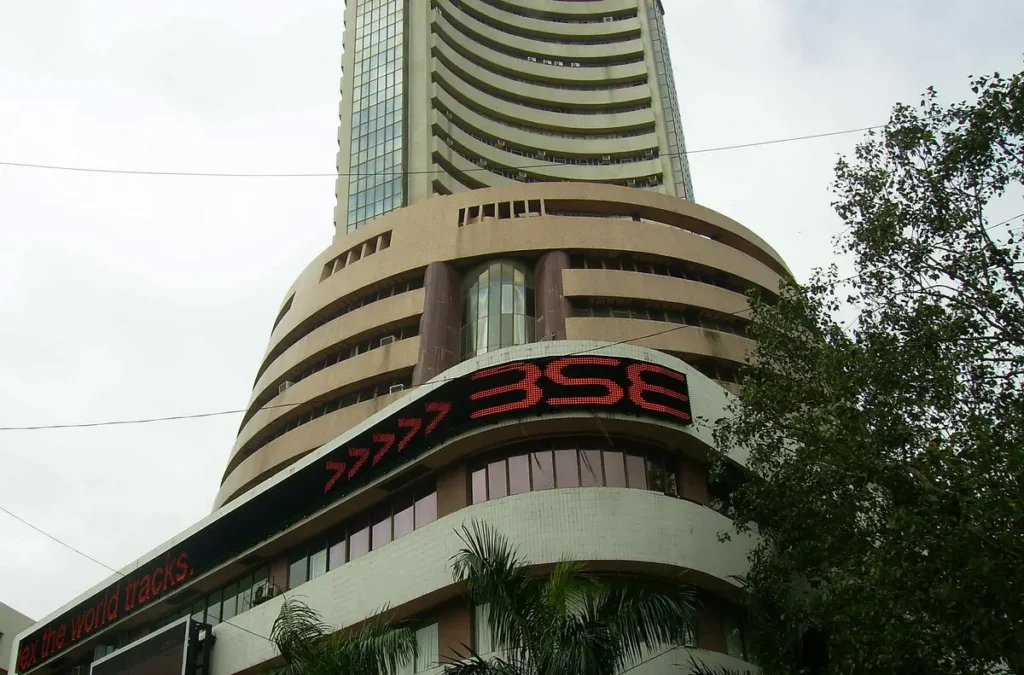
Image: Niyantha Shekhar, Wikimedia Commons, CC BY 2.0
How to use this in Mains
If asked: Decriminalisation of minor offences improves ease of doing business but may weaken deterrence. Discuss. (GS-II/III)
Quote: “Weaker deterrence: environmental groups argue that replacing jail with fines under laws such as the Environment (Protection) Act lets big polluters pay and continue.”
Use it: Your counter-view paragraph starts here; follow with a way forward.
In the news

CCPA acts against online sale of explosives: 3,940 sellers delisted from seven platforms
The Central Consumer Protection Authority (CCPA) said on 19 October 2026 that 3,940 sellers of regulated explosives such as ammonium nitrate, picric acid and PETN have been delisted from seven online platforms after its action. It has fined Dial4Trade and ExportersIndia ₹10 lakh per order, and other cases are under hearing or investigation.
19 Oct 2026
India to host 61st CIML meeting on legal metrology in New Delhi, 26–28 October
India will host the 61st meeting of the International Committee of Legal Metrology (CIML) for the first time, in New Delhi from 26 to 28 October 2026. The Department of Consumer Affairs is organising it with the International Organization of Legal Metrology (OIML), and more than 100 delegates are expected, PIB said on 19 October.
19 Oct 2026
NMC withdraws MSMER-2023: medical colleges lose the fixed penalty rulebook, annual disclosure stays
The National Medical Commission (NMC) has de-notified the Maintenance of Standards of Medical Education Regulations, 2023 (MSMER-2023) by a notification dated 14 October 2026, published in the Gazette on 16 October. Its fixed penalties, including seat cuts and fines of up to ₹5 lakh for false records, go with it. The Annual Disclosure Report stays.
19 Oct 2026
Supreme Court: no prior approval under Section 17A needed to probe a bribe demand
In a judgment of 16 October 2026, a Supreme Court Bench of Justices S.V.N. Bhatti and N.V. Anjaria held that investigating a bribe demand by a public servant does not need prior approval under Section 17A of the Prevention of Corruption Act. Asking for a bribe, the court said, is not part of discharging official duties.
19 Oct 2026