
UPSC Mains 2026 GS2 Q18: model answer
Should education be treated primarily as a welfare obligation of the state or as a strategic investment for building a globally competitive, knowledge-driven nation? Critically evaluate.
What the question wants
Evaluate both views and arrive at a synthesis: education is both a right (equity) and an investment (growth); policy must balance them.
How to structure it
Intro: Article 21A and NEP 2020. Body: welfare view; strategic-investment view; risks of each extreme; synthesis with policy steps. Conclusion.
- 1Welfare view
- 2Strategic-investment view
- 3Risks of each extreme
- 4Synthesis with policy steps
Model answer
Education is a fundamental right for children aged 6–14 (Article 21A, 86th Amendment, 2002; RTE Act, 2009). At the same time, the NEP 2020 frames it as the engine of a knowledge economy. The debate is about emphasis.
| View | Argument | Check |
|---|---|---|
| State duty | Art. 21A; RTE 2009 | Learning levels still low |
| Market | Choice, efficiency | Fees, exclusion; 25% EWS quota |
| Balance | NEP 2020: public investment + regulated private role | Target of 6% of GDP |
Education as a welfare obligation
- Ensures equity: access for girls, SC/ST, rural and disabled children through free schooling, mid-day meals (PM POSHAN) and scholarships.
- Gross enrolment in elementary education is near universal, a welfare success.
- Risk if this is the only frame: focus on enrolment and inputs, while learning outcomes stay weak (ASER and foundational-learning surveys show many children cannot read grade-level text).
Education as a strategic investment
- Builds human capital for growth, innovation and the demographic dividend; East Asian economies show the payoff.
- Higher education, research (the Anusandhan National Research Foundation), skills and digital learning raise competitiveness.
- Risk if this is the only frame: elite institutions grow while government schools are neglected; private costs rise and inequality deepens.
Synthesis
- The two are complementary: universal foundational learning (NIPUN Bharat) is itself the best long-term investment.
- Public spending should rise toward NEP's 6% of GDP target; quality and accountability (learning-outcome assessments such as PARAKH) should go with access.
- Vocational integration, teacher training, and research funding with equity safeguards.
Conclusion: education should be treated as a right delivered with the seriousness of a strategic investment. Equity without quality wastes potential; quality without equity wastes people.
Keywords, cases and data to drop in
Article 21A RTE 2009 NEP 2020 NIPUN Bharat ASER learning gaps 6% of GDP target Anusandhan NRF PARAKH
Where most answers lose marks
- Choosing one side; 'critically evaluate' needs a balanced synthesis.
- No reference to learning outcomes.
- Ignoring the constitutional right under Article 21A.
Fresh examples from current affairs
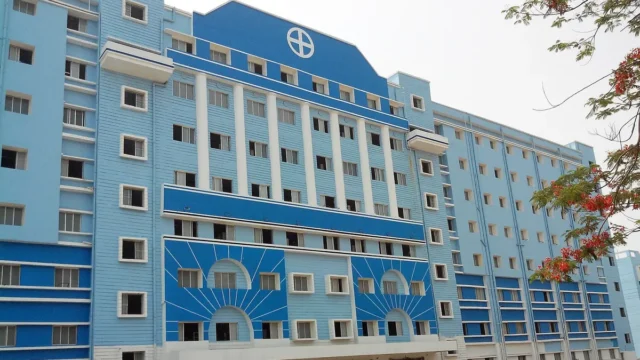
NMC withdraws MSMER-2023: medical colleges lose the fixed penalty rulebook, annual disclosure stays
The National Medical Commission (NMC) has de-notified the Maintenance of Standards of Medical Education Regulations, 2023 (MSMER-2023) by a notification dated 14 October 2026, published in the Gazette on 16 October. Its fixed penalties, including seat cuts and fines of up to ₹5 lakh for false records, go with it. The Annual Disclosure Report stays.
UPSC angle: Prelims: NMC Act 2019, autonomous boards, Concurrent List Entry 25. · Mains GS-II: regulation of medical education.
19 Oct 2026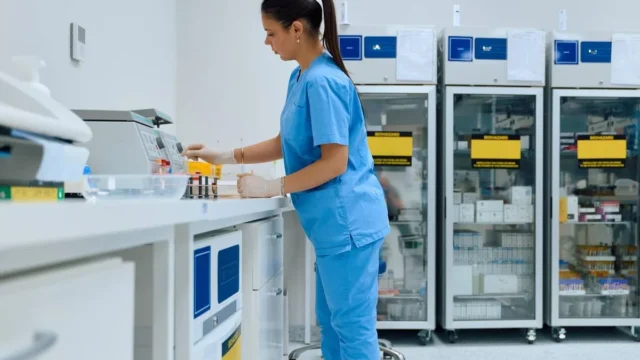
NCAHP notifies autonomous boards and digital registration for allied and healthcare professionals
The National Commission for Allied and Healthcare Professions has notified regulations for Autonomous Boards and a Central Assessment Committee, and for registering allied and healthcare professionals with unique IDs in State and Central Registers. It also notified a two-year competency-based Diploma in Medical Radiology and Imaging Technology with a six-month internship.
UPSC angle: Prelims: NCAHP Act year, D.MRIT. · Mains GS-II: health human resources.
7 Oct 2026
PM-SETU at one year: 850 ITIs identified, 14 clusters approved
PM-SETU, launched on 4 October 2025 to upgrade 1,000 Government ITIs through a hub-and-spoke model, has identified 850 ITIs and approved 14 ITI clusters worth ₹3446 crore in its first year. The scheme has a ₹60,000 crore outlay shared by the Centre, States and industry, and also upgrades five NSTIs.
UPSC angle: Prelims: PM-SETU expansion; hub-and-spoke. · Mains: Making ITIs industry-relevant.
3 Oct 2026
Literacy backgrounder: Education Ministry defines literacy; 95% counts as “full literacy”
A PIB backgrounder of 29 September 2026 says the Education Ministry has, for the first time, defined literacy as reading, writing and computing with comprehension, plus life skills like digital and financial literacy. A State or UT at 95 per cent counts as fully literate. PLFS 2025 puts India's literacy rate at 81.1 per cent.
UPSC angle: Prelims: 95% threshold; new definition components.
29 Sep 2026Learn the concept
Question text as printed in the official UPSC question paper: https://www.upsc.gov.in/sites/default/files/QP-CSM-26-010926-GENERAL-STUDIES-PAPER%20-%20II.pdf The model answer is original Battle IAS work; use it to learn structure, not to memorise.