
National Education Policy 2020: 5+3+3+4 Structure, Language, Higher Education Reforms, Implementation and Concerns (UPSC Notes + PYQs)

UPSC has already asked about this. Read the story with these questions in mind.
Background: India’s education policies
India has had three national policies. The first, in 1968, followed the Kothari Commission (1964-66), which proposed a common school system, the 10+2+3 pattern and spending of 6% of national income on education. The 1986 policy, revised in 1992 after the Acharya Ramamurti review, launched Operation Blackboard and Navodaya Vidyalayas. The Right to Education Act, 2009, following the 86th Amendment (Article 21A, 2002), made education free and compulsory for ages 6-14. NEP 2020 is the first policy of the twenty-first century. A committee under T.S.R. Subramanian (2016) prepared inputs, and the K. Kasturirangan committee submitted the draft in 2019.
- 1966Kothari Commission report
- 1968First National Policy on Education
- 1986NPE 1986 (revised 1992)
- 200286th Amendment: Article 21A
- 2009RTE Act
- 2020NEP 2020 approved, 29 July
School education
- 5+3+3+4 replaces 10+2: Foundational (ages 3-8, including three years of pre-school), Preparatory (8-11), Middle (11-14), Secondary (14-18).
- Foundational literacy and numeracy by Grade 3 as the top priority; the NIPUN Bharat mission (2021) carries this.
- Medium of instruction in the home language or mother tongue up to at least Grade 5, preferably Grade 8, “wherever possible”.
- Vocational exposure from Grade 6 with internships; coding from the middle stage.
- Board exams made easier to test core skills; new assessment centre PARAKH; new curriculum frameworks (NCF for Foundational Stage 2022, NCF for School Education 2023).
- 1Foundational: ages 3-8 (pre-school + Grades 1-2)
- 2Preparatory: ages 8-11 (Grades 3-5)
- 3Middle: ages 11-14 (Grades 6-8)
- 4Secondary: ages 14-18 (Grades 9-12)
Higher education
- Gross Enrolment Ratio target of 50% by 2035.
- Four-year multidisciplinary undergraduate degree with multiple entry and exit; Academic Bank of Credits.
- A single regulator, the Higher Education Commission of India, proposed to replace UGC, AICTE and NCTE (legislation pending).
- National Research Foundation, set up by the Anusandhan National Research Foundation Act, 2023.
- Entry of foreign universities; UGC regulations of 2023 allow campuses in India.
Funding and governance
Public spending on education to reach 6% of GDP, a target first set by the Kothari Commission (1964-66) and never met; combined Centre and State spending is around 4-4.6%. Education is in the Concurrent List since the 42nd Amendment, so States implement most of it.
The language debate
NEP 2020 recommends that the medium of instruction be the home language or mother tongue at least till Class 5, and preferably till Class 8, and keeps the three-language formula with flexibility, saying no language will be imposed on any State. Tamil Nadu, which has followed a two-language policy since 1968, objects that the formula pushes Hindi, and has declined to sign the PM SHRI school agreement, leading to a dispute over Samagra Shiksha funds. Supporters point out that learning in the mother tongue improves understanding in early years. Teaching in regional languages also needs textbooks, trained teachers and, in higher education, technical material, which bodies such as AICTE have started to translate.
Assessment reform
The policy calls for moving away from rote memorisation. Board exams are to test core concepts and be offered twice a year; CBSE introduced two board exams for Class 10 from 2026. PARAKH, set up under NCERT, is the national assessment centre that sets standards for school boards and runs national surveys of learning. The Common University Entrance Test (CUET) replaced Class 12 cut-offs for central university admissions from 2022.
APAAR and the Academic Bank of Credits
Every student gets an APAAR ID (“One Nation One Student ID”) linked to the Academic Bank of Credits, which stores credits earned so that students can leave and re-enter higher education with certificates, diplomas or degrees.
Concerns
Some States, notably Tamil Nadu, objected to the language provisions and to centralisation; Tamil Nadu has also stayed out of the PM SHRI schools scheme. Others worry about the cost of pre-school expansion, teacher shortages (over one lakh single-teacher schools), dropouts after multiple exits, and digital divides seen during the pandemic.
Key data
| Indicator | Figure |
|---|---|
| Schools in India | About 14.7 lakh (UDISE+ 2023-24) |
| GER in higher education | 28.4% (AISHE 2021-22) |
| Public education spending | About 4.1-4.6% of GDP (Economic Survey estimates) |
| Children in Grade 3 who can read a Grade 2 text | About 27% in 2024 (ASER 2024, rural) |
What has been done so far
- NIPUN Bharat (2021) for foundational learning; Vidya Pravesh school-readiness module.
- Academic Bank of Credits and four-year UG programmes in many central universities.
- National Curriculum Frameworks (2022, 2023) and new NCERT textbooks from 2023.
- PM SHRI schools (2022) as models of the policy.
- Common University Entrance Test (CUET) for central universities from 2022.
- National Credit Framework and APAAR ID for students.
Way forward
Fund the 6% target; fill teacher vacancies and train teachers for activity-based learning; keep three-language flexibility so that no State feels a language is imposed; protect public universities’ autonomy while regulating quality; measure outcomes through independent surveys like PARAKH and ASER.
PYQ trend
Prelims asked RTE provisions (2018) and constitutional provisions bearing on education (2012). Mains 2026 GS-II asked whether education is a welfare obligation or a strategic investment; 2023 linked education with skills and employment. Pair NEP with data from UDISE+ and ASER.
National Education Policy: UPSC angle
For UPSC CSE
Prelims: structure, targets, institutions (PARAKH, NRF, ABC). Mains GS-II: issues relating to education and human resources; federal friction over language.
National Education Policy UPSC PYQs (Prelims)
Questions UPSC has actually asked, from the official papers. Pick an option to check yourself.
Which of the following provisions of the Constitution of India have a bearing on Education?
– 1. Directive Principles of State Policy
– 2. Rural and Urban Local Bodies
– 3. Fifth Schedule
– 4. Sixth Schedule
– 5. Seventh Schedule
Select the correct answer using the codes given below :
Education appears everywhere: DPSP (Arts. 45, 46), the 11th and 12th Schedules listing education for panchayats and municipalities, the Fifth and Sixth Schedules (tribal areas; district councils may run primary schools) and the Seventh Schedule, where education is in the Concurrent List (entry 25). Answer as per the official UPSC key · Battle IAS PYQ bankAnswer (d) & why
Consider the following statements :
– 1. As per the Right to Education (RTE) Act, to be eligible for appointment as a teacher in a State, a person would be required to possess the minimum qualification laid down by the concerned State Council of Teacher Education.
– 2. As per the RTE Act, for teaching primary classes, a candidate is required to pass a Teacher Eligibility Test conducted in accordance with the National Council of Teacher Education guidelines.
– 3. In India, more than 90% of teacher education institutions are directly under the State Governments.
Which of the statements given above is/are correct ?
Under Section 23 of the RTE Act, minimum teacher qualifications are set by the academic authority named by the Centre, the NCTE, not a state council. The TET, held under NCTE guidelines, is compulsory. Over 90% of teacher-education institutions are privately run, not government ones. Answer as per the official UPSC key · Battle IAS PYQ bankAnswer (b) & why
Mains PYQs on this topic
Questions from the official UPSC Mains papers (2023-2026 in the Battle IAS Mains bank), newest first. Each links to a model answer.
- UPSC Mains 2026 · GS Paper II · Q18 · 15 marks
Should education be treated primarily as a welfare obligation of the state or as a strategic investment for building a globally competitive, knowledge-driven nation? Critically evaluate.
- UPSC Mains 2023 · GS Paper II · Q18 · 15 marks
Skill development programmes have succeeded in increasing human resources supply to various sectors. In the context of the statement analyse the linkages between education, skill and employment.
Quick quiz
The Foundational Stage under NEP 2020 covers ages
Three years pre-school plus Grades 1-2.Answer (b)
NEP 2020 set a GER target in higher education of
From about 27% in 2018.Answer (b)
The NEP 2020 drafting committee was chaired by
Draft submitted in 2019.Answer (b)
FAQs
Does NEP make mother-tongue teaching compulsory?
No. It says “wherever possible”, up to Grade 5 and preferably Grade 8.
What is the Academic Bank of Credits?
A digital store of credits earned by students, letting them move between institutions and exit and re-enter.
Which policy did NEP 2020 replace?
The National Policy on Education, 1986, as modified in 1992.
Is HECI in place?
Not yet; it needs a law.
What is PARAKH?
Performance Assessment, Review and Analysis of Knowledge for Holistic Development, a national assessment centre under NCERT.
Is NEP 2020 a law?
No. It is a policy; parts of it need laws or State action to take effect.
Spotted an error? Tell us. We correct within 48 hours.
Image: dhillan chandramowli, Wikimedia Commons, CC BY-SA 2.0
How to use this in Mains
If asked: UPSC Mains 2026, GS-II: Should education be treated primarily as a welfare obligation of the state or as a strategic investment for building a globally competitive, knowledge-driven nation? Critically evaluate.
Quote: “The policy calls for moving away from rote memorisation.”
Use it: Use as a learning-quality point when you argue education is an investment.
In the news
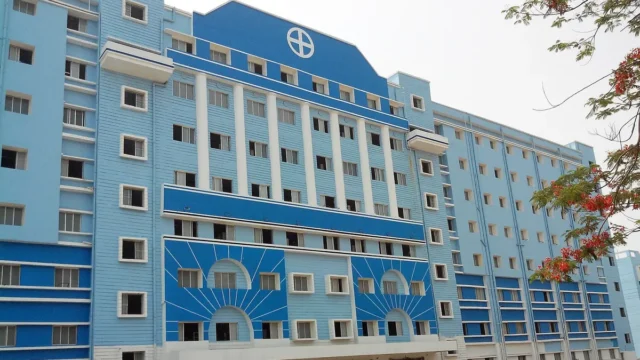
NMC withdraws MSMER-2023: medical colleges lose the fixed penalty rulebook, annual disclosure stays
The National Medical Commission (NMC) has de-notified the Maintenance of Standards of Medical Education Regulations, 2023 (MSMER-2023) by a notification dated 14 October 2026, published in the Gazette on 16 October. Its fixed penalties, including seat cuts and fines of up to ₹5 lakh for false records, go with it. The Annual Disclosure Report stays.
19 Oct 2026
NCAHP notifies autonomous boards and digital registration for allied and healthcare professionals
The National Commission for Allied and Healthcare Professions has notified regulations for Autonomous Boards and a Central Assessment Committee, and for registering allied and healthcare professionals with unique IDs in State and Central Registers. It also notified a two-year competency-based Diploma in Medical Radiology and Imaging Technology with a six-month internship.
7 Oct 2026
PM-SETU at one year: 850 ITIs identified, 14 clusters approved
PM-SETU, launched on 4 October 2025 to upgrade 1,000 Government ITIs through a hub-and-spoke model, has identified 850 ITIs and approved 14 ITI clusters worth ₹3446 crore in its first year. The scheme has a ₹60,000 crore outlay shared by the Centre, States and industry, and also upgrades five NSTIs.
3 Oct 2026
Literacy backgrounder: Education Ministry defines literacy; 95% counts as “full literacy”
A PIB backgrounder of 29 September 2026 says the Education Ministry has, for the first time, defined literacy as reading, writing and computing with comprehension, plus life skills like digital and financial literacy. A State or UT at 95 per cent counts as fully literate. PLFS 2025 puts India's literacy rate at 81.1 per cent.
29 Sep 2026