
NMC withdraws MSMER-2023: medical colleges lose the fixed penalty rulebook, annual disclosure stays
Next story · 19 OctIndia to host 61st CIML meeting on legal metrology in New Delhi, 26–28 October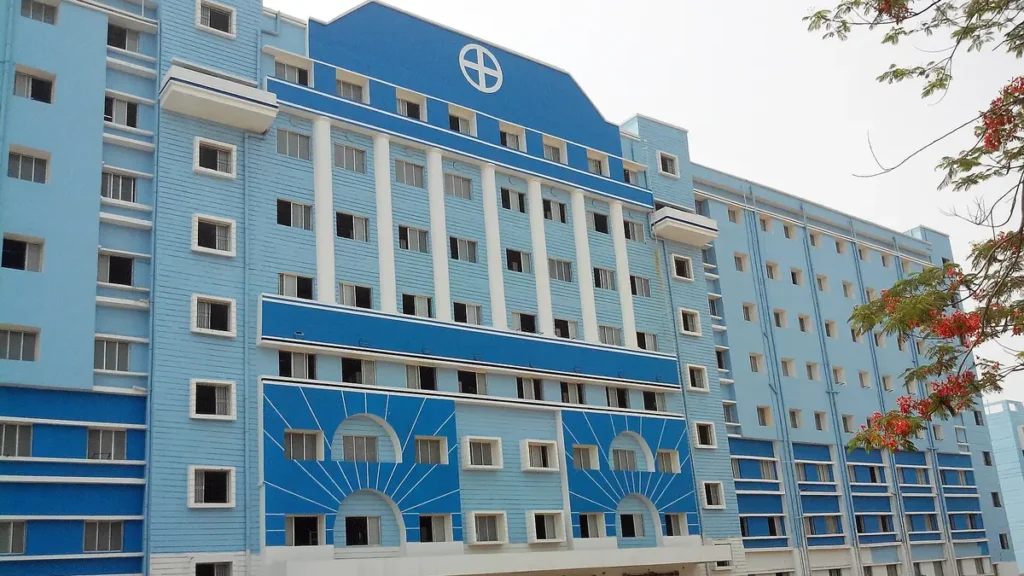
The National Medical Commission (NMC) has de-notified the Maintenance of Standards of Medical Education Regulations, 2023 (MSMER-2023) by a notification dated 14 October 2026, published in the Gazette on 16 October. Its fixed penalties, including seat cuts and fines of up to ₹5 lakh for false records, go with it. The Annual Disclosure Report stays.
- Notification
- 14 Oct 2026
- Withdrawn
- MSMER-2023
- Continues
- Annual Disclosure Report
- Parent law
- NMC Act, 2019
MSMER-2023 withdrawn: what happened?
A medical college is judged by its teachers, beds and patients. ‘Ghost faculty’ and doctored patient files have long been shortcuts to pass inspections. The rulebook that punished such tricks with fixed penalties has now been withdrawn, and students will want to know what replaces it.
- NMC cited Sections 10, 24, 25 and 57 of the NMC Act, 2019, read with Section 21 of the General Clauses Act, 1897.
- MSMER-2023 had been notified on 19 September 2023 and is now withdrawn with immediate effect.
- A saving clause protects actions already taken and pending matters under the old rules.
- The Annual Disclosure Report (ADR), filed by every medical institution, continues as before (Indian Express; PTI).
What are NMC and MSMER-2023?
- NMC replaced the Medical Council of India under the NMC Act, 2019 and regulates medical education and practice.
- It works through four autonomous boards, including the Medical Assessment and Rating Board (MARB).
- MSMER-2023 was NMC’s enforcement manual for colleges that fell short of standards or misreported facilities.
- It let NMC act in graded steps, starting from a warning, against colleges that broke the rules.
How do things compare before and after the withdrawal?
| Point | Under MSMER-2023 | After withdrawal |
|---|---|---|
| Penalties | Withheld accreditation, seat cuts, stopping admissions | No fixed ladder in a rulebook |
| False records | Personal fine up to ₹5 lakh | Fine gone; disciplinary and criminal law remain |
| Appeals | NMC in 60 days, then Centre in 30 | As per the NMC Act |
| Disclosure | Annual Disclosure Report | ADR continues |
Which constitutional and legal provisions apply?
- Union List Entry 66: determination of standards in higher education institutions.
- Concurrent List Entry 25: education, including medical education.
- NMC Act, 2019, Section 57: NMC’s power to make regulations.
- General Clauses Act, 1897, Section 21: power to issue includes power to rescind.
What happens now to a college under scrutiny?
After the de-notification
- Pending cases continue under saving clause
- New lapses judged under NMC Act
- Colleges keep filing Annual Disclosure Report
- False records invite disciplinary or criminal action
- NMC may notify a fresh framework later
Which numbers should you remember?
| Number | What it means |
|---|---|
| Up to 5 | Academic years for which accreditation could be withheld |
| 45 days | Time NMC had to decide a first appeal |
| 24(i), 25(h) | NMC Act clauses under which the ADR continues |
Criminal law on forgery and cheating still applies to anyone who fabricates faculty or patient records.
Why does this matter?
| Angle | What to note |
|---|---|
| Health | Quality of doctors depends on standards in colleges. |
| Regulation | Without fixed penalties, more depends on the regulator’s discretion. |
| Federalism | Medical education is Concurrent; Union sets standards. |
| Accountability | Ghost faculty is a known way to cheat inspections. |
What are the challenges?
- Without a penalty ladder, actions may look arbitrary or inconsistent.
- Weaker deterrence against ghost faculty and fake patient records.
- Uncertainty for colleges and students until a new framework comes.
- Penalties without a clear written code invite more litigation.
What should be done next?
- Notify a clear, graded replacement framework soon.
- Use ADR data, biometric attendance and surprise inspections together.
- Publish inspection findings so students can judge colleges.
- Keep personal accountability for anyone signing false records.
What can Prelims ask on medical education regulation?
- NMC was set up under the NMC Act, 2019, replacing the Medical Council of India.
- MSMER-2023 was notified on 19 September 2023 and withdrawn in October 2026.
- The Annual Disclosure Report remains mandatory for medical institutions.
- NMC’s four boards: UGMEB, PGMEB, MARB and the Ethics and Medical Registration Board.
- Education, including medical education, is Entry 25 of the Concurrent List.
How to write about medical education quality in Mains
Practice question (10 marks, 150 words): Regulating quality in medical education needs both deterrence and transparency. Discuss in the light of recent changes by the NMC. (GS-II)
- Intro: 14 Oct 2026 de-notification of MSMER-2023.
- What went: penalty ladder, ₹5 lakh fine, appeal timeline.
- What stays: ADR, NMC Act powers, criminal law.
- Concerns: deterrence, consistency, legal certainty.
- Way forward: graded new code, data-led inspections.
Image: Academic building of Murshidabad Medical College and Hospital, Berhampore. Sukdev Paul, Wikimedia Commons, CC BY-SA 4.0
How to use this in Mains
If asked: Critically examine the role of the National Medical Commission in ensuring quality medical education. (GS-II)
Quote: “However, a key component of the MSMER 2023, the Annual Disclosure Report (ADR), which every medical institution files, will continue as before.”
Use it: Shows disclosure survives; argue that disclosure without graded penalties weakens deterrence.
If asked: Discuss the problem of ‘ghost faculty’ in medical colleges and suggest remedies. (GS-II)
Quote: “This was the clause aimed at problems like “ghost faculty” and doctored patient files, because it made the people who signed off on a college’s claims personally answerable.”
Use it: Use it to explain personal accountability; recommend keeping it in any new framework.
Exam angle
Prelims: NMC Act 2019, autonomous boards, Concurrent List Entry 25. · Mains GS-II: regulation of medical education.
Practice MCQs
Original practice questions (not PYQs).
Consider the following statements:
1. The NMC replaced the Medical Council of India under the NMC Act, 2019.
2. After MSMER-2023 was withdrawn, medical colleges need not file Annual Disclosure Reports.
3. Medical education is in the Concurrent List.
How many of the statements given above are correct?
Answer (b) & explanation
Statements 1 and 3 are correct. The ADR continues (Indian Express; PTI).
Which section of the General Clauses Act, 1897 says the power to issue a notification includes the power to rescind it?
Answer (c) & explanation
NMC cited Section 21 while de-notifying MSMER-2023.
Which of the following is NOT an autonomous board under the National Medical Commission?
Answer (d) & explanation
The four boards are UGMEB, PGMEB, MARB and EMRB.
Questions students ask about this
What has the NMC withdrawn?
The Maintenance of Standards of Medical Education Regulations, 2023, by a notification dated 14 October 2026.
What was removed?
The graded penalty ladder for colleges, the personal fine of up to ₹5 lakh for false records and the fixed appeal timeline.
What continues?
The Annual Disclosure Report that every medical institution files.
What about pending cases?
A saving clause protects actions already taken and matters pending under the old rules.
Keep studying
Go deeper
facts from cited sources only; faculty review pending