
UPSC Mains 2026 GS1 Q18: model answer
Is caste disappearing in urban India? Illustrate your answer with examples.
What the question wants
Argue a nuanced 'no, it is changing form', with examples of decline and of persistence.
How to structure it
Intro: Ambedkar's hope in cities. Body: signs of weakening; signs of persistence; changed forms. Conclusion: transformation, not disappearance.
- 1Signs of weakening
- 2Signs of persistence
- 3Changed forms
Model answer
Ambedkar urged Dalits to move to cities, hoping anonymity and modern work would loosen caste. Seventy-five years later, the urban picture is mixed.
Where caste is weakening
- Shared public spaces: metros, offices, restaurants, where purity rules are hard to apply.
- Occupations no longer tied to birth; jobs in IT and services go by skill.
- Rising inter-caste marriages among educated urban youth, though still a small share.
- Reservation has created an urban Dalit and OBC middle class.
Where it persists
- Marriage: matrimonial sites still filter by caste; most marriages stay within caste (IHDS surveys).
- Housing: landlords ask surnames; studies of Delhi and Bengaluru rentals show discrimination.
- Work: manual scavenging and sanitation work remain overwhelmingly Dalit; sewer deaths continue.
- Campuses: the deaths of Rohith Vemula (2016) and Payal Tadvi (2019) exposed bias; the Supreme Court has asked UGC to strengthen anti-discrimination rules.
- Corporate world: a 2023 caste-bias case in a US tech firm shows it travels abroad.
Changed forms
- Caste associations act as networks for jobs and votes.
- Caste identity is asserted politically by marginalised groups.
Caste is not disappearing; it is becoming less visible and more private. Laws, reservation and economic mobility have weakened its rituals but not its hold on marriage, housing and dignity of labour.
Keywords, cases and data to drop in
endogamy Sanskritisation caste networks manual scavenging IHDS
Where most answers lose marks
- A flat yes or no
- No examples
Fresh examples from current affairs
Forest Rights Act: second regional review conference for eight eastern and central States
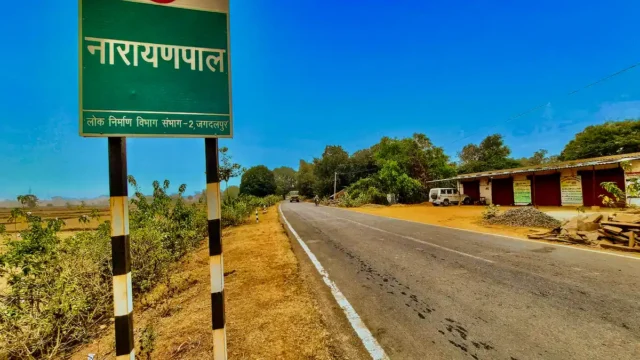
On 9 October 2026 the Tribal Affairs Ministry held the second regional review of the Forest Rights Act, 2006 in Kolkata with eight States. Nationally, over 54 lakh claims have been filed, about 25 lakh titles given, about 11 lakh are pending and over 18 lakh rejected. The focus is quick disposal, record updating, CFR rights and PVTG habitat rights.
UPSC angle: Prelims: FRA provisions, PVTG habitat rights. · Mains GS-II: welfare of STs; GS-III: forest governance.
10 Oct 2026
CAQM flying squads find 17 road-dust violations along Delhi’s Ring Road
On 3 October 2026 four CAQM flying squads inspected 25 stretches, about 35 km, of Delhi's Inner and Outer Ring Road managed by PWD. They found 17 violations of heavy visible road dust and construction and demolition waste. CAQM directed agencies to clean roads regularly to stop traffic from lifting dust back into the air.
UPSC angle: Prelims: CAQM, pollution sources. · Mains GS-III: urban air pollution.
4 Oct 2026
Varuna Elevated Corridor: ₹10,998-crore, 43.2-km road project for Varanasi
The Varuna Elevated Corridor, approved by the Union Cabinet in July 2026, is a ₹10,998-crore, 43.218-km road along the Varuna river in Varanasi. It will link NH-31 with the Varanasi Ring Road. NHAI will build it, with a cable-stayed bridge. Travel time from NH-31 to Kashi Railway Station should fall from about 40 to 20 minutes.
UPSC angle: Mains: Balancing heritage conservation and urban infrastructure.
15 Sep 2026
PM SVANidhi restructured: lending extended to 2030, 1.15 crore vendors targeted
PM SVANidhi, the collateral-free loan scheme for urban street vendors launched on 1 June 2020, completed one year of its restructured phase on 27 August 2026. Lending now runs till 31 March 2030 for 1.15 crore vendors. In the first year, 21.86 lakh loans worth ₹6,294 crore went to 10.56 lakh new beneficiaries.
UPSC angle: Prelims: SVANidhi ministry, purpose.
27 Aug 2026Learn the concept
Question text as printed in the official UPSC question paper: https://www.upsc.gov.in/sites/default/files/QP-CSM-26-010926-GENERAL%20STUDIES%20PAPER%20-%20I.pdf The model answer is original Battle IAS work; use it to learn structure, not to memorise.