
Food Security in India: Dimensions, National Food Security Act 2013, PDS Reforms, PMGKAY and Nutrition Challenges (UPSC Notes + PYQs)
UPSC has already asked about this. Read the story with these questions in mind.
- Prelims 2018If the President of India exercises his power as provided under Article 356 of the Constitution in respect of a particular State, thenSolve it below ↓
- Prelims 2023With reference to ancient India, consider the following statements: The concept of Stupa is Buddhist in origin. …Solve it below ↓
Dimensions
Availability (production, buffer stocks), access (income, PDS), absorption (clean water, health, sanitation) and stability. India produces record grain, yet NFHS-5 (2019-21) found 35.5% of children under five stunted and 57% of women anaemic: the gap is in access and absorption, not supply.
The NFSA 2013
- Coverage: about 81 crore people, based on Census 2011.
- Prices were ₹3/2/1 per kg for rice, wheat and coarse grains before grain became free.
- Maternity benefit of at least ₹6,000; meals for children through ICDS and the mid-day meal (PM POSHAN).
- Eldest woman of 18+ is head of household on the ration card.
- Grievance redress through District Grievance Redressal Officers and State Food Commissions.
PDS reforms
Aadhaar seeding and ePoS machines cut leakages; One Nation One Ration Card lets migrants draw rations anywhere; end-to-end computerisation; fortified rice distributed through all schemes by 2024. Chhattisgarh’s 2004 PDS reforms (community-run fair price shops) remain a model.
Problems
- Exclusion of eligible families because coverage still uses 2011 population figures.
- Grain-heavy, protein-poor diet; millets and pulses only lightly in PDS.
- FCI’s high costs; open-ended procurement of rice and wheat, which distorts cropping in Punjab and Haryana and depletes groundwater.
- Biometric failures in remote areas.
Way forward
Update coverage, add pulses, millets and edible oil, move gradually toward targeted cash where markets work, decentralise procurement, and link PDS with nutrition through ICDS and POSHAN Abhiyaan. The Shanta Kumar Committee (2015) suggested cutting coverage to 40% and cash transfers; both remain debated.
Food Security: UPSC angle
For UPSC CSE
Prelims: NFSA entitlements, ONORC, buffer norms, PMGKAY. Mains GS-II/III: PDS reform, nutrition security, MSP and procurement.
Food Security UPSC PYQs (Prelims)
Questions UPSC has actually asked, from the official papers. Pick an option to check yourself.
If the President of India exercises his power as provided under Article 356 of the Constitution in respect of a particular State, then
Article 356(1)(b) transfers the State legislature’s powers to Parliament. The Assembly may be dissolved or only suspended. In S.R. Bommai (1994) the Court said it should not be dissolved before Parliament approves the proclamation. Article 19 is suspended only in a national emergency under Article 358. Answer as per the official UPSC key · Battle IAS PYQ bankAnswer (b) & why
With reference to ancient India, consider the following statements :
– 1. The concept of Stupa is Buddhist in origin.
– 2. Stupa was generally a repository of relics.
– 3. Stupa was a votive and commemorative structure in Buddhist tradition.
How many of the statements given above are correct?
Burial mounds over the remains of important people go back to Vedic and pre-Buddhist times. The Buddhists took up the stupa and made it their own, so 1 is wrong. Stupas held relics of the Buddha or of monks, and small votive stupas were offered by pilgrims as acts of merit. Answer as per the official UPSC key · Battle IAS PYQ bankAnswer (b) & why
In India, the term “Public Key Infrastructure” is used in the context of
Public Key Infrastructure is the system of encryption keys, digital certificates and certifying authorities behind digital signatures and secure online transactions. In India the Controller of Certifying Authorities oversees it under the IT Act, 2000. Answer as per the official UPSC key · Battle IAS PYQ bankAnswer (a) & why
Mains PYQs on this topic
Questions from the official UPSC Mains papers (2023-2026 in the Battle IAS Mains bank), newest first. Each links to a model answer.
- UPSC Mains 2026 · GS Paper III · Q3 · 10 marks
Describe the various Technology Missions initiated in Indian agriculture and examine their role in food security.
- UPSC Mains 2024 · GS Paper I · Q14 · 15 marks
The groundwater potential of the gangetic valley is on a serious decline. How may it affect the food security of India?
- UPSC Mains 2024 · GS Paper III · Q14 · 15 marks
Elucidate the importance of buffer stocks for stabilizing agricultural prices in India. What are the challenges associated with the storage of buffer stock? Discuss.
Quick quiz
Under NFSA, an Antyodaya Anna Yojana household gets
Priority households get 5 kg per person.Answer (c)
NFSA covers up to
Section 3.Answer (b)
Under NFSA, the head of the household for the ration card is
Women’s empowerment provision.Answer (b)
FAQs
What is One Nation One Ration Card?
Portability of ration cards so beneficiaries can draw grain from any fair price shop in India.
Is grain under NFSA free?
Yes, under PMGKAY since 1 January 2023, extended for five years from January 2024.
What is the difference between food security and nutrition security?
Nutrition security also needs diverse diets, clean water, health care and sanitation.
Which committee suggested restructuring FCI?
The Shanta Kumar Committee, 2015.
Spotted an error? Tell us. We correct within 48 hours.
Image: Prabhat1729, Wikimedia Commons, CC BY-SA 4.0
How to use this in Mains
If asked: Has the National Food Security Act ensured nutritional security? Examine. (GS-II/III)
Quote: “Grain-heavy, protein-poor diet; millets and pulses only lightly in PDS.”
Use it: Use as a nutrition gap that technology missions must address.
In the news
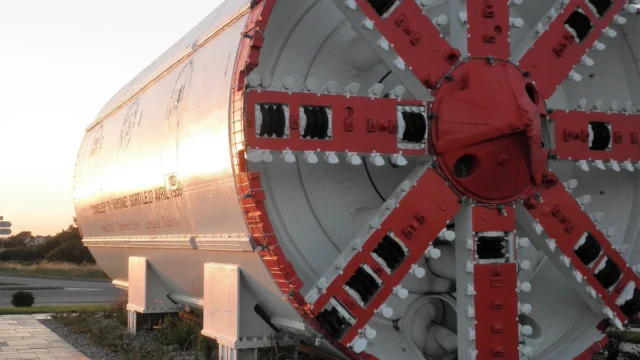
China to impose export controls on tunnel boring machines from 18 November: what it means for India
On 19 October 2026 China’s Commerce Ministry announced export controls on tunnel boring machines (TBMs) and related items from 18 November, calling them clearly dual-use. India imports TBMs for metro, rail and border tunnels and has faced customs delays on Chinese machines since 2024. China also announced controls on some drones.
19 Oct 2026
Pumped storage hydropower: India’s roadmap for 100 GW of ‘water batteries’ by 2035-36
A PIB backgrounder of 19 October 2026 explains how pumped storage projects (PSPs) will store solar and wind power for India’s grid. India runs 7.43 GW of pumped storage today, is building 15.87 GW more and has an assessed potential of 345.38 GW. A roadmap aims to add about 100 GW between 2025-26 and 2035-36.
19 Oct 2026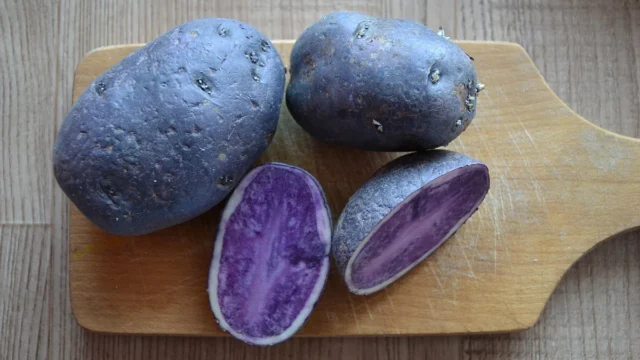
Kufri Jamunia: ICAR-CPRI’s purple potato to fight hidden hunger
A PIB backgrounder of 18 October 2026 puts the spotlight on Kufri Jamunia, a purple-fleshed potato bred by ICAR’s Central Potato Research Institute and released in 2024. It has nearly twice the Vitamin C of a common potato and several times more zinc and iron, along with antioxidants called anthocyanins. The idea is clever: instead of asking people to change what they eat, make the food they already eat more nutritious. That is biofortification.
18 Oct 2026
Oil companies bar sugar-based ethanol for 2026-27; maize incentive cut to ₹2.79 a litre
The oil marketing companies have kept sugar out of India’s ethanol programme for the coming year. The tender issued on 16 October 2026 seeks about 11 billion litres of ethanol for the 2026-27 supply year, but asks for none made from sugarcane juice, sugar syrup or B-heavy molasses, because the Government wants sugar diversion for ethanol cut to zero. Grain must now carry the load, and even the maize incentive has been cut. Read this as a live example of the food-versus-fuel trade-off.
18 Oct 2026