
Kufri Jamunia: ICAR-CPRI’s purple potato to fight hidden hunger
Next story · 18 OctIndia’s space economy to grow from about $9 billion to $40-45 billion in 7-8 years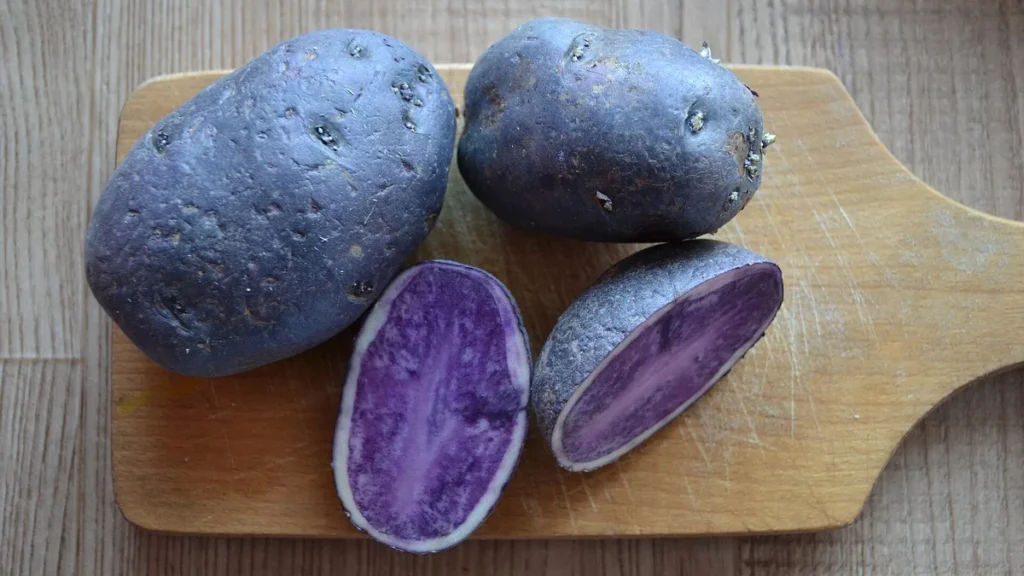
A PIB backgrounder of 18 October 2026 puts the spotlight on Kufri Jamunia, a purple-fleshed potato bred by ICAR’s Central Potato Research Institute and released in 2024. It has nearly twice the Vitamin C of a common potato and several times more zinc and iron, along with antioxidants called anthocyanins. The idea is clever: instead of asking people to change what they eat, make the food they already eat more nutritious. That is biofortification.
- Variety
- Kufri Jamunia (2024)
- Bred by
- ICAR-CPRI
- Yield
- 32-35 t/ha
- Vitamin C
- 42.75 mg/100 g
Purple potato: what happened?
Walk into almost any Indian kitchen and you will find potatoes. They are cheap, filling and loved by every age group. Now imagine if the same aloo in a child’s paratha also carried extra iron, zinc and Vitamin C. That is the promise of the purple potato.
- 18 Oct 2026: PIB released a backgrounder on Kufri Jamunia, a nutrient-rich coloured potato developed by ICAR-CPRI.
- Kufri Jamunia was officially released in 2024. It has higher levels of ascorbic acid (Vitamin C), anthocyanin and carotenoids than the earlier coloured varieties Kufri Manik (2021) and Kufri Neelkanth (2018).
- Per 100 g it has 42.75 mg Vitamin C against 23.15 mg in a common potato, 2.28 mg zinc against 0.28 mg, and 3.22 mg iron against 0.57 mg.
- It yields 32-35 tonnes per hectare under recommended practices and is recommended for the North Indian plains.
What are hidden hunger and biofortification?
- Hidden hunger means a person eats enough calories but still lacks essential vitamins and minerals such as iron, zinc and Vitamin A.
- Biofortification raises the nutrient content of a crop through plant breeding, so the food is naturally more nutritious.
- Fortification is different: nutrients are added during processing, as in fortified rice or iodised salt.
- Anthocyanins are natural pigments that give purple, red and blue colours, and act as antioxidants.
- ICAR-CPRI (Central Potato Research Institute), headquartered in Shimla, bred all three coloured varieties.
How does Kufri Jamunia compare?
| Nutrient (per 100 g) | Kufri Jamunia | Common potato |
|---|---|---|
| Vitamin C | 42.75 mg | 23.15 mg |
| Zinc | 2.28 mg | 0.28 mg |
| Iron | 3.22 mg | 0.57 mg |
| Anthocyanins (flesh) | 42.05 mg | Not given |
| Carotenoids (flesh) | About 161 µg | Not given |
Which policy and legal provisions apply?
- Article 47 (DPSP): the State shall regard raising the level of nutrition and improving public health as among its primary duties.
- Seventh Schedule, State List Entry 14: agriculture, including agricultural research; ICAR supports research nationally.
- National Food Security Act, 2013: legal right to subsidised foodgrains; nutrition is part of its wider aim.
- Protection of Plant Varieties and Farmers’ Rights Act, 2001: framework for registering new plant varieties and protecting farmers’ rights.
How does a new variety reach the plate?
From lab to kitchen
- ICAR-CPRI breeds and tests the variety in multi-location trials
- Variety released (Kufri Jamunia, 2024)
- Seed multiplied and supplied to farmers
- Farmers in the North Indian plains grow it
- Consumers eat it in curry, paratha or processed flour
Which numbers should you remember?
| Number | What it means |
|---|---|
| 32-35 t/ha | Yield under recommended practices |
| About 49 t/ha | Yield in station trials at 90 days |
| About 90% | Marketable share of total yield in trials |
| 6-8 weeks | Dormancy period, so tubers do not sprout quickly |
| 10-12 | Medium to large tubers per plant |
Long dormancy and low rotting mean better storage, which matters to farmers who wait for good prices after harvest.
Why does this matter?
| Angle | What to note |
|---|---|
| Nutrition | Tackles iron and zinc deficiency through a staple food. |
| Agriculture | High yield and good storage make it attractive to growers. |
| Science | An example of conventional breeding, not genetic modification. |
| Markets | Colour and novelty give it strong consumer appeal and value-added uses. |
What are the challenges?
- Quality seed is needed in large amounts before farmers can adopt a new variety widely.
- Consumers may hesitate to buy an unfamiliar purple potato at first.
- Farmers need assured markets or a price premium to switch from familiar varieties.
- One crop alone cannot end hidden hunger; diets need variety too.
What should be done next?
- Scale up seed production through State seed agencies and farmer producer organisations.
- Promote the variety through Krishi Vigyan Kendras in the North Indian plains.
- Link it to nutrition schemes and school meals where suitable.
- Build processing for purple potato flour and dehydrated products to widen demand.
What can Prelims ask on biofortified potatoes?
- Kufri Jamunia: purple-fleshed, released 2024 by ICAR-CPRI.
- Kufri Neelkanth: first purple-skinned specialty potato of CPRI (2018); Kufri Manik: deep red tubers (2021).
- ICAR-CPRI is in Shimla.
- Biofortification = breeding for nutrients; fortification = adding nutrients in processing.
- Anthocyanins: natural pigments with antioxidant value.
- Article 47: nutrition and public health as a primary duty.
How to write about hidden hunger in Mains
Practice question (10 marks, 150 words): What is hidden hunger? How can biofortification help India address it? Give examples.
- Intro: define hidden hunger: enough calories, too few micronutrients.
- Body 1: biofortification vs fortification.
- Body 2: example: Kufri Jamunia, with Vitamin C, zinc and iron well above a common potato.
- Body 3: barriers: seed supply, consumer acceptance, prices.
- Conclusion: biofortified staples plus diet diversity plus awareness.
Image: Blanka Luppová, via Wikimedia Commons, CC BY-SA 4.0 (purple-fleshed potatoes, for illustration)
How to use this in Mains
If asked: How can biofortification help address malnutrition in India? (GS-III)
Quote: “Unlike conventional food fortification, which adds nutrients during processing, biofortification integrates nutrition directly into the crop.”
Use it: Use this one line to define the idea clearly, then give Kufri Jamunia with its numbers as your example.
If asked: “Hidden hunger is India’s silent emergency.” Discuss. (GS-II)
Quote: “Hidden hunger remains a major nutritional challenge despite adequate calorie intake in many populations.”
Use it: Start with this line to show you know hidden hunger is about quality, not quantity, of food. Then move to solutions.
Exam angle
Prelims: Kufri Jamunia, CPRI, anthocyanins, biofortification vs fortification. · Mains GS-III: nutrition security; GS-II: hunger.
Practice MCQs
Original practice questions (not PYQs).
Kufri Jamunia, recently in the news, is a
Answer (b) & explanation
Kufri Jamunia is a purple-fleshed potato released by ICAR-CPRI in 2024 (PIB, 18 Oct 2026).
Consider the following statements:
1. Biofortification raises the nutrient content of a crop through plant breeding.
2. Fortification adds nutrients to food during processing.
3. Anthocyanins are natural pigments with antioxidant properties.
How many of the statements given above are correct?
Answer (c) & explanation
All three are correct (PIB backgrounder, 18 Oct 2026).
The Central Potato Research Institute (CPRI) is located at
Answer (b) & explanation
ICAR-CPRI is headquartered in Shimla, Himachal Pradesh.
Questions students ask about this
What is Kufri Jamunia?
A purple-fleshed, nutrient-rich potato variety released by ICAR-CPRI in 2024.
How is it better than a common potato?
Per 100 g it has about twice the Vitamin C, about eight times the zinc and over five times the iron.
Is it genetically modified?
No. It is bred through conventional plant breeding, which is what biofortification means.
Where can it be grown?
It is recommended for the North Indian plains.
Keep studying
Go deeper
Official source: PIB Backgrounder, 18 Oct 2026: India's Nutrient-Rich Purple Potato (Kufri Jamunia)
facts from cited sources only; faculty review pending