
Article 21 (Right to Life and Personal Liberty): Meaning, Expansion, Key Cases and UPSC PYQs
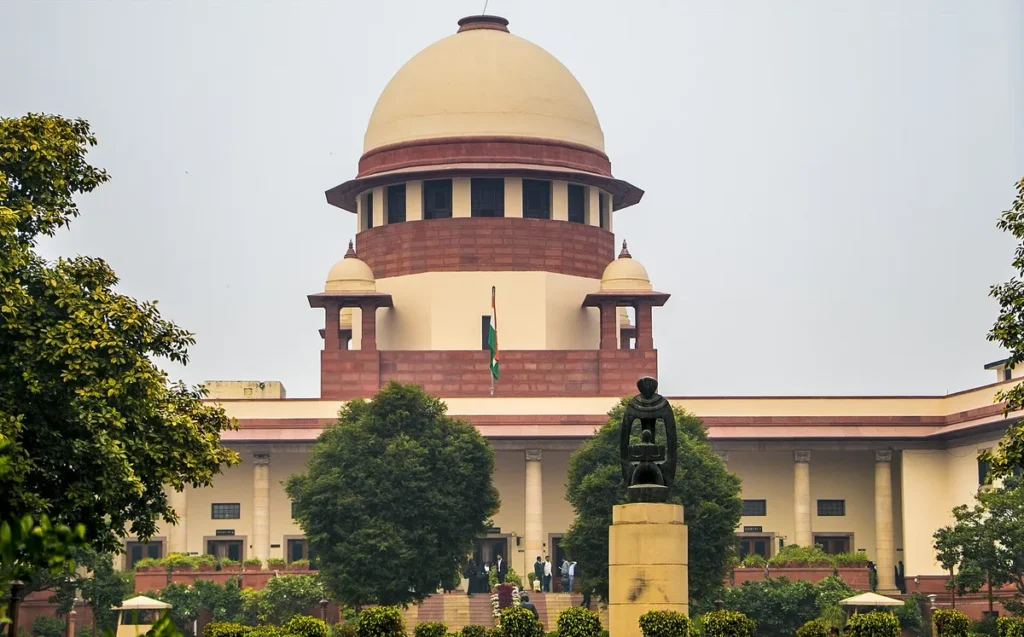
UPSC has already asked about this. Read the story with these questions in mind.
- Prelims 2018Right to Privacy is protected as an intrinsic part of Right to Life and Personal Liberty. Which of the following in the Constitution of…Solve it below ↓
- Mains 2023 · GS2“The Constitution of India is a living instrument with capabilities of enormous dynamism. It is a constitution made for a progressive society.” Illustrate with…See model answer →
See all 6 PYQs
- Prelims 2019Which Article of the Constitution of India safeguards one's right to marry the person of one's choice?Solve it below ↓
- Prelims 2024Under which of the following Articles of the Constitution of India, has the Supreme Court of India placed the Right to Privacy ?Solve it below ↓
- Prelims 2012The National Green Tribunal Act, 2010 was enacted in consonance with which of the following provisions of the Constitution of India?Solve it below ↓
- Mains 2024 · GS2Right to privacy is intrinsic to life and personal liberty and is inherently protected under Article 21 of the constitution. Explain. In this reference…See model answer →
Background: “procedure established by law”
The Constituent Assembly first considered the American “due process of law” clause for Article 21. After advice from Justice Felix Frankfurter and concern that due process would let courts strike down land reform and preventive detention laws, the Assembly chose the narrower Japanese phrase “procedure established by law“. In A.K. Gopalan (1950) the Supreme Court read this literally: if a valid law laid down a procedure, the detention was lawful. It took nearly three decades, and the experience of the Emergency, for the Court to read fairness back into the Article.
What does Article 21 say?
The text is one sentence. Two features matter: it applies to every person (not just citizens), and it protects against the State. Read with Article 359 as amended in 1978, Articles 20 and 21 cannot be suspended even during a National Emergency.
From A.K. Gopalan to Maneka Gandhi
In A.K. Gopalan (1950) the Court read “procedure established by law” literally: any procedure validly enacted was enough, and Articles 19 and 21 were seen as separate compartments. In Maneka Gandhi v. Union of India (1978) the Court held that the procedure must be just, fair and reasonable, and that Articles 14, 19 and 21 operate together (the “golden triangle”). This brought in a substantive due-process standard close to the American “due process of law”. In ADM Jabalpur (1976) the Court had held that Article 21 could be suspended during the Emergency. Puttaswamy (2017) expressly overruled that view.
- Borrowed from Japan
- Asks only whether a valid law exists
- Gopalan (1950) view
- Narrower protection
- American idea
- Asks whether the law itself is fair
- Effectively adopted after Maneka Gandhi (1978)
- Wider protection
Rights read into Article 21 (selected)
| Right | Leading case |
|---|---|
| Speedy trial | Hussainara Khatoon (1979) |
| Livelihood | Olga Tellis (1985) |
| Pollution-free environment | Subhash Kumar (1991) |
| Privacy | K.S. Puttaswamy (2017), 9 judges |
| Marry a person of one’s choice | Shafin Jahan (2018) |
| Die with dignity (passive euthanasia, living wills) | Common Cause (2018) |
| Free legal aid | M.H. Hoskot (1978); also Art. 39A |
The National Green Tribunal Act, 2010 itself cites the right to a healthy environment as part of Article 21.
Article 21A: Right to Education
The 86th Amendment (2002) inserted Article 21A: the State shall provide free and compulsory education to all children aged 6 to 14, in the manner the State determines by law. That law is the Right of Children to Free and Compulsory Education Act, 2009. The same amendment added the 11th Fundamental Duty.
- 1950A.K. Gopalan: literal reading
- 1978Maneka Gandhi: just, fair, reasonable
- 1985Olga Tellis: livelihood
- 1997Vishaka: workplace dignity
- 2017Puttaswamy: privacy
- 2018Common Cause: passive euthanasia
Why Article 21 matters for UPSC
Article 21 is where most of Indian constitutional law’s growth has happened, so it links Polity (GS-II) with environment (GS-III), technology and data protection (GS-III) and ethics (GS-IV: dignity, autonomy). One concept, four papers: exactly the interlinked preparation Battle IAS recommends.
Rights read into Article 21
| Right | Leading case |
|---|---|
| Livelihood | Olga Tellis (1985) |
| Speedy trial | Hussainara Khatoon (1979) |
| Free legal aid | M.H. Hoskot (1978) |
| Clean environment and pollution-free water | Subhash Kumar (1991) |
| Dignity at the workplace | Vishaka (1997) |
| Privacy | K.S. Puttaswamy (2017) |
| Die with dignity (passive euthanasia) | Common Cause (2018) |
| Freedom from adverse effects of climate change | M.K. Ranjitsinh (2024) |
Death penalty and Article 21
Article 21 allows deprivation of life by a fair procedure, so the death penalty is constitutional. In Bachan Singh (1980) the Court limited it to the “rarest of rare” cases. In Shatrughan Chauhan (2014) it held that long, unexplained delay in deciding mercy petitions can justify commuting a death sentence, and that solitary confinement before the mercy plea is decided is unconstitutional. Debates continue over mitigating evidence and the consistency of sentencing.
Privacy after Puttaswamy
A nine-judge bench in K.S. Puttaswamy (2017) unanimously held privacy to be a Fundamental Right flowing mainly from Article 21, overruling M.P. Sharma (1954) and Kharak Singh (1962) on this point. It set a three-part test for any intrusion: legality, a legitimate aim, and proportionality. The test shaped the later Aadhaar judgment (2018) and the Digital Personal Data Protection Act, 2023. Decriminalisation of consensual same-sex relations in Navtej Singh Johar (2018) also drew on dignity and privacy.
Limits and criticism
- Judges, not legislatures, have created many of these rights, which raises questions of judicial overreach.
- Rights such as health and shelter are hard to enforce when resources are scarce.
- Long pre-trial detention under special laws still tests the promise of personal liberty.
Article 21: UPSC angle
For UPSC CSE
Prelims: which right is located in which Article (privacy, marriage, environment), Art. 21A, non-suspension. UPSC asked on privacy in 2018 and again in 2024. Mains GS-II: expansion of Art. 21 via judicial interpretation, its limits, privacy and surveillance, death penalty and dignity.
Article 21 UPSC PYQs (Prelims)
Questions UPSC has actually asked, from the official papers. Pick an option to check yourself.
Right to Privacy is protected as an intrinsic part of Right to Life and Personal Liberty. Which of the following in the Constitution of India correctly and appropriately imply the above statement?
Puttaswamy (2017) located privacy in Article 21 and the freedoms of Part III. Answer as per the official UPSC key · Battle IAS PYQ bankAnswer (c) & why
Which Article of the Constitution of India safeguards one's right to marry the person of one's choice?
Shafin Jahan (2018): choosing a life partner is part of personal liberty under Article 21. Answer as per the official UPSC key · Battle IAS PYQ bankAnswer (b) & why
Under which of the following Articles of the Constitution of India, has the Supreme Court of India placed the Right to Privacy ?
Privacy was placed under Article 21, the same idea UPSC tested in 2018. Answer as per the official UPSC key · Battle IAS PYQ bankAnswer (d) & why
The National Green Tribunal Act, 2010 was enacted in consonance with which of the following provisions of the Constitution of India?
– 1. Right to healthy environment, construed as a part of Right to life under Article 21
– 2. Provision of grants for raising the level of administration in the Scheduled Areas for the welfare of Scheduled Tribes under Article 275(1)
– 3. Powers and functions of Gram Sabha as mentioned under Article 243(A)
Select the correct answer using the codes given below :
The NGT Act, 2010 refers to the right to a healthy environment as part of Article 21; the other two provisions are unrelated. Answer as per the official UPSC key · Battle IAS PYQ bankAnswer (a) & why
Mains PYQs on this topic
Questions from the official UPSC Mains papers (2023-2026 in the Battle IAS Mains bank), newest first. Each links to a model answer.
- UPSC Mains 2026 · GS Paper II · Q1 · 10 marks
Right to privacy relating to self-identity is very dear to every human being and well protected under Article 21 of the Constitution. In this context, examine the effect of the amendment in 2026, to the Transgender Persons (Protection of Rights) Act, 2019.
- UPSC Mains 2024 · GS Paper II · Q12 · 15 marks
Right to privacy is intrinsic to life and personal liberty and is inherently protected under Article 21 of the constitution. Explain. In this reference discuss the law relating to D.N.A. testing of child in the womb to establish its paternity.
- UPSC Mains 2023 · GS Paper II · Q11 · 15 marks
“The Constitution of India is a living instrument with capabilities of enormous dynamism. It is a constitution made for a progressive society.” Illustrate with special reference to the expanding horizons of the right to life and personal liberty.
Quick quiz
Which case held that “procedure established by law” under Article 21 must be just, fair and reasonable?
1978, linking Articles 14, 19 and 21.Answer (b)
Article 21A was inserted by the
2002.Answer (c)
Which judgment recognised passive euthanasia and living wills under Article 21?
Common Cause v. Union of India (2018), Constitution Bench. Aruna Shanbaug (2011) allowed passive euthanasia under guidelines but not living wills.Answer (b)
FAQs
What is Article 21 in simple words?
No person can be deprived of life or personal liberty except by a fair, just and reasonable procedure established by law.
Is Article 21 available to foreigners?
Yes. It uses the word “person”, so it protects citizens and non-citizens.
Can Article 21 be suspended during an emergency?
No. Since the 44th Amendment (1978), Articles 20 and 21 cannot be suspended.
What is Article 21A?
The right of children aged 6–14 to free and compulsory education, added by the 86th Amendment, 2002.
Which rights come under Article 21?
Among others: privacy, livelihood, clean environment, speedy trial, legal aid, shelter, dignity and the right to choose a partner.
Did ADM Jabalpur survive?
No. The 1976 ruling that habeas corpus could be suspended was expressly overruled in K.S. Puttaswamy (2017), and the 44th Amendment had already made Article 21 non-suspendable.
Is the right to health part of Article 21?
Yes. Courts have read health and emergency medical care into Article 21, for instance in Paschim Banga Khet Mazdoor Samity (1996).
Spotted an error? Tell us. We correct within 48 hours.
Image: Subhashish Panigrahi, Wikimedia Commons, CC BY-SA 4.0
How to use this in Mains
If asked: UPSC Mains 2026, GS-II: Right to privacy relating to self-identity is very dear to every human being and well protected under Article 21 of the Constitution. In this context, examine the effect of the amendment in 2026, to the Transgender Persons (Protection of Rights) Act, 2019.
Quote: “Article 21 is where most of Indian constitutional law’s growth has happened, so it links Polity (GS-II) with environment (GS-III), technology and data protection (GS-III) and ethics (GS-IV: dignity, autonomy).”
Use it: Use to show Article 21's breadth before privacy.
In the news

Supreme Court: no prior approval under Section 17A needed to probe a bribe demand
In a judgment of 16 October 2026, a Supreme Court Bench of Justices S.V.N. Bhatti and N.V. Anjaria held that investigating a bribe demand by a public servant does not need prior approval under Section 17A of the Prevention of Corruption Act. Asking for a bribe, the court said, is not part of discharging official duties.
19 Oct 2026
CCPA acts against online sale of explosives: 3,940 sellers delisted from seven platforms
The Central Consumer Protection Authority (CCPA) said on 19 October 2026 that 3,940 sellers of regulated explosives such as ammonium nitrate, picric acid and PETN have been delisted from seven online platforms after its action. It has fined Dial4Trade and ExportersIndia ₹10 lakh per order, and other cases are under hearing or investigation.
19 Oct 2026
India to host 61st CIML meeting on legal metrology in New Delhi, 26–28 October
India will host the 61st meeting of the International Committee of Legal Metrology (CIML) for the first time, in New Delhi from 26 to 28 October 2026. The Department of Consumer Affairs is organising it with the International Organization of Legal Metrology (OIML), and more than 100 delegates are expected, PIB said on 19 October.
19 Oct 2026
NMC withdraws MSMER-2023: medical colleges lose the fixed penalty rulebook, annual disclosure stays
The National Medical Commission (NMC) has de-notified the Maintenance of Standards of Medical Education Regulations, 2023 (MSMER-2023) by a notification dated 14 October 2026, published in the Gazette on 16 October. Its fixed penalties, including seat cuts and fines of up to ₹5 lakh for false records, go with it. The Annual Disclosure Report stays.
19 Oct 2026