
UPSC Mains 2024 GS2 Q12: model answer
Right to privacy is intrinsic to life and personal liberty and is inherently protected under Article 21 of the constitution. Explain. In this reference discuss the law relating to D.N.A. testing of child in the womb to establish its paternity.
What the question wants
Explain privacy as part of Article 21, then the legal position on prenatal paternity DNA tests.
How to structure it
Intro: In Justice K.S. Puttaswamy v. Union of India (2017). Body: (1) Law on DNA tests for paternity; (2) Child in the womb. Conclusion: Privacy protects both the mother and the unborn child's future dignity.
- 1(1) Law on DNA tests for paternity
- 2(2) Child in the womb
Model answer
In Justice K.S. Puttaswamy v. Union of India (2017), a nine-judge bench unanimously held that privacy is a fundamental right, intrinsic to life and liberty under Article 21 and to the freedoms in Part III.
It covers bodily integrity, informational privacy (including genetic data) and decisional autonomy. Any restriction must pass the tests of legality, legitimate aim and proportionality.
Law on DNA tests for paternity
- Section 112 of the Evidence Act (now Section 116 of the Bharatiya Sakshya Adhiniyam, 2023) presumes a child born during a valid marriage to be legitimate, unless non-access is proved.
- Goutam Kundu (1993): courts cannot order blood or DNA tests as a roving inquiry; there must be a strong prima facie case.
- Nandlal Wasudeo Badwaik (2014): where a DNA test is done, its result prevails over the presumption.
- Aparna Ajinkya Firodia (2023): DNA testing of a child should be ordered only in cases of eminent need, balancing the child's privacy and dignity.
Child in the womb
- A prenatal paternity test needs invasive procedures like amniocentesis, with risk to the mother and foetus.
- It involves the mother's bodily integrity and reproductive autonomy; it cannot be forced without her consent.
- The PC-PNDT Act, 1994 strictly bans sex determination, so any test must not be misused for that purpose.
- There is no specific statute; the DNA Technology (Use and Application) Regulation Bill was withdrawn in 2023.
Privacy protects both the mother and the unborn child's future dignity. Courts must order such tests only when truth cannot be found by other means.
Keywords, cases and data to drop in
Puttaswamy 2017 bodily integrity Section 112 presumption Goutam Kundu Aparna Ajinkya Firodia 2023 PC-PNDT
Where most answers lose marks
- Not discussing prenatal testing specifically.
- Ignoring the mother's consent.
Same theme in Prelims
'X' was addressing a seminar on the meaning of the term 'law' as provided under Article 13, Part III of the Constitution of India. 'X' explained that the meaning of the term 'law' in the Constitution of India was very comprehensive. It included ordinances, orders and even rules and regulations. 'Y' pointed out that the term 'law' in Article 13 also included custom or usage having in the territory of India the force of law, to which 'X' was not convinced.
Based on the above, select the correct conclusion from the options given below :
Answer (d) & explanation
Only Y's view is correct (d). Article 13(3)(a) defines "law" to include any Ordinance, order, bye-law, rule, regulation, notification, and custom or usage having the force of law in India. So Y is right that custom is included. Option (a) is wrong: X rejected custom, so his view as a whole fails. Option (b) is wrong: Y's view matches the text. Option (c) is wrong: X's view is not fully correct.
Notice why it matters: Article 13 makes any law, including a custom, void if it violates Fundamental Rights. This is the root of judicial review in India. Courts have struck down discriminatory customs on this basis. Whether personal laws are "law" under Article 13 is still debated.
option (c) tempts you because X's first half is true. UPSC judges the whole view, and X's refusal on custom makes it wrong.
Answer as per the official UPSC answer key.
Consider the following pairs :
| Provision in the Constitution of India | Stated under
| I. Separation of Judiciary from the Executive in the public services of the State | The Directive Principles of State Policy
| II. Valuing and preserving of the rich heritage of our composite culture | The Fundamental Duties
| III. Prohibition of employment of children below the age of 14 years in factories | The Fundamental Rights
How many of the above pairs are correctly matched?
Answer (c) & explanation
All three pairs are correctly matched (c). Pair I is right: separation of the judiciary from the executive is Article 50, a Directive Principle. Pair II is right: valuing and preserving our composite culture is Article 51A(f), a Fundamental Duty. Pair III is right: no child below 14 may work in factories, mines or hazardous work under Article 24, a Fundamental Right. So options (a), (b) and (d) fail.
Notice related provisions: Article 21A gives free education for ages 6–14 (86th Amendment, 2002), and Article 51A(k) asks parents to educate their children. The Child Labour Amendment Act, 2016 banned all child labour below 14. Article 39(e) and (f) protect children too.
Article 45 (early childhood care, a DPSP) and Article 24 (a Fundamental Right) both talk about children. Keep them apart.
Answer as per the official UPSC answer key.
Under which of the following Articles of the Constitution of India, has the Supreme Court of India placed the Right to Privacy ?
Answer (d) & explanation
The Supreme Court placed the Right to Privacy under Article 21 (d). In Justice K.S. Puttaswamy v. Union of India (2017), a nine-judge Bench held that privacy is part of the right to life and personal liberty under Article 21, and also flows from the freedoms in Part III. It overruled the older M.P. Sharma (1954) and Kharak Singh (1962) rulings. Option (a) is wrong: Article 15 bans discrimination. Option (b) is wrong: Article 16 gives equal opportunity in public jobs. Option (c) is wrong: Article 19 lists six freedoms, such as speech.
Notice that most new rights, such as food, shelter, livelihood and a clean environment, came through Article 21. Parliament later passed the Digital Personal Data Protection Act, 2023.
Answer as per the official UPSC answer key.
Fresh examples from current affairs
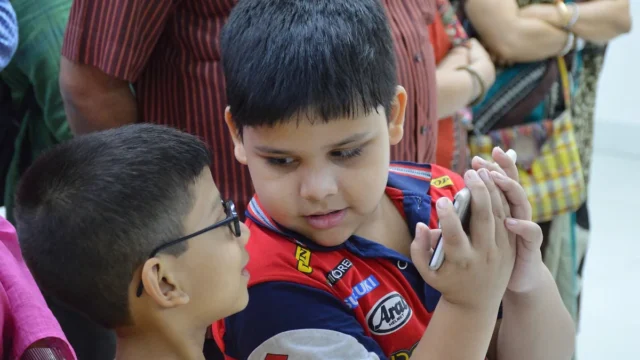
Supreme Court: children have a right to the internet, and platforms must block child abuse material
In a judgment of 15 October 2026, the Supreme Court said that the right to access and use the internet is a fundamental right of every person, children included, under Article 21 read with Article 19(1)(a). So the answer to online danger is not to lock children out but to go after the abusive content and the platforms that fail to remove it. The Court ordered a National Hash and URL List Database, two-hour reporting of unknown abuse material, and loss of revenue for platforms that profit from it through paywalls.
UPSC angle: Prelims: Arts. 21 and 19(1)(a); POCSO s.15; IT Act ss.67B and 79; CSEAM. · Mains GS-II: rights of children, regulation of platforms.
18 Oct 2026
₹1,423 crore over three years for implementing PCR and SC/ST Atrocities Acts; 217 exclusive special courts
The Centre released ₹1,423.30 crore to States and UTs over 2022-23 to 2024-25 to implement the Protection of Civil Rights Act, 1955 and the SC/ST (Prevention of Atrocities) Act, 1989. States report 217 Exclusive Special Courts in 15 States and UTs. Yet 65,646 cases were registered in 2024 and 3,92,006 were pending trial at year end.
UPSC angle: Prelims: PCR Act year; Art. 17. · Mains: Why do atrocity cases see low conviction?
1 Oct 2026
DPDP Rules, 2025 notified: data protection law now fully in force
Compliance timelines matter for small firms. The independence of the Data Protection Board is the main criticism to note.
UPSC angle: Prelims: DPDP terms. · Mains: data protection.
17 Nov 2025
OTT oversight under IT Rules 2021
Self-regulation first, government last, is the design.
UPSC angle: Prelims: IT Rules 2021.
6 Aug 2025Learn the concept
Question text as printed in the official UPSC question paper: https://www.upsc.gov.in/sites/default/files/QP_CSM_2024_GenStud_II_03102024.pdf The model answer is original Battle IAS work; use it to learn structure, not to memorise.