
Climate Change: Science, Impacts on India, UNFCCC to Paris Agreement, COP Outcomes and India’s Commitments (UPSC Notes + PYQs)
UPSC has already asked about this. Read the story with these questions in mind.
- Prelims 2016The term ‘Intended Nationally Determined Contributions’ is sometimes seen in the news in the context ofSolve it below ↓
- Prelims 2014The scientific view is that the increase in global temperature should not exceed 2°C above pre-industrial level. If the global temperature increases beyond 3°C…Solve it below ↓
See all 6 PYQs
- Prelims 2018The Partnership for Action on Green Economy (PAGE), a UN mechanism to assist countries transition towards greener and more inclusive economies, emerged atSolve it below ↓
- Prelims 2021At the national level, which ministry is the nodal agency to ensure effective implementation of the Scheduled Tribes and Other Traditional Forest Dwellers (Recognition…Solve it below ↓
- Prelims 2016With reference to the Agreement at the UNFCCC Meeting in Paris in 2015, which of the following statements is/are correct?Solve with answer →
- Prelims 2025Consider the following statements: Article 6 of the Paris Agreement on climate change is frequently discussed in global discussions on sustainable development and climate…Solve with answer →
The science in brief
Carbon dioxide, methane, nitrous oxide and fluorinated gases trap outgoing heat. Atmospheric CO₂ crossed 420 ppm, against about 280 ppm before industrialisation. Each of the last decades has been warmer than the one before; 2024 was the first calendar year above 1.5°C on several datasets, though the Paris goal refers to long-term averages.
Impacts on India
- More intense heat waves (2024 recorded over 40,000 suspected heat-stroke cases).
- Erratic monsoon: more extreme rain days and longer dry spells.
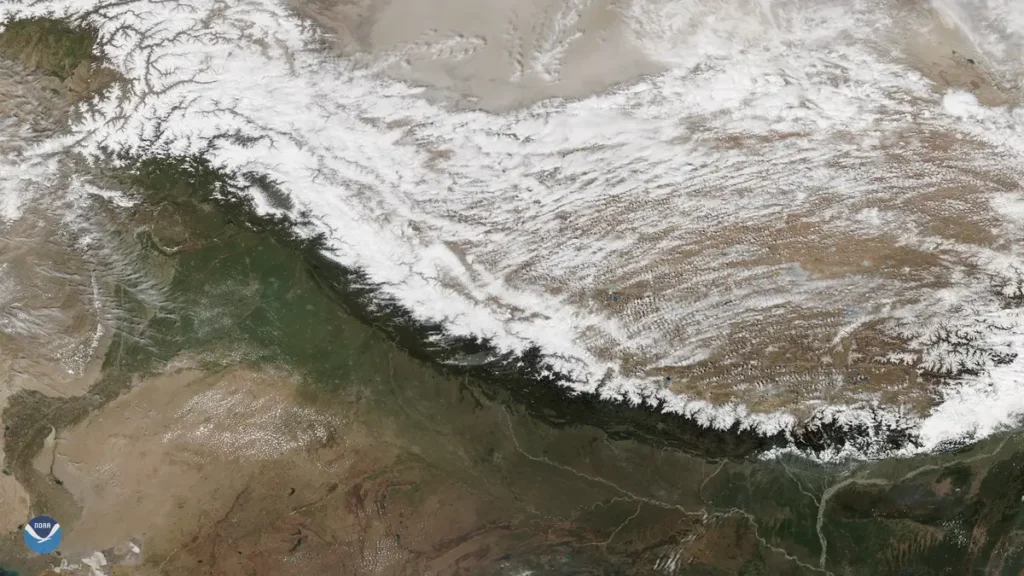
- Glacier retreat in the Himalayas; glacial lake outburst floods (South Lhonak, Sikkim, 2023).
- Sea-level rise and cyclone intensification on the coasts; the Arabian Sea is warming fast.
- Wheat yield losses from terminal heat; health, labour productivity and migration effects.
The global regime
| Milestone | Year | What it did |
|---|---|---|
| UNFCCC | 1992 (Rio) | Framework; “common but differentiated responsibilities” (CBDR) |
| Kyoto Protocol | 1997 | Binding cuts for developed countries; carbon markets (CDM) |
| Paris Agreement | 2015 | All countries submit NDCs; five-yearly global stocktake |
| COP26 Glasgow | 2021 | “Phase down” of unabated coal; India announced net zero 2070 |
| COP27, COP28 | 2022, 2023 | Loss and damage fund; first global stocktake: “transition away from fossil fuels” |
| COP29 Baku | 2024 | New finance goal: $300 billion a year by 2035 |
India’s commitments
- Updated NDC (2022): cut emissions intensity of GDP by 45% from 2005 levels by 2030; 50% of installed power capacity from non-fossil sources by 2030 (crossed in 2025); an additional carbon sink of 2.5-3 billion tonnes CO₂-equivalent.
- Net zero by 2070; LiFE (Lifestyle for Environment) mission.
- NAPCC (2008) with eight missions, and State action plans.
- Carbon Credit Trading Scheme (2023), Green Credit Programme, International Solar Alliance.
India’s position
India’s per capita emissions are about a third of the world average and its historical share is small. It insists on CBDR, climate finance and technology transfer, and rejects trade measures like the EU’s Carbon Border Adjustment Mechanism as unilateral. Mains answers should balance development needs with India’s own vulnerability.
Climate Change: UPSC angle
For UPSC CSE
Prelims: COP outcomes, NDC numbers, gases and GWP, NAPCC missions. Mains GS-III: climate impacts on India, adaptation, finance and equity.
Climate Change UPSC PYQs (Prelims)
Questions UPSC has actually asked, from the official papers. Pick an option to check yourself.
The term ‘Intended Nationally Determined Contributions’ is sometimes seen in the news in the context of
Before Paris (2015), each country submitted its INDC, a climate pledge it set for itself. Once a country ratified the Agreement, its INDC became its NDC. India pledged to cut emissions intensity by 33–35% from 2005 levels by 2030, and raised this to 45% in 2022. Answer as per the official UPSC key · Battle IAS PYQ bankAnswer (b) & why
The scientific view is that the increase in global temperature should not exceed 2°C above pre-industrial level. If the global temperature increases beyond 3°C above the pre-industrial level, what can be its possible impact/impacts on the world?
– 1. Terrestrial biosphere tends toward a net carbon source.
– 2. Widespread coral mortality will occur.
– 3. All the global wetlands will permanently disappear.
– 4. Cultivation of cereals will not be possible anywhere in the world.
Select the correct answer using the code given below.
The IPCC’s Fourth Assessment warned that above about 3°C, land ecosystems would start releasing more carbon than they take up, and corals would die across wide areas. “All” wetlands vanishing and cereals failing “anywhere” are extreme claims. Answer as per the official UPSC key · Battle IAS PYQ bankAnswer (b) & why
The Partnership for Action on Green Economy (PAGE), a UN mechanism to assist countries transition towards greener and more inclusive economies, emerged at
PAGE was set up in 2013 as a response to the call of Rio+20 (2012), whose outcome document “The Future We Want” backed the green economy idea. UNEP, ILO, UNDP, UNIDO and UNITAR run it together. Answer as per the official UPSC key · Battle IAS PYQ bankAnswer (b) & why
At the national level, which ministry is the nodal agency to ensure effective implementation of the Scheduled Tribes and Other Traditional Forest Dwellers (Recognition of Forest Rights) Act, 2006?
The Forest Rights Act recognises the rights of forest-dwelling communities, so the Ministry of Tribal Affairs is its nodal ministry. The Environment Ministry handles forest conservation laws, which is why it looks tempting. Answer as per the official UPSC key · Battle IAS PYQ bankAnswer (d) & why
Mains PYQs on this topic
Questions from the official UPSC Mains papers (2023-2026 in the Battle IAS Mains bank), newest first. Each links to a model answer.
- UPSC Mains 2025 · GS Paper I · Q4 · 10 marks
How are climate change and the sea level rise affecting the very existence of many island nations? Discuss with examples.
- UPSC Mains 2025 · GS Paper III · Q18 · 15 marks
Write a review on India’s climate commitments under the Paris Agreement (2015) and mention how these have been further strengthened in COP26 (2021). In this direction, how has the first Nationally Determined Contribution intended by India been updated in 2022 ?
- UPSC Mains 2023 · GS Paper I · Q4 · 10 marks
Discuss the consequences of climate change on the food security in tropical countries.
Quick quiz
India’s updated NDC targets a reduction in emissions intensity of GDP by 2030 of
From 2005 levels.Answer (b)
The loss and damage fund was operationalised at
Agreed at COP27, operationalised at COP28.Answer (b)
India’s net zero target year is
Announced at COP26.Answer (c)
FAQs
What is CBDR?
Common but differentiated responsibilities: all countries must act, but developed countries bear greater responsibility for past emissions.
What is an NDC?
A Nationally Determined Contribution: a country’s own climate pledge under the Paris Agreement, updated every five years.
Has the world crossed 1.5°C?
Single years have; the Paris limit refers to multi-decade averages, which are approaching 1.5°C.
How many missions does NAPCC have?
Eight originally, including solar, energy efficiency and Himalayan ecosystem missions.
Spotted an error? Tell us. We correct within 48 hours.
Image: https://commons.wikimedia.org/wiki/File:NOAA-20_Shows_Snowpack_Within_The_Himalayas_(NESDIS_2020-04-02).jpg
How to use this in Mains
If asked: Discuss the impact of climate change on India and India's stand in climate negotiations. (GS-III)
Quote: “India’s per capita emissions are about a third of the world average and its historical share is small.”
Use it: Use to state India's climate-justice stand.
In the news
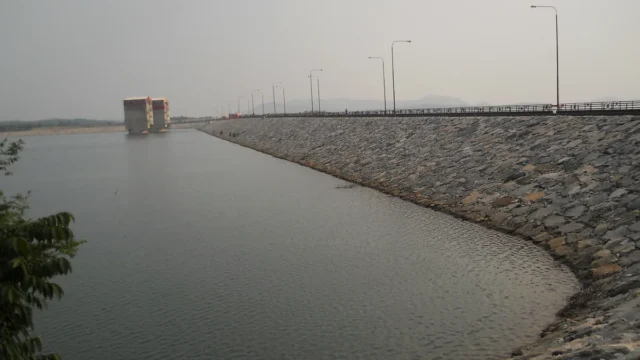
Pumped storage hydropower: India’s roadmap for 100 GW of ‘water batteries’ by 2035-36
A PIB backgrounder of 19 October 2026 explains how pumped storage projects (PSPs) will store solar and wind power for India’s grid. India runs 7.43 GW of pumped storage today, is building 15.87 GW more and has an assessed potential of 345.38 GW. A roadmap aims to add about 100 GW between 2025-26 and 2035-36.
19 Oct 2026
NBA shares Rs 1.19 crore with 29 State Biodiversity Boards from use of crop genetic resources
On 17 October 2026 the National Biodiversity Authority (NBA) said it had shared ₹1.19 crore with 29 State Biodiversity Boards and one UT Biodiversity Council. The money came from seed companies that used Indian maize, rice, pearl millet and cotton for research and commercial hybrids. As the crops were bought from markets and the original holders could not be traced, the amount was split in proportion to each State’s cultivation area. The release comes two days before the CBD COP 17 opens in Yerevan.
18 Oct 2026
Oil companies bar sugar-based ethanol for 2026-27; maize incentive cut to ₹2.79 a litre
The oil marketing companies have kept sugar out of India’s ethanol programme for the coming year. The tender issued on 16 October 2026 seeks about 11 billion litres of ethanol for the 2026-27 supply year, but asks for none made from sugarcane juice, sugar syrup or B-heavy molasses, because the Government wants sugar diversion for ethanol cut to zero. Grain must now carry the load, and even the maize incentive has been cut. Read this as a live example of the food-versus-fuel trade-off.
18 Oct 2026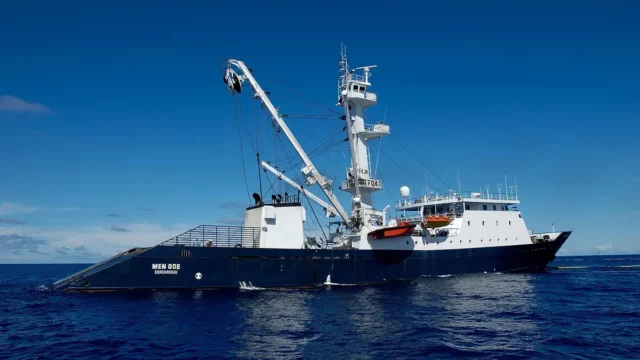
India to accede to the Southern Indian Ocean Fisheries Agreement (SIOFA)
On 14 October 2026 the Centre approved India's accession to the Southern Indian Ocean Fisheries Agreement. India, a Cooperating Non-Contracting Party since 2022, will become a full Contracting Party. Indian vessels can then fish squids, toothfish, alfonsino and other non-migratory stocks in the SIOFA area and join its scientific and compliance bodies.
14 Oct 2026