
Khet Bachao Abhiyan: Centre reviews 22 October to 30 November farm campaign with States
Next story · 17 OctFSSAI proposes residue limits for acetamiprid and imidacloprid in tea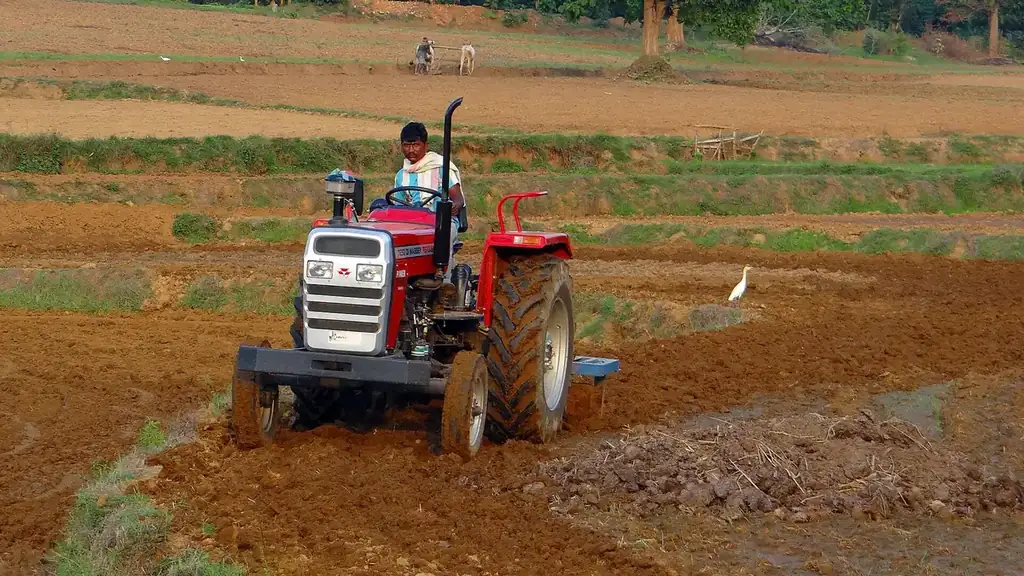
UPSC has already asked about this. Read the story with these questions in mind.
On 17 October 2026 Union Agriculture Minister Shivraj Singh Chouhan reviewed preparations for the Khet Bachao Abhiyan with agriculture ministers of 11 States and UTs. The campaign runs from 22 October to 30 November 2026. About 4,150 teams of Krishi Vigyan Kendra and ATMA staff, with over 12,000 scientists and officials, plan around 1.5 lakh meetings with farmers on soil health, crop residue, balanced fertiliser use and key schemes.
- Dates
- 22 Oct – 30 Nov 2026
- Teams
- 4,150 (KVK + ATMA)
- Meetings
- 1.5 lakh target
- Reach
- 50 lakh each: ICAR, ATMA
Khet Bachao Abhiyan: what happened?
Every rabi season begins with small decisions on lakhs of farms: what to sow after paddy, how much fertiliser to use, what to do with the straw. Khet Bachao Abhiyan tries to put a scientist in front of the farmer before those decisions are made.
- 17 Oct 2026: virtual review with agriculture ministers of Madhya Pradesh, Uttar Pradesh, Telangana, Gujarat, Uttarakhand, Rajasthan, Assam, Haryana, Jammu and Kashmir, Bihar and Maharashtra (PIB).
- Campaign dates: 22 October to 30 November 2026; States may fix local dates for activities.
- Nodal officers to be named at State and district levels; Collectors asked to steer it. The minister warned that it must not become a mere formality.
- The campaign was first announced earlier in October at the national conference for the rabi season (DD India).
What is the Khet Bachao Abhiyan?
- A farmer outreach campaign of the Ministry of Agriculture and Farmers Welfare, run with ICAR, Krishi Vigyan Kendras (KVKs) and ATMA (Agricultural Technology Management Agency) teams.
- Core themes: crop residue management, integrated pest management, soil health, climate-resilient farming, and more oilseeds and pulses.
- Also promoted: natural farming, integrated farming systems, mechanisation, balanced fertiliser use, green ammonia and bio-inputs, water conservation, crop diversification and intercropping.
- Scheme push: Farmer ID, PM Fasal Bima Yojana, Kisan Credit Card, seed distribution and Soil Health Cards; better use of fields left empty after paddy.
How is it different from the 2025 Viksit Krishi Sankalp Abhiyan?
| Point | Viksit Krishi Sankalp Abhiyan | Khet Bachao Abhiyan |
|---|---|---|
| Season | Kharif 2025 | Rabi 2026 |
| Dates | 29 May – 12 June 2025 (15 days) | 22 Oct – 30 Nov 2026 (40 days) |
| Scale | 728 districts; 1,35,42,105 farmers directly benefited (reported) | 4,150 teams; 1.5 lakh meetings; 50 lakh each via ICAR and ATMA (targets) |
| Stress | Pre-sowing advice for kharif | Soil, residue, inputs, rabi crops and schemes |
Which constitutional and legal provisions apply?
- State List Entry 14: agriculture, including agricultural education and research, protection against pests and prevention of plant diseases. States run farming policy; the Centre supports through schemes and ICAR.
- Article 48 (DPSP): organise agriculture and animal husbandry on modern and scientific lines.
- Fertiliser (Control) Order, 1985 under the Essential Commodities Act, 1955: the legal tool against fake fertilisers.
- Seeds Act, 1966 and Insecticides Act, 1968: quality control of seeds and pesticides.
How big is the campaign?
| Target | Figure |
|---|---|
| KVK and ATMA teams | 4,150 |
| Scientists, ATMA officials and workers | Over 12,000 |
| Meetings or events | 1.5 lakh (about two a day per team on average) |
| Participants | 50 lakh via ATMA and 50 lakh via ICAR |
Why does this campaign matter?
| Angle | What to note |
|---|---|
| Soil health | Balanced fertiliser use based on Soil Health Cards. |
| Air pollution | Crop residue management in the stubble-burning months of October–November. |
| Self-reliance | Push for oilseeds and pulses, including on fields left empty after paddy. |
| Federalism | Centre plans, States set dates and run it through district teams. |
What are the challenges?
- Campaigns can turn into box-ticking; the minister himself warned against a mere formality.
- Extension staff are thin on the ground; a 40-day drive cannot replace year-round advice.
- The dates overlap with harvest and sowing, when farmers have the least time for meetings.
- Meetings are easy to count, but changes in fertiliser use or residue burning are harder to measure.
What should be done next?
- Track outcomes: Soil Health Card-based fertiliser use, residue burning, and pulses on rice fallows.
- Use Farmer ID records for follow-up visits after the campaign ends.
- Pair advice with inputs: residue machinery, quality seed and bio-inputs.
- Keep a fixed season calendar so that extension becomes routine, not a one-off.
What can Prelims ask on the Khet Bachao Abhiyan?
- Dates: 22 October to 30 November 2026; Ministry of Agriculture and Farmers Welfare.
- Field teams: Krishi Vigyan Kendras (under ICAR) and ATMA.
- Targets: 4,150 teams; over 12,000 scientists and officials; 1.5 lakh meetings.
- Themes: residue management, IPM, soil health, climate-resilient farming, oilseeds and pulses.
- Agriculture: State List Entry 14; Article 48.
- Earlier campaign: Viksit Krishi Sankalp Abhiyan, 29 May–12 June 2025.
How to write about agricultural extension in Mains
Practice question (10 marks, 150 words): “Agricultural extension in India must move from campaigns to continuous advice.” Discuss with reference to recent initiatives.
- Intro: extension links lab to land; Khet Bachao Abhiyan, 22 Oct–30 Nov 2026.
- Body: KVK and ATMA teams, 1.5 lakh meetings, themes from soil to schemes.
- Compare: Viksit Krishi Sankalp Abhiyan 2025.
- Limits: staff shortage, timing, weak outcome tracking.
- Conclusion: campaigns plus digital follow-up plus a fixed season calendar.
Image: Phil Bus, Wikimedia Commons, CC BY-SA 2.0
How to use this in Mains
If asked: What are the constraints of agricultural extension services in India? Suggest measures. (GS-III)
Quote: “A total of 4,150 teams, combining Krishi Vigyan Kendras and ATMA, has been targeted under the campaign, and more than 12,000 scientists, ATMA officers and workers are expected to join it.”
Use it: Use it as your scale example (PIB, translated from Hindi), then make the point that one campaign must be followed by year-round advice.
If asked: Discuss the role of crop residue management in tackling air pollution in north India. (GS-III)
Quote: “The main themes of the campaign include crop residue management, integrated pest management, improvement of soil health, climate-resilient agriculture and promotion of oilseed and pulse crops.”
Use it: Use it in your ‘government measures’ paragraph to show residue management is being taken to farmers at the exact time of stubble burning (PIB, translated from Hindi).
Exam angle
Prelims: Khet Bachao Abhiyan dates, KVK, ATMA, Soil Health Card. · Mains GS-III: agricultural extension and sustainable farming.
Practice MCQs
Original practice questions (not PYQs).
The Khet Bachao Abhiyan, reviewed by the Union Agriculture Minister in October 2026, is scheduled to run from
Answer (b) & explanation
PIB, 17 Oct 2026: 22 October to 30 November 2026.
With reference to agricultural extension in India, consider the following statements:
1. Krishi Vigyan Kendras function under the Indian Council of Agricultural Research system.
2. ATMA stands for Agricultural Technology Management Agency.
Which of the statements given above is/are correct?
Answer (c) & explanation
KVKs are ICAR’s district-level farm science centres; ATMA is the Agricultural Technology Management Agency at district level.
‘Agriculture, including agricultural education and research, protection against pests and prevention of plant diseases’ is an entry in the
Answer (b) & explanation
State List Entry 14.
Questions students ask about this
What is the Khet Bachao Abhiyan?
A Centre-led farmer outreach campaign from 22 October to 30 November 2026 on soil health, residue management, inputs and schemes.
Who will run it on the ground?
About 4,150 teams of Krishi Vigyan Kendras and ATMA, with over 12,000 scientists and officials.
What will farmers hear about?
Crop residue management, pest management, soil health, climate-resilient farming, oilseeds and pulses, balanced fertiliser use, and schemes like PMFBY, KCC and Farmer ID.
Was there a similar campaign before?
Yes. The Viksit Krishi Sankalp Abhiyan ran from 29 May to 12 June 2025 before the kharif season.
Keep studying
Go deeper
Official source: PIB (Hindi), 17 Oct 2026: Union Agriculture Minister reviews preparations for Khet Bachao Abhiyan; campaign from 22 October to 30 November
facts from cited sources only; faculty review pending