
CJI Surya Kant inaugurates the first permanent High Court bench in Leh
Next story · 18 OctSCO Heads of Government meet in Dushanbe on 19–20 October: Rajnath Singh to represent India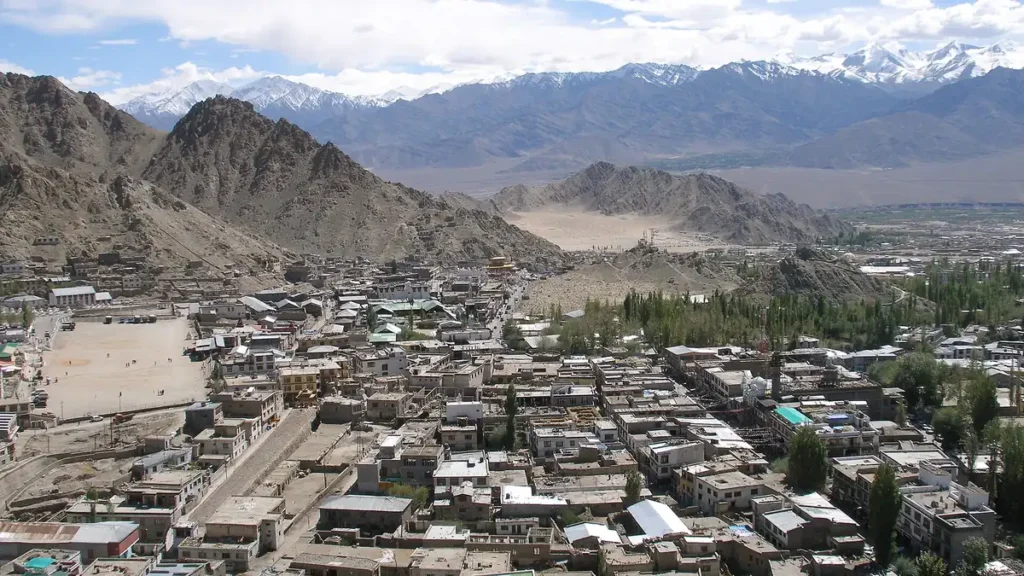
On 18 October 2026 Chief Justice of India Surya Kant inaugurated a permanent bench of the High Court of Jammu and Kashmir and Ladakh in Leh. Until now, a person in Ladakh who wanted to file a writ petition had to travel to Srinagar or Jammu, across high passes and harsh winters. The bench was made possible by a regulation that the President promulgated on 27 August and that came into force on 5 September. It is a simple idea with a big effect: bring the court to the people.
- Inaugurated
- 18 Oct 2026
- By
- CJI Surya Kant
- Court
- HC of J&K and Ladakh
- Regulation
- 27 Aug; in force 5 Sept
High Court in Leh: what happened?
Picture a farmer from a remote village in Ladakh with a land dispute. Before this week, his nearest High Court was in Srinagar or Jammu, a long road journey over high passes that are often shut in winter. For many such families, justice was far away in the plain, physical sense. That distance has now shrunk.
- 18 Oct 2026: CJI Surya Kant inaugurated the permanent bench of the High Court of Jammu and Kashmir and Ladakh in Leh. Lieutenant Governor Vinai Kumar Saxena attended (The Hindu).
- 27 Aug 2026: the President promulgated the regulation enabling a permanent bench in the UT of Ladakh, to come into force on a date notified by the Administrator.
- 5 Sept 2026: the Lieutenant Governor appointed this as the date the regulation took effect.
- 17 Oct 2026: Ladakh Chief Secretary Ashish Kundra said people would no longer have to travel to Srinagar or Jammu to file writ petitions, and that the initiative took shape within two months.
- At the inauguration the CJI said that once video-conferencing is set up at the bench, the Supreme Court will list all matters from Ladakh on a single day and hear them virtually, so Leh and Kargil lawyers can argue without leaving Ladakh. At about 3,500 metres, he said, no High Court in India has ever sat higher (HT/PTI).
What is a High Court bench?
- A High Court normally sits at its principal seat. A bench is a group of judges of the same High Court sitting permanently at another place, so people do not have to travel to the main seat.
- A common High Court: Article 231 lets Parliament set up one High Court for two or more States, or for a State and a Union Territory. Article 241 deals with High Courts for Union Territories.
- J&K and Ladakh: after the 2019 reorganisation, Jammu and Kashmir and Ladakh became separate Union Territories but kept one common High Court, which sits at Srinagar and Jammu.
- Other examples: the Chief Secretary cited the Gauhati High Court’s bench in Arunachal Pradesh, and mentioned the bench at Gwalior (Madhya Pradesh High Court).
- Ladakh’s geography (very high altitude, long distances, roads closed by snow) makes access to justice harder than almost anywhere else in India.
What changes for a litigant in Ladakh?
| Point | Before | After the Leh bench |
|---|---|---|
| Where to file a writ | Srinagar or Jammu | Leh |
| Travel | Long road trips over high passes; harder in winter | Within the UT |
| Cost and time | High travel and stay costs | Much lower |
| Court | Common High Court of J&K and Ladakh | Same High Court, now sitting in Leh too |
Which constitutional and legal provisions apply?
- Article 214: there shall be a High Court for each State. Article 231: a common High Court for two or more States or a State and a UT.
- Article 241: Parliament may constitute a High Court for a Union Territory or extend a High Court’s jurisdiction to it.
- Article 226: High Courts can issue writs. This is why writ petitions are the big gain for Ladakh’s people.
- Article 39A (DPSP): the State shall ensure equal justice and free legal aid, so that no citizen is denied justice for economic or other reasons.
How did the bench come about?
From order to inauguration
- President promulgates the regulation (27 Aug 2026)
- Lieutenant Governor notifies the date of effect (5 Sept 2026)
- Court rooms, staff and registry set up in Leh
- CJI inaugurates the permanent bench (18 Oct 2026)
- Writs and other cases can be filed in Leh
Which dates should you remember?
| Date | What happened |
|---|---|
| 27 Aug 2026 | President promulgated the regulation for a permanent bench in Ladakh |
| 5 Sept 2026 | Regulation came into force |
| 17 Oct 2026 | Chief Secretary explains the benefits |
| 18 Oct 2026 | CJI Surya Kant inaugurates the bench in Leh |
| About 3,500 m | Altitude of the bench; the CJI said no High Court in India has sat higher |
The Chief Secretary said the bench was not among the demands raised by Ladakh’s representatives in talks with the Centre; he called it a Government of India initiative.
Why does this matter?
| Angle | What to note |
|---|---|
| Access to justice | Brings writ jurisdiction within reach of remote, high-altitude people. |
| Federal structure | Shows how a common High Court can serve two UTs. |
| Governance in Ladakh | Part of a wider debate on institutions for the UT. |
| Judicial reform | Benches are one answer to distance and delay. |
What are the challenges?
- A bench needs enough judges, staff and lawyers; a thin roster can mean long gaps between hearings.
- Digital links and e-filing must work well in a region with patchy connectivity.
- Kargil and other far-off areas still face long journeys to Leh.
- Judges and staff posted at high altitude need housing and health support, especially in winter.
What should be done next?
- Fix a regular roster so judges sit in Leh through the year, including winter.
- Set up the promised video-conferencing quickly, so Kargil, Zanskar and Supreme Court matters can be heard from Leh.
- Strengthen legal aid in Ladakh so poor litigants can use the new bench.
- Build a local Bar through training for young Ladakhi lawyers.
What can Prelims ask on High Courts and benches?
- Article 214: High Court for each State; Article 231: common High Court.
- Article 241: High Courts for Union Territories.
- Article 226: writ jurisdiction of High Courts (wider than Article 32).
- J&K and Ladakh share one High Court; it now has a permanent bench in Leh (Oct 2026).
- Gauhati High Court has a bench in Arunachal Pradesh.
- Article 39A: equal justice and free legal aid.
How to write about access to justice in Mains
Practice question (10 marks, 150 words): “Justice delayed by distance is justice denied.” Discuss with reference to the setting up of High Court benches.
- Intro: Leh bench inaugurated on 18 Oct 2026; earlier, writs meant a trip to Srinagar or Jammu.
- Body 1: constitutional base: Arts. 214, 231, 226, 39A.
- Body 2: gains: lower cost, faster relief, trust in institutions.
- Body 3: limits: judge strength, connectivity, remote areas.
- Conclusion: benches plus e-courts plus legal aid.
Image: Vyacheslav Argenberg, via Wikimedia Commons, CC BY 4.0
How to use this in Mains
If asked: Examine the need for more High Court benches in India. (GS-II)
Quote: “Bringing justice closer to the people is a very significant achievement. Otherwise, anyone who feels aggrieved and wishes to file a writ petition would have to travel to Srinagar or Jammu.”
Use it: Use this as a ready example of distance as a barrier to justice. Then link it to Article 39A and to e-courts.
If asked: Discuss the governance challenges of Ladakh after it became a Union Territory. (GS-II)
Quote: “A name on a court's letterhead is not the same as a court at one's doorstep,”
Use it: The CJI’s line sums up the gap between symbolic and real access. Use it in the ‘steps taken’ part, then balance it with the wider demands for institutions in the UT.
Exam angle
Prelims: Arts. 214, 231, 241, 226, 39A; common High Court. · Mains GS-II: access to justice, judicial infrastructure.
Practice MCQs
Original practice questions (not PYQs).
Which Article of the Constitution allows a common High Court for two or more States, or for a State and a Union Territory?
Answer (c) & explanation
Article 231 provides for a common High Court; Article 214 says each State shall have a High Court.
With reference to the permanent High Court bench in Leh, consider the following statements:
1. It is a bench of the High Court of Jammu and Kashmir and Ladakh.
2. It was set up by an Act of the Ladakh Legislative Assembly.
Which of the statements given above is/are correct?
Answer (a) & explanation
Ladakh is a UT without a legislature. The bench came through a regulation promulgated by the President on 27 August 2026 (The Hindu).
Article 39A of the Constitution relates to
Answer (b) & explanation
Article 39A (DPSP) directs the State to secure equal justice and free legal aid. Separation of judiciary is Article 50.
Questions students ask about this
What was inaugurated in Leh?
A permanent bench of the High Court of Jammu and Kashmir and Ladakh, on 18 October 2026, by CJI Surya Kant.
Why does it matter?
People in Ladakh can now file writ petitions in Leh instead of travelling to Srinagar or Jammu.
How was it set up?
Through a regulation promulgated by the President on 27 August 2026, which came into force on 5 September.
Does Ladakh have its own High Court?
No. It shares a common High Court with Jammu and Kashmir; Leh is now a permanent bench of that court.
Keep studying
Go deeper
facts from cited sources only; faculty review pending