
India’s space economy to grow from about $9 billion to $40-45 billion in 7-8 years
Next story · 18 OctCJI Surya Kant inaugurates the first permanent High Court bench in Leh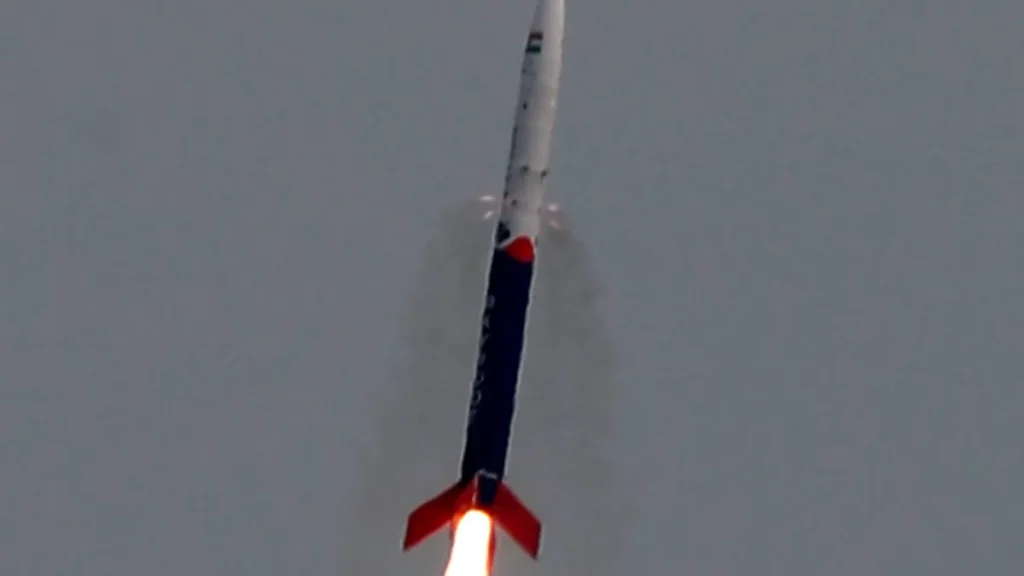
UPSC has already asked about this. Read the story with these questions in mind.
On 17 October 2026, Union Minister Dr Jitendra Singh said India’s space economy, worth about USD 9 billion today, should reach USD 40-45 billion in the next seven to eight years. He said the task now is to move from showing what India can do in space to building space companies that can compete and earn worldwide. For that, private firms need steady demand, quick approvals and patient capital. This is the story of space turning from a science mission into an industry.
- Now
- About USD 9 billion
- Target
- USD 40-45 billion
- Timeline
- 7-8 years
- Opened to private
- 2019-20
Space economy: what happened?
For decades, when an Indian rocket lifted off, it was ISRO’s rocket. Today young engineers in Hyderabad, Bengaluru and Chennai run start-ups that build rockets, satellites and the software that reads satellite data. The question the Government is now asking is simple: can these firms grow into businesses that win customers across the world?
- 17 Oct 2026: at a media roundtable on ‘Space, Sovereignty and New Economy’ at the Bloomberg New Economy Forum, New Delhi, Dr Jitendra Singh said the space economy, now about USD 9 billion, is expected to reach USD 40-45 billion over 7-8 years (PIB).
- He said the opening of the space sector to private players in 2019-20 had produced significant results within five to six years.
- He called for predictable demand through anchor government customers, licences for installation or export within defined timeframes, and GST reforms that give real benefit to industry.
- He noted that India provides space-based support for disaster management to Myanmar, Bangladesh and Sri Lanka. IN-SPACe’s Director (Promotion) Vinod Kumar also took part.
How did India open its space sector?
- NSIL (NewSpace India Limited), set up in 2019, is ISRO’s commercial arm. It sells ISRO launches and satellite services.
- IN-SPACe (Indian National Space Promotion and Authorisation Centre), created in 2020, is a single-window body that authorises and promotes private space activity.
- Indian Space Policy, 2023 set out what ISRO, NSIL, IN-SPACe and private firms each do. ISRO is to focus on research and advanced missions.
- FDI rules, February 2024: up to 74% under the automatic route for satellite manufacturing and operation, up to 49% for launch vehicles, and up to 100% for components and systems (PIB).
- Vikram-S, launched on 18 November 2022 by Skyroot Aerospace, was India’s first privately developed rocket to fly.
Old model versus new model
| Point | ISRO-led model | Open space economy |
|---|---|---|
| Who builds rockets and satellites | Mainly ISRO | ISRO plus private firms and start-ups |
| Who authorises private activity | No single window | IN-SPACe |
| Commercial sales | Limited | NSIL plus private companies |
| Foreign investment | Restricted | Up to 74% / 49% / 100% automatic, by segment |
| Main goal | Capability and national missions | Capability plus revenue and global market share |
Which policy and legal provisions apply?
- Space is not named in the Seventh Schedule, so it falls under the Union’s residuary power (Article 248 and Union List Entry 97).
- Indian Space Policy, 2023: roles of ISRO, NSIL, IN-SPACe and the private sector.
- FDI policy (amended 2024) under the Foreign Exchange Management Act, 1999: segment-wise caps for space.
- Outer Space Treaty, 1967 (Article VI): India is a party, so it remains responsible for national space activities, including those of private firms.
How does a private space firm grow?
From idea to global customer
- Start-up designs a satellite, rocket or data service
- IN-SPACe authorises it and gives access to ISRO facilities
- Government acts as an anchor customer or funds a proof of concept
- Firm gets quick licences for installation or export
- It wins private and foreign customers and scales up
Which numbers should you remember?
| Number | What it means |
|---|---|
| About USD 9 billion | Size of India’s space economy today |
| USD 40-45 billion | Expected size in 7-8 years |
| 2019-20 | Space sector opened to private participation |
| 74% / 49% / 100% | Automatic-route FDI caps: satellites / launch vehicles / components |
The Minister stressed that space helps on the ground too: satellite data is used for project clearances, geotagging of works, farming and disaster management.
Why does this matter?
| Angle | What to note |
|---|---|
| Economy | A small sector today with room to grow several times over. |
| Strategic autonomy | Indigenous capability matters for security even as foreign capital comes in. |
| Governance | Single-window approvals and time-bound licences are the key ask. |
| Diplomacy | Space data support to neighbours such as Myanmar, Bangladesh and Sri Lanka. |
What are the challenges?
- Demand is still small and uncertain, so start-ups struggle to plan production.
- Licence and export approvals can be slow without fixed timelines.
- India still lacks a dedicated space activities law covering liability, insurance and licensing.
- Global competition is fierce, especially in launch services and satellite constellations.
What should be done next?
- Use government demand as an anchor: buy services from private firms, not only build in-house.
- Set legal timelines for space licences and export clearances.
- Pass a comprehensive space activities law to give investors certainty.
- Grow the downstream market: satellite data services for farming, insurance and cities.
What can Prelims ask on the space economy?
- IN-SPACe: authorisation and promotion body for private space activity (2020).
- NSIL: commercial arm of ISRO (2019).
- Indian Space Policy, 2023.
- FDI: 74% satellites, 49% launch vehicles, 100% components under the automatic route (Feb 2024).
- Vikram-S (Skyroot), 18 Nov 2022: first privately developed Indian rocket.
- Space economy: about USD 9 billion now; USD 40-45 billion expected in 7-8 years (Oct 2026).
How to write about the space economy in Mains
Practice question (15 marks, 250 words): “India’s space sector must move from capability to commerce.” Discuss the reforms and the challenges.
- Intro: about USD 9 billion now; USD 40-45 billion expected in 7-8 years.
- Body 1: reforms: NSIL, IN-SPACe, Space Policy 2023, FDI 2024.
- Body 2: what firms need: predictable demand, time-bound approvals, capital.
- Body 3: risks: no space law, small demand, global rivals; need for strategic autonomy.
- Conclusion: public-private partnership with a clear legal base.
Image: Launch of Vikram-S by Skyroot Aerospace, 18 Nov 2022. ISRO, via Wikimedia Commons, GODL-India
How to use this in Mains
If asked: Discuss the role of the private sector in India’s space programme. (GS-III)
Quote: “India’s Space economy, currently valued at around USD 9 billion, is expected to reach USD 40–45 billion over the next seven to eight years,”
Use it: Open with this number, then explain the reforms that made private entry possible: NSIL, IN-SPACe and the 2024 FDI rules.
If asked: “Space technology is a tool of development.” Comment. (GS-III)
Quote: “Satellite communications, geospatial applications and Earth observation are supporting infrastructure development, project monitoring, agriculture, disaster management and defence.”
Use it: Use it to list applications quickly, then add India’s disaster-data support to neighbours as a diplomacy point.
Exam angle
Prelims: IN-SPACe, NSIL, Space Policy 2023, FDI caps, Vikram-S. · Mains GS-III: private sector in space, strategic autonomy.
Practice MCQs
Original practice questions (not PYQs).
With reference to India’s space sector, consider the following statements:
1. IN-SPACe authorises and promotes space activities of non-government entities.
2. Under the FDI policy amended in 2024, 100% FDI under the automatic route is allowed for satellite manufacturing and operation.
Which of the statements given above is/are correct?
Answer (a) & explanation
Satellite manufacturing and operation get up to 74% under the automatic route; 100% is for components and systems (PIB, 21 Feb 2024).
Vikram-S, launched in November 2022, is notable because it was
Answer (b) & explanation
Vikram-S of Skyroot Aerospace, Hyderabad, flew on 18 November 2022 from Sriharikota.
According to the Government in October 2026, India’s space economy is expected to reach USD 40-45 billion in about
Answer (b) & explanation
Dr Jitendra Singh: from about USD 9 billion now to USD 40-45 billion over the next 7-8 years (PIB, 17 Oct 2026).
Questions students ask about this
How big is India’s space economy?
About USD 9 billion now, according to the Government.
What is the target?
USD 40-45 billion over the next seven to eight years.
What do private space firms need most?
Predictable demand, quick and time-bound approvals, and investment, the Minister said.
Which body authorises private space activity?
IN-SPACe, the Indian National Space Promotion and Authorisation Centre.
Keep studying
Go deeper
Official source: PIB, 17 Oct 2026: India's Space Economy to Reach USD 40-45 Billion in 7-8 Years; Dr Jitendra Singh
facts from cited sources only; faculty review pending