
India rejects OIC’s Baghdad resolutions on Jammu and Kashmir as ‘malicious, biased and false’
Next story · 19 OctChina to impose export controls on tunnel boring machines from 18 November: what it means for India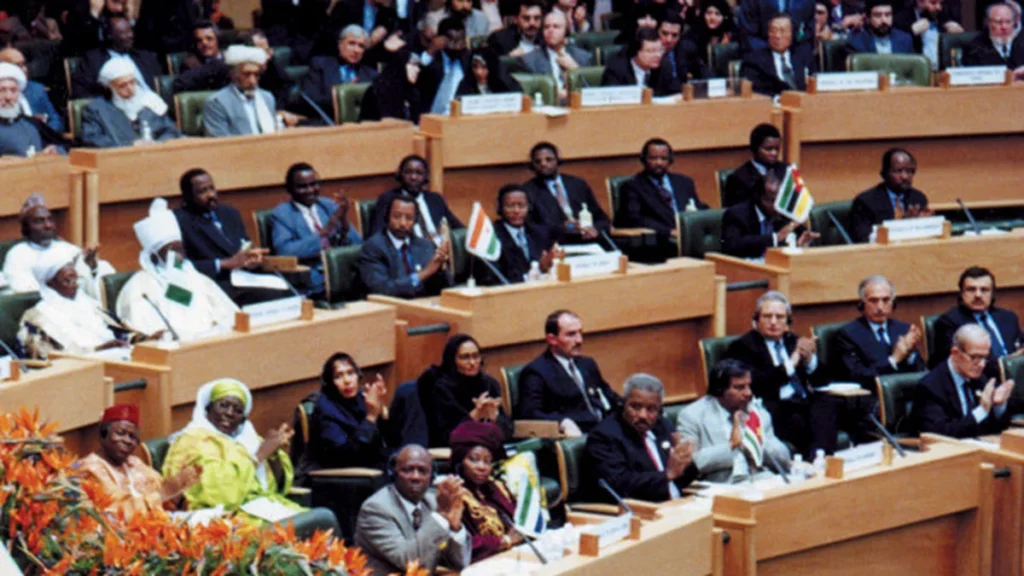
UPSC has already asked about this. Read the story with these questions in mind.
- Mains 2023 · GS3Winning of ‘Hearts and Minds’ in terrorism-affected areas is an essential step in restoring the trust of the population. Discuss the measures adopted by…See model answer →
- Mains 2025 · GS2Discuss the nature of Jammu and Kashmir Legislative Assembly after the Jammu and Kashmir Reorganization Act, 2019. Briefly describe the powers and functions of…See model answer →
On 19 October 2026 the Ministry of External Affairs rejected references to India in resolutions adopted at the Organisation of Islamic Cooperation (OIC) Council of Foreign Ministers in Baghdad on 17–18 October. It called them ‘malicious, biased and false’, said Pakistan orchestrated them, and said the OIC has no locus standi on India’s internal matters.
- Forum
- 52nd OIC CFM
- Venue
- Baghdad, 17–18 Oct
- India’s reply
- MEA, 19 Oct 2026
- OIC members
- 57
OIC resolutions and India’s reply: what happened?
Almost every year a resolution on Kashmir appears at an OIC meeting, and almost every year India pushes back. This time New Delhi’s reply was sharper, and it ended with a pointed call for the OIC to reform itself. The episode is a good lesson in how India handles multilateral criticism.
- 17–18 Oct 2026: OIC foreign ministers in Baghdad adopted resolutions referring to Jammu and Kashmir and to ‘Islamophobia’ in India.
- MEA said the Union Territories of J&K and Ladakh are “integral and inalienable parts of India” and the OIC has “no locus standi” (The Hindu; Indian Express).
- It contrasted growth in J&K since the abrogation of Article 370 with what it called violence and repression against civilian protesters in Pakistan-occupied J&K.
- It said the OIC’s repeated endorsement of Pakistan’s narrative raises “serious questions about its credibility and integrity”.
What is the OIC?
- A 57-member body of Muslim-majority countries, founded in 1969; it calls itself second only to the UN in size.
- Headquarters: Jeddah, Saudi Arabia. The Council of Foreign Ministers meets every year; the Islamic Summit is its top body.
- India is neither a member nor an observer; Pakistan objected to India’s presence at Rabat in 1969.
- In 2019 India was ‘Guest of Honour’ at the 46th CFM in Abu Dhabi.
How does this compare with the OIC Contact Group statement?
| Point | OIC Contact Group on J&K | OIC Council of Foreign Ministers |
|---|---|---|
| When and where | September 2026, UNGA sidelines, New York | 17–18 October 2026, Baghdad |
| Body | Small group set up in 1994 | All member states’ foreign ministers |
| Output | Joint communiqué | Formal resolutions |
Which constitutional and legal provisions apply?
- Article 1: India is a Union of States; J&K and Ladakh became UTs on 31 October 2019.
- Article 370 was made inoperative in August 2019; the Supreme Court upheld this in December 2023.
- J&K Reorganisation Act, 2019 created the two Union Territories.
- UN Charter, Article 2(7): no intervention in matters of domestic jurisdiction.
How does India respond to such resolutions?
From Baghdad to New Delhi
- OIC adopts resolutions at its meeting
- MEA issues statement rejecting references
- India stresses sovereignty and no locus standi
- India points to Pakistan’s record and terrorism
- Bilateral ties with members continue separately
Why does this matter?
| Angle | What to note |
|---|---|
| Sovereignty | India rejects any third-party role on J&K. |
| West Asia policy | Strong Gulf ties coexist with bloc-level criticism. |
| Pakistan | Uses multilateral forums like the OIC to internationalise Kashmir. |
| Diplomacy | India now openly questions the OIC’s credibility and asks for reform. |
What are the challenges?
- Repeated resolutions shape public opinion in many Muslim-majority countries over time.
- ‘Islamophobia’ references target India’s image beyond Kashmir.
- India has no seat inside the OIC to answer such texts from within.
- Warm bilateral ties with Gulf states do not stop critical bloc texts.
What should be done next?
- Keep deepening trade, energy and diaspora ties with key OIC members.
- Showcase development, tourism and elections in J&K with hard data.
- Counter disinformation through steady public diplomacy.
- Keep raising PoJK rights abuses and cross-border terrorism.
What can Prelims ask on the OIC?
- OIC: founded 1969; headquarters Jeddah; 57 members.
- 52nd Council of Foreign Ministers: Baghdad, Iraq, 17–18 October 2026.
- India was Guest of Honour at the 46th CFM, Abu Dhabi, March 2019.
- The OIC Contact Group on Jammu and Kashmir was set up in 1994.
- J&K and Ladakh became Union Territories on 31 October 2019.
How to write about India and the OIC in Mains
Practice question (10 marks, 150 words): Despite close ties with many Muslim-majority countries, India’s relationship with the OIC remains strained. Examine. (GS-II)
- Intro: MEA rejects Baghdad CFM references, 19 Oct 2026.
- History: 1969 Rabat episode; 2019 Guest of Honour.
- Pakistan’s role and the J&K Contact Group.
- Bilateral Gulf partnerships versus bloc positions.
- Way forward: bilateralism, outreach, call for reform.
Image: Delegates at the Eighth Summit of the OIC, Tehran, 1997. Khamenei.ir, Wikimedia Commons, CC BY 4.0
How to use this in Mains
If asked: Discuss India’s approach to multilateral criticism on Jammu and Kashmir. (GS-II)
Quote: “The references to India are malicious, biased and false, and have been orchestrated by Pakistan.”
Use it: Open with it to show India’s firm line; then explain ‘no locus standi’ and the domestic-jurisdiction principle.
If asked: Assess the significance of the OIC for India’s West Asia policy. (GS-II)
Quote: “We hope its members will do better and reform this organisation.”
Use it: Shows India separates the bloc from its members; pair it with strong bilateral Gulf partnerships.
Exam angle
Prelims: OIC facts, J&K Reorganisation Act, UN Charter Article 2(7). · Mains GS-II: India, OIC and Pakistan.
Practice MCQs
Original practice questions (not PYQs).
With reference to the Organisation of Islamic Cooperation (OIC), consider the following statements:
1. Its headquarters is in Jeddah.
2. India attended the 46th Council of Foreign Ministers as Guest of Honour.
3. India has observer status in the OIC.
How many of the statements given above are correct?
Answer (b) & explanation
Statements 1 and 2 are correct. India is neither a member nor an observer.
The 52nd OIC Council of Foreign Ministers in October 2026 was held in
Answer (b) & explanation
It met in Baghdad, Iraq, on 17–18 October 2026.
Which provision of the UN Charter bars intervention in matters essentially within a state’s domestic jurisdiction?
Answer (b) & explanation
Article 2(7). Article 2(4) bars the threat or use of force; Article 51 covers self-defence.
Questions students ask about this
What did India reject?
References to India, including on J&K and ‘Islamophobia’, in OIC resolutions adopted in Baghdad on 17–18 October 2026.
What did the MEA say?
That the references were malicious, biased and false, orchestrated by Pakistan, and that the OIC has no locus standi.
Is India a member of the OIC?
No. India is neither a member nor an observer, though it was Guest of Honour in 2019.
What did India ask of the OIC?
It said it hoped members would ‘do better and reform this organisation’.
Keep studying
Go deeper
facts from cited sources only; faculty review pending