
Ladakh draft framework: L-G to have final say on laws of proposed UT-level elected body
Next story · 21 OctJapan’s MMX mission lifts off for Mars to bring back a sample of Phobos by 2031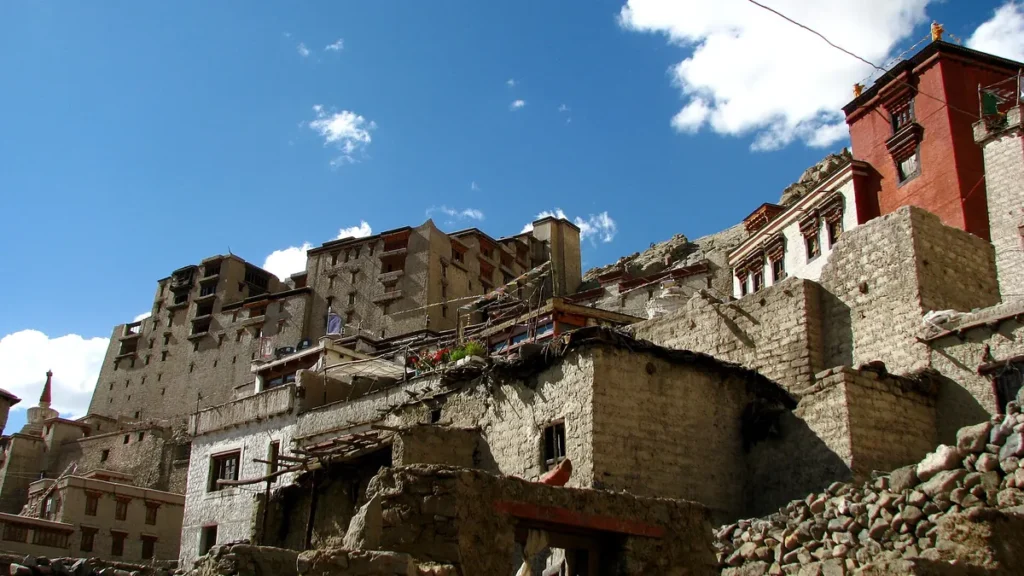
The Centre’s draft ‘Constitutional and Statutory Framework’ for Ladakh proposes a Union Territory-level elected body whose every regulation will take effect only after the Lieutenant Governor’s assent, The Hindu reported on 21 October 2026. A new constitutional provision would also give constitutional status to the hill councils. Leh and Kargil groups, who want Sixth Schedule safeguards, meet the Home Ministry this week.
- Draft
- 32 pages, MHA
- Final authority
- Lieutenant Governor
- Talks with
- LAB and KDA
- UT since
- 31 Oct 2019
Ladakh’s draft framework: what happened?
Ladakh has been a Union Territory without a legislature since 2019. Its people have asked for a real say in laws on land, jobs and culture. The Centre’s draft now offers an elected body, but with the L-G holding the pen on every law.
- MHA’s draft says every regulation of the UT-level body ‘would go to the Lt. Governor and would take effect after his assent’ (The Hindu).
- The body would come through a new constitutional provision placed with the Article 371 special provisions, in a proposed new chapter.
- The draft gives options on delimitation (population only, or population and area such as 50-50 or 60-40) and on women’s seats (one-third or up to 50%).
- The next round of talks with the Leh Apex Body (LAB) and Kargil Democratic Alliance (KDA) is this week.
How did Ladakh get here?
- Article 370 ceased to apply in August 2019; the J&K Reorganisation Act, 2019 made Ladakh a UT without a legislature from 31 October 2019.
- Ladakh Autonomous Hill Development Councils (LAHDCs) work in Leh and Kargil under a state law The Hindu cites as the LAHDC Act, 1997.
- In 2023 the Centre set up a high-powered committee with LAB and KDA on safeguards.
- LAB and KDA want statehood and Sixth Schedule protection for the tribal-majority region.
How do the three models compare?
| Point | Sixth Schedule | Proposed Ladakh model |
|---|---|---|
| Basis | Articles 244(2), 275(1) | New provision near Article 371 |
| Who makes laws | Autonomous district councils | UT-level elected body |
| Final say | Governor, with council powers listed | Lieutenant Governor’s assent |
| Where today | Assam, Meghalaya, Tripura, Mizoram | Under discussion for Ladakh |
Which constitutional provisions apply?
- Article 239: UTs are administered by the President through an administrator (L-G).
- Article 240: the President can make regulations for certain UTs; the draft plans a regulation under it.
- Articles 371 to 371J: special provisions for certain States, such as Nagaland and Mizoram.
- Article 368: a new constitutional provision needs a constitutional amendment.
What are the sticking points?
- Final assent with the L-G may look like limited autonomy to LAB and KDA.
- Delimitation by population alone favours dense areas; area-based seats help remote villages.
- Unclear split of subjects between the UT body and the hill councils.
- Land, jobs and ecology in a fragile, strategic border region.
What should be done next?
- Agree in principle on the options, as the draft itself proposes, before clause-by-clause drafting.
- List clearly which subjects the elected body will control.
- Protect land and jobs for local residents through the regulation.
- Keep the hill councils strong and funded.
What can Prelims ask on Ladakh’s governance?
- Ladakh: UT without a legislature since 31 Oct 2019.
- Article 240: President’s regulations for certain UTs.
- Sixth Schedule: tribal areas in Assam, Meghalaya, Tripura, Mizoram.
- LAHDC: hill councils in Leh and Kargil.
- Articles 371–371J: special provisions for States.
How to write about Ladakh’s autonomy in Mains
Practice question (10 marks, 150 words): Discuss the options for constitutional safeguards in Ladakh. How far does the Centre’s proposed framework meet local demands? (GS-II)
- Intro: UT since 2019; draft framework reported 21 Oct 2026.
- Demand: Sixth Schedule, statehood, land and job protection.
- Offer: elected body, constitutional status for LAHDCs, L-G assent.
- Gaps: final authority, delimitation, subject list.
- Way forward: negotiated, clearly listed powers.
Image: Old town and Leh Palace, Leh, Ladakh. McKay Savage from London, UK, Wikimedia Commons, CC BY 2.0
How to use this in Mains
If asked: Compare the Sixth Schedule with Article 371-type special provisions as tools of regional autonomy. (GS-II)
Quote: “Every regulation (law) made by the U.T.-level body would go to the Lt. Governor and would take effect after his assent.”
Use it: Use it to show where the proposed model differs from autonomous councils.
If asked: How should delimitation be done in sparsely populated regions? (GS-II)
Quote: “The draft asks whether delimitation would be only population-based or based on both population and area in different proportions.”
Use it: Quote it, then argue for weighting area in remote, high-altitude regions.
Exam angle
Prelims: Articles 239, 240, 244, 371; Sixth Schedule States. · Mains GS-II: autonomy vs central control in UTs.
Practice MCQs
Original practice questions (not PYQs).
Under which Article of the Constitution can the President make regulations for the peace, progress and good government of certain Union Territories?
Answer (b) & explanation
Article 240 empowers the President to make regulations for certain UTs.
The provisions of the Sixth Schedule apply to tribal areas in which of the following States?
Answer (a) & explanation
Article 244(2) and the Sixth Schedule cover tribal areas of Assam, Meghalaya, Tripura and Mizoram.
Consider the following statements about the proposed Ladakh framework:
1. Regulations of the UT-level body would take effect after the L-G’s assent.
2. The draft settles delimitation on a population-only basis.
Which of the statements given above is/are correct?
Answer (a) & explanation
The draft leaves delimitation open, giving options such as population-only or mixes of population and area.
Questions students ask about this
What does the Ladakh draft propose?
A UT-level elected body, constitutional status for hill councils and L-G assent for every regulation.
Who is negotiating with the Centre?
The Leh Apex Body and the Kargil Democratic Alliance.
What do they want?
Statehood and Sixth Schedule safeguards.
Is the draft final?
No. It asks for agreement on options before clause-by-clause drafting.
Keep studying
Go deeper
facts from cited sources only; faculty review pending