
Open-weight AI models: why Big Tech gives them away and what it means for India
Next story · 21 OctLadakh draft framework: L-G to have final say on laws of proposed UT-level elected body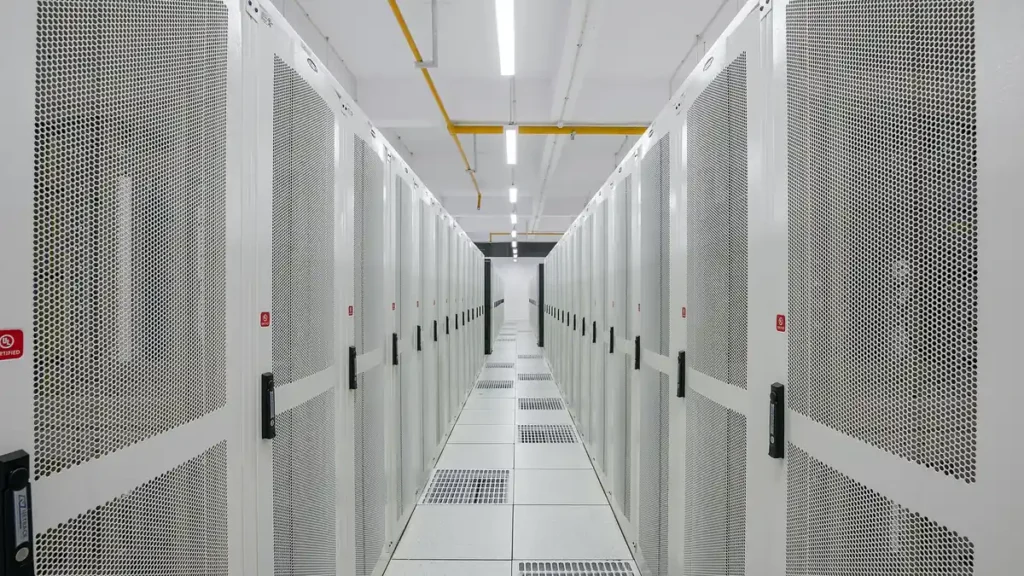
In October 2026 alone, Reflection AI, Meta, NVIDIA and Mistral released or announced open-weight AI models. The Hindu explained on 20 October why firms spend heavily and then let anyone download the weights: to win developers, set standards and earn from cloud, chips and services. For India, open weights offer a base to build Indian-language AI, but they also bring safety risks.
- Open weights
- Downloadable trained parameters
- Early example
- GPT-2 weights, 2019
- Chinese entrant
- DeepSeek-R1, Jan 2025
- Indian efforts
- Sarvam, AI4Bharat, BharatGen
Open-weight AI: what happened?
Picture a chef who has learnt from thousands of recipes. Sharing her ‘weights’ is like sharing her trained instinct, so other chefs can cook their own dishes. That is what tech firms are doing with AI models, and it is not charity.
- Reflection AI released Beam’s weights on 16 October; Meta released Muse Spark Open and NVIDIA two Nemotron models on 15 October (The Hindu).
- Mistral AI announced Timestral, models for time-series forecasting.
- OpenAI, releasing its open-weight models in August 2025, spoke of helping partners build on ‘US-led rails’.
- Chinese releases such as DeepSeek-R1 (MIT licence) and Alibaba’s Qwen sharpened the race.
What exactly is an open-weight model?
- Weights are the numbers a model learns in training; they decide how it turns inputs into outputs.
- Open-weight means these can be downloaded, run on one’s own servers and fine-tuned.
- It is not always fully open-source: training code and data may stay secret, and licences may limit use.
- Proprietary models are used only through apps or paid APIs controlled by the provider.
How do open-weight and closed models compare?
| Point | Open-weight | Closed (API only) |
|---|---|---|
| Control | User runs and adapts it | Provider controls access |
| Cost | Free download; pay for hardware or hosting | Pay per use |
| Safety | Safeguards can be removed; cannot be recalled | Provider can monitor and restrict |
| Business model | Ecosystem, cloud, chips, services | Usage fees |
Which laws and policies apply in India?
- Information Technology Act, 2000 and IT Rules, 2021: duties of intermediaries, including on deepfakes.
- Digital Personal Data Protection Act, 2023: consent and limits on personal data used in AI.
- IndiaAI Mission (approved March 2024, about Rs 10,372 crore): compute, datasets and foundation models.
- Article 19(1)(a) and 21: free speech and privacy limits on AI deployment.
What are the risks?
- Once released, weights cannot be withdrawn; misuse is hard to stop.
- Licences may restrict commercial use or hide training data.
- Running large models needs costly compute that many Indian firms lack.
- Dependence may simply shift from foreign APIs to foreign model families.
What should India do?
- Build Indian-language models on open bases through IndiaAI Mission.
- Set up safety testing for models used in public services.
- Expand shared GPU compute for start-ups and researchers.
- Back domain models in farming, law and health, as BharatGen is doing.
What can Prelims ask on open-weight AI?
- Weights = trained parameters of a model.
- Open-weight is not the same as fully open-source.
- DeepSeek-R1 released in January 2025 under the MIT licence.
- AI4Bharat is based at IIT Madras.
- Network effect: more developers make a model more useful to others.
How to write about AI sovereignty in Mains
Practice question (10 marks, 150 words): Can open-weight AI models help India achieve technological sovereignty in AI? Examine the opportunities and risks. (GS-III)
- Intro: wave of open-weight releases, October 2026.
- Why firms release: developers, standards, cloud and chips.
- For India: Indian languages, lower dependence, start-ups.
- Risks: safety, licences, compute gap.
- Way forward: IndiaAI Mission, testing, shared compute.
Image: Server racks at Pi Data Centers, Amaravati, Andhra Pradesh. PiDatacenters, Wikimedia Commons, CC BY-SA 4.0
How to use this in Mains
If asked: Discuss the trade-offs between openness and safety in artificial intelligence. (GS-III)
Quote: “Once weights are widely distributed, they cannot simply be withdrawn.”
Use it: Use it to frame the safety concern, then suggest testing and licensing.
If asked: How can India reduce dependence on foreign AI platforms? (GS-III)
Quote: “Organisations can adapt models to Indian languages and local requirements, and may choose to run them on their own infrastructure.”
Use it: Quote it and link to IndiaAI Mission and Indian-language models.
Exam angle
Prelims: weights, open-weight vs open-source, IndiaAI, AI4Bharat. · Mains GS-III: AI sovereignty, safety and regulation.
Practice MCQs
Original practice questions (not PYQs).
In artificial intelligence, the term ‘weights’ refers to
Answer (b) & explanation
Weights are the learnt numerical values that shape how a model processes inputs.
Consider the following statements:
1. An open-weight model always publishes its full training data.
2. Open-weight models can be run on a user’s own servers.
Which of the statements given above is/are correct?
Answer (b) & explanation
Open weights can be downloaded and run locally, but training code and data may remain secret.
AI4Bharat, which develops Indian-language AI models and tools, is based at
Answer (c) & explanation
AI4Bharat is an initiative at IIT Madras.
Questions students ask about this
What is an open-weight AI model?
A model whose trained parameters can be downloaded, run and adapted by others.
Is it the same as open-source?
Not always; training code and data may stay secret, and licences may restrict use.
Why do companies give them away?
To attract developers, set standards and earn from cloud, chips and services.
What is the main risk?
Released weights cannot be recalled, and safeguards can be removed.
Keep studying
Go deeper
facts from cited sources only; faculty review pending