
GRAP Stage I invoked in Delhi-NCR as AQI turns ‘Poor’: the 25 actions and what comes next
Next story · 22 OctFSSAI notices to Nestlé and Zydus over baby-food and Complan claims: what the rules say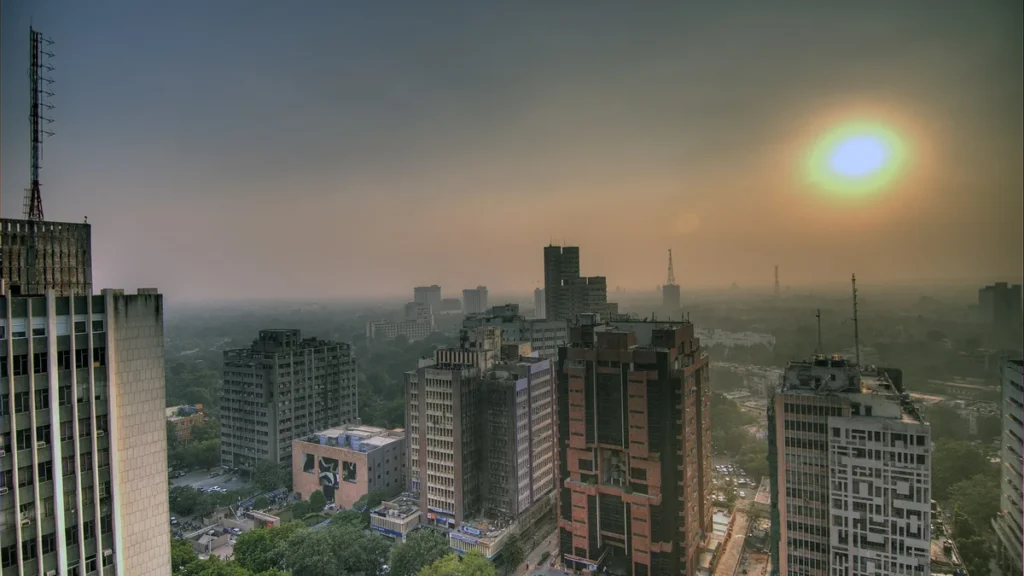
With Delhi’s AQI at 244 (‘Poor’) on 21 October 2026, the Commission for Air Quality Management (CAQM) invoked all 25 actions of Stage I of the Graded Response Action Plan (GRAP) across the NCR. The focus is on dust control at construction sites, covered transport of debris, anti-smog guns, water sprinkling, no open burning and strict PUC checks. AQI had been 179 (‘Moderate’) a day earlier.
- Invoked
- 21 Oct 2026
- Delhi AQI
- 244 (Poor)
- Stage I actions
- 25
- Body
- CAQM
GRAP Stage I: what happened?
Every October, as winds slow and temperatures drop, Delhi’s air turns. GRAP is the pre-agreed playbook that kicks in, stage by stage, so no one has to argue about what to do each time.
- 21 Oct 2026: Delhi’s AQI was 244 at 2 pm and 245 at 4 pm (CPCB bulletin, via PIB).
- CAQM’s GRAP sub-committee invoked Stage I in the entire NCR with immediate effect, based on IMD and IITM forecasts.
- Construction sites of 500 sq m or more must register on the dust portal; debris moves only in covered vehicles.
- Inter-State buses into NCR must be electric, CNG or BS-VI diesel; coal and firewood banned in tandoors.
What is GRAP?
- A set of emergency curbs that tighten as air quality worsens in Delhi-NCR.
- Notified on 12 January 2017 after Supreme Court directions (December 2016); first run by EPCA, now by CAQM.
- It is incremental: higher stages add to, not replace, earlier measures.
- The current schedule was revised in September 2026.
What are the four stages?
| Stage | AQI | Category |
|---|---|---|
| I | 201–300 | Poor |
| II | 301–400 | Very Poor |
| III | 401–450 | Severe |
| IV | Above 450 | Severe+ |
Which constitutional and legal provisions apply?
- Article 21: the right to life includes the right to clean air (Supreme Court in M.C. Mehta and later cases).
- Article 48A: the State shall protect and improve the environment.
- Commission for Air Quality Management in NCR and Adjoining Areas Act, 2021 created CAQM.
- Air (Prevention and Control of Pollution) Act, 1981 and Environment (Protection) Act, 1986.
What are the challenges?
- GRAP reacts after air worsens; it does not fix sources year-round.
- Enforcement across many agencies and States is uneven.
- Stubble burning, vehicles and dust cross State borders.
- Construction curbs at higher stages hit daily-wage workers.
What should be done next?
- Use forecasts to act before AQI crosses thresholds.
- Plan by airshed, across Delhi, Haryana, UP and Punjab.
- Speed up the National Clean Air Programme (NCAP) city plans.
- Expand electric and CNG public transport and clean fuel for small eateries.
What can Prelims ask on GRAP?
- GRAP stages: I Poor, II Very Poor, III Severe, IV Severe+.
- AQI scale: 0–500; 201–300 = Poor.
- CAQM: statutory body under a 2021 Act.
- SAMEER app: CPCB’s app for AQI and complaints.
- NCAP: launched in 2019.
How to write about air pollution in Mains
Practice question (10 marks, 150 words): GRAP is an emergency brake, not a cure. Critically examine air quality management in the NCR. (GS-III)
- Intro: Stage I invoked, 21 Oct 2026; AQI 244.
- How GRAP works: stages, actions, CAQM.
- Limits: reactive, enforcement, cross-border sources.
- Reforms: airshed planning, NCAP, transport, stubble.
- Conclusion: year-round action over seasonal panic.
Image: Smog over Connaught Place at sunset, New Delhi. wili hybrid, Wikimedia Commons, CC BY 2.0
How to use this in Mains
If asked: Discuss the role of statutory bodies in tackling air pollution in the NCR. (GS-III)
Quote: “Actions under Stage-I of the extant GRAP would be implemented, monitored and reviewed by all the agencies concerned in the entire NCR to ensure that the AQI levels do not slip further.”
Use it: Use it to show the multi-agency design.
If asked: Why does Delhi’s air quality worsen every winter? Suggest remedies. (GS-III)
Quote: “GRAP is a set of emergency measures that kick in to prevent further deterioration of air quality once it reaches, or is forecast to reach a certain threshold.”
Use it: Quote it, then argue for year-round source control.
Exam angle
Prelims: GRAP stages, AQI bands, CAQM, NCAP. · Mains GS-III: air quality governance.
Practice MCQs
Original practice questions (not PYQs).
Under GRAP, Stage I is invoked when Delhi’s AQI is in the range
Answer (b) & explanation
Stage I applies to ‘Poor’ air quality (AQI 201–300).
The Commission for Air Quality Management in NCR and Adjoining Areas was established under
Answer (c) & explanation
CAQM is a statutory body under the CAQM Act, 2021.
Which of the following is/are part of GRAP Stage I actions?
1. Dust control at construction sites
2. Ban on all construction activity
3. Strict enforcement of PUC norms
Select the correct answer using the code given below.
Answer (b) & explanation
A wider construction ban is reserved for higher stages; Stage I focuses on dust control and enforcement.
Questions students ask about this
Why was GRAP Stage I invoked?
Delhi’s AQI entered the ‘Poor’ category (244) on 21 October 2026.
Who invokes GRAP?
The Commission for Air Quality Management’s GRAP sub-committee.
How many actions are in Stage I?
25.
What happens if air worsens?
Stages II, III and IV add stricter curbs.
Keep studying
Go deeper
Official source: PIB, 21 Oct 2026: CAQM invokes Stage-I of GRAP in Delhi-NCR
facts from cited sources only; faculty review pending