
Plastic Pollution: Sources, Microplastics, Plastic Waste Management Rules, Single-Use Plastic Ban, EPR and the Global Plastics Treaty (UPSC Notes + PYQs)

UPSC has already asked about this. Read the story with these questions in mind.
- Prelims 2024Consider the following statements :Statement-I : Many chewing gums found in the market are considered a source of environmental pollution.Statement-II : Many chewing gums…Solve it below ↓
- Mains 2026 · GS3What are the challenges to solid waste management in India? Discuss the governmental policy framework on solid waste management. Discuss the success/failure cases of…See model answer →
Why plastic is a problem
Global plastic use reached about 460 million tonnes in 2019, and only about 9% was recycled; the rest was burnt, landfilled or leaked (OECD Global Plastics Outlook, 2022). Plastic breaks into microplastics (under 5 mm) and nanoplastics found in seas, soil, salt, drinking water and human blood. Burning releases dioxins. Marine animals choke or starve; turtles mistake bags for jellyfish. Plastic also adds to climate change: most is made from fossil fuels.
- Cheap single-use packaging
- Poor segregation at source
- Gaps in collection in small towns and villages
- Low value of multi-layered plastic
- Open burning and dumping
Hidden plastics
Plastic is not only in bags and bottles. Chewing gum base, cigarette filters (cellulose acetate), car tyres, eyeglass lenses, tea bags, synthetic clothes (which shed microfibres in washing) and cosmetics with microbeads all contain plastic, as two recent Prelims questions (2024, 2025) tested.
India’s rules
- Plastic Waste Management Rules, 2016 (replacing the 2011 rules): duties for local bodies, gram panchayats, waste generators and producers.
- 2021 amendment: ban on 19 identified single-use plastic items (earbuds with plastic sticks, plastic flags, candy and ice-cream sticks, thermocol décor, plates, cups, cutlery, straws, wrapping films for sweet boxes, PVC banners under 100 micron and others) from 1 July 2022; carry bags to be at least 75 micron from September 2021 and 120 micron from 31 December 2022.
- EPR Guidelines, 2022: brand owners, producers and importers must collect and recycle set shares of their packaging, with tradeable EPR certificates on a CPCB portal, minimum recycled content and reuse targets.
- 2024 amendment: rules on compostable and biodegradable plastics and registration of manufacturers.
- Swachh Bharat Mission-Urban 2.0 for garbage-free cities; plastic in road building (Indian Roads Congress guidelines).
- 1Producer registers on CPCB portal
- 2Annual collection target set by packaging category
- 3Registered recyclers process waste and issue certificates
- 4Producer buys certificates to meet obligation
- 5Environmental compensation if target is missed
Data snapshot
| Indicator | Figure |
|---|---|
| Plastic waste generated in India | About 4.1 million tonnes in 2020-21 (CPCB annual report) |
| Per capita plastic use in India | Far below the world average, but rising fast |
| Global plastic recycled | About 9% (OECD, 2019 data) |
| Single-use items banned | 19, from 1 July 2022 |
The global treaty talks
In March 2022 the UN Environment Assembly (UNEA-5.2) agreed to negotiate a legally binding treaty “to end plastic pollution” covering the full life cycle. The Intergovernmental Negotiating Committee met five times; the session at Busan (November-December 2024) and its resumed session at Geneva (August 2025) ended without agreement. A “high ambition” group wanted caps on primary plastic production; oil-producing countries and others, including India, preferred a focus on waste management and national choices. India has said any treaty must respect national circumstances and provide finance and technology.
Issues
- Weak enforcement of the SUP ban in markets and small shops.
- Multi-layered packaging (chips, sachets) is hard to recycle.
- Informal waste pickers do most recycling without protection.
- Fake EPR certificates were detected on the CPCB portal.
- Alternatives (paper, cloth, compostables) cost more.
Way forward
Strict EPR audits, design for recycling, deposit-return schemes for bottles, recognising and protecting waste pickers (Pune’s SWaCH model), source segregation, cheaper alternatives through MSME support, and behaviour change campaigns. Some States have shown results: Sikkim banned packaged drinking water in government functions and Styrofoam products years ago.
Life cycle: where plastic leaks
Plastic pollution is not only a litter problem; it can be traced through the whole life of a product. About 99% of plastics are made from fossil fuels. Production releases greenhouse gases; additives such as phthalates and bisphenol A (BPA) are mixed in to make plastic soft, coloured or fire-resistant, and some of them disturb hormones. Plastics used in packaging have the shortest lives, often a single use. After use, waste is collected, sorted and recycled only if segregation works; much of it is burnt in the open or dumped. Rivers carry plastic to the sea, where sunlight and waves break it into ever smaller pieces. Each stage offers a place to act: less production, safer design, reuse, better collection and clean-up. This “full life cycle” approach is what the UNEA-5.2 mandate asked the treaty talks to cover.
- 1Design for reuse and recycling
- 2Use and reuse
- 3Segregate at source
- 4Collect and recycle (EPR)
- 5Recycled content back into new products
Repeats: the last stage feeds back into the first
Microplastics and health
Microplastics have now been found in human blood, lungs, placenta and breast milk. A 2024 study in the New England Journal of Medicine found microplastics and nanoplastics in fatty plaque in the neck arteries of patients, and those who had them were at higher risk of heart attack, stroke or death over the following three years. Such studies show association, not yet proof of cause, but they have shifted the debate from wildlife to human health. Tyre wear and synthetic textiles are among the biggest sources of microplastics in the environment, which is why the problem cannot be solved by banning bags alone.
Global milestones
- Basel Convention plastic amendments (adopted 2019, in force 2021): exports of mixed or contaminated plastic waste need the prior informed consent of the importing country.
- UNEA-4 (2019): India piloted a resolution on single-use plastic pollution.
- UNEA-5.2 (March 2022): mandate for a binding treaty.
- INC-5 (Busan, 2024) and INC-5.2 (Geneva, August 2025): no agreement.
- MARPOL Annex V already bans the dumping of plastics from ships.
In India, the 2024 amendment to the Plastic Waste Management Rules defined compostable and biodegradable plastics and required makers of such products to get certification and to label them; Uttar Pradesh had banned polythene carry bags from 15 July 2018, ahead of the national ban.
PYQ trend
Prelims 2024 (chewing gum) and 2025 (cigarette butts, lenses, tyres) asked hidden plastics. Mains GS-III 2026 asked about solid waste management challenges and policy. Expect questions on EPR and the treaty.
Plastic Pollution: UPSC angle
For UPSC CSE
Prelims: rules, thickness, banned items, hidden plastics. Mains GS-III: solid waste management, circular economy, global negotiations.
Plastic Pollution UPSC PYQs (Prelims)
Questions UPSC has actually asked, from the official papers. Pick an option to check yourself.
Consider the following statements :
– Statement-I : Many chewing gums found in the market are considered a source of environmental pollution.
– Statement-II : Many chewing gums contain plastic as gum base.
Which one of the following is correct in respect of the above statements ?
Most modern gum bases are synthetic polymers such as polyvinyl acetate and polyisobutylene, which are plastics, in place of the old natural chicle. They do not break down, so spat-out gum sticks to streets for years. II is the reason for I. Answer as per the official UPSC key · Battle IAS PYQ bankAnswer (a) & why
Consider the following :
– I. Cigarette butts
– II. Eyeglass lenses
– III. Car tyres
How many of them contain plastic?
Cigarette filters are made of cellulose acetate, a plastic. Most spectacle lenses are polycarbonate or other plastics. Tyres contain synthetic rubber and polymer fibres; tyre wear is a big source of microplastics. All three. Answer as per the official UPSC key · Battle IAS PYQ bankAnswer (c) & why
Mains PYQs on this topic
Questions from the official UPSC Mains papers (2023-2026 in the Battle IAS Mains bank), newest first. Each links to a model answer.
- UPSC Mains 2026 · GS Paper III · Q17 · 15 marks
What are the challenges to solid waste management in India? Discuss the governmental policy framework on solid waste management. Discuss the success/failure cases of Delhi and Indore cities highlighting the salient feature of their solid waste management initiatives.
Quick quiz
From 31 December 2022, plastic carry bags must be at least
Under the PWM (Amendment) Rules, 2021.Answer (d)
Microplastics are particles smaller than
Standard definition.Answer (b)
The mandate for a global plastics treaty came from
March 2022.Answer (b)
FAQs
What is Extended Producer Responsibility?
Making producers responsible for collecting and recycling the packaging they put on the market.
Which items were banned in 2022?
19 single-use items, including straws, cutlery, earbuds with plastic sticks, plastic flags and thermocol décor.
Do cigarette filters contain plastic?
Yes, most are made of cellulose acetate, a plastic.
Why did the treaty talks fail in 2024-25?
Countries disagreed over caps on new plastic production and the treaty’s scope.
What is the role of waste pickers?
They collect and sort most recyclable plastic in India, usually informally.
Are microplastics harmful to human health?
They have been found in blood, lungs and arterial plaque. A 2024 NEJM study linked them to higher heart risk, but cause and effect is not yet proven.
Spotted an error? Tell us. We correct within 48 hours.
Image: Hajj0 ms, Wikimedia Commons, CC BY-SA 3.0
How to use this in Mains
If asked: UPSC Mains 2026, GS-III: What are the challenges to solid waste management in India? Discuss the governmental policy framework on solid waste management. Discuss the success/failure cases of Delhi and Indore cities highlighting the salient feature of their solid waste management initiatives.
Quote: “Informal waste pickers do most recycling without protection.”
Use it: A sharp social-justice point; mention Pune's SWaCH model after it.
In the news
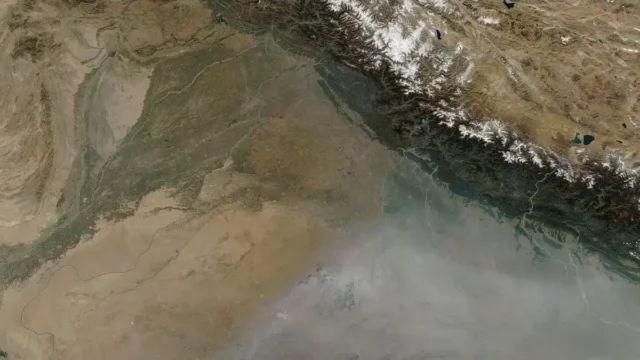
CAQM reviews stubble-burning hotspots in Amritsar and Tarn Taran
A CAQM team visited Amritsar and Tarn Taran, two Punjab hotspots of paddy stubble burning, on 9-10 October 2026 and reviewed crop residue machinery, baler supply chains and control rooms. CAQM flying squads are deployed in 18 Punjab districts from 1 October to 30 November 2026 to check burning during harvest.
10 Oct 2026
CAQM flying squads find 17 road-dust violations along Delhi’s Ring Road
On 3 October 2026 four CAQM flying squads inspected 25 stretches, about 35 km, of Delhi's Inner and Outer Ring Road managed by PWD. They found 17 violations of heavy visible road dust and construction and demolition waste. CAQM directed agencies to clean roads regularly to stop traffic from lifting dust back into the air.
4 Oct 2026
Mumbai Port’s Jawahar Dweep declared India’s first plastic-free oil terminal
On 2 October 2026 the Mumbai Port Authority declared its Jawahar Dweep Marine Oil Terminal plastic-free, making it India's first plastic-free oil terminal. The Union Ports Minister marked it at the port's Swachhata Abhiyan on Gandhi Jayanti, honoured sanitation workers and dedicated the port's Oil Spill Response facilities to the nation.
2 Oct 2026
GOBARdhan Central Sector Scheme (₹23,731 crore) launched for compressed biogas
On 1 October 2026 the Petroleum Minister launched GOBARdhan, a Central Sector Scheme for compressed biogas (CBG) approved by the Cabinet on 6 August 2026 with ₹23,731 crore. It runs from 2026-27 to 2035-36 and aims to raise domestic CBG output nearly 10-fold to about 5 MMSCMD through assured offtake, a fixed price, capital aid and pipeline support.
1 Oct 2026