
Nasha Mukt Bharat Abhiyaan reaches 35 crore people: demand reduction and the 2029 drug-free goal
Next story · 23 OctMPC minutes: RBI rate-setters divided on whether inflation is spreading, and what it means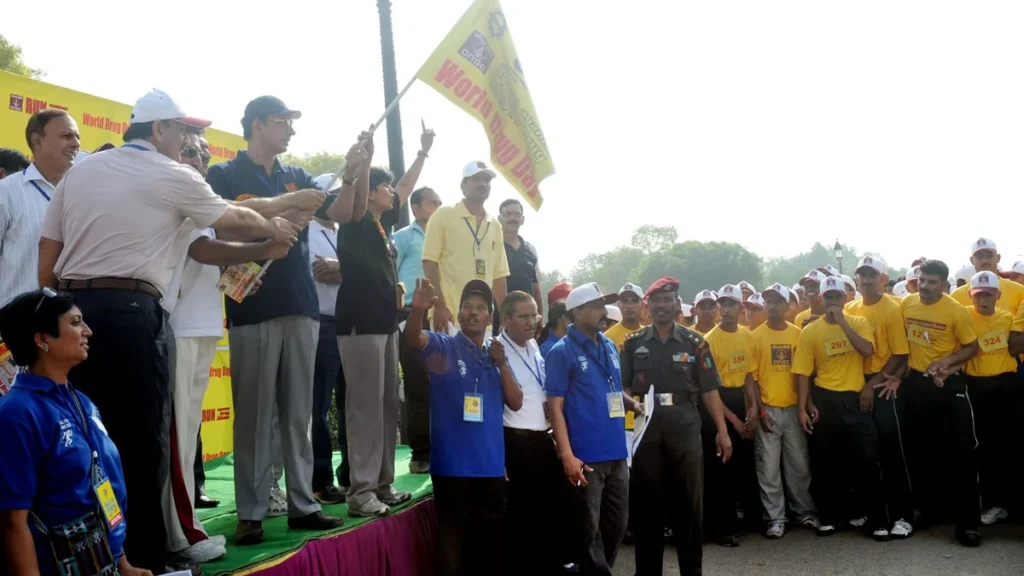
The Ministry of Social Justice and Empowerment said on 22 October 2026 that the Nasha Mukt Bharat Abhiyaan has reached over 35 crore people, including 13.94 crore youth and 10.86 crore women, and more than 32 lakh educational institutions. Launched on 15 August 2020 in 272 vulnerable districts, it now runs across the country. It is the demand side of a twin strategy, while police and the NCB attack supply, with the Home Minister’s target of uprooting the drug trade by 31 December 2029.
- Reach
- Over 35 crore people
- Launched
- 15 August 2020
- Target
- Drug trade out by 2029
- Helpline
- 14446
NMBA: what happened?
Arrests and seizures fight supply. But if young people keep wanting drugs, the market finds a way. That is the gap this campaign tries to fill.
- 22 Oct 2026 (PIB): NMBA has reached 35 crore+ people: 13.94 crore youth, 10.86 crore women and 32 lakh+ educational institutions.
- It runs under the National Action Plan for Drug Demand Reduction (NAPDDR) of the Ministry of Social Justice and Empowerment.
- Home Minister Amit Shah, at the 3rd National Conference of Anti-Narcotics Task Force heads in September, set 31 December 2029 to uproot the drug trade.
- ‘Nashamukt Mitras’ are to carry awareness to schools and colleges; the national de-addiction helpline is 14446.
What is the Nasha Mukt Bharat Abhiyaan?
- A nationwide drug demand-reduction campaign launched on 15 August 2020, first in 272 vulnerable districts.
- It covers prevention, assessment, treatment, rehabilitation, aftercare and community awareness.
- It works through youth clubs, women’s groups, schools, NSS and NCC volunteers and civil society.
- It aims to cut stigma so people seek help early.
How do demand and supply reduction compare?
| Side | Who leads | Tools |
|---|---|---|
| Demand reduction | Ministry of Social Justice (NMBA, NAPDDR) | Awareness, treatment, rehabilitation |
| Supply reduction | MHA, NCB, State ANTFs | Seizures, arrests, breaking networks |
| Health | Health Ministry, AIIMS NDDTC | De-addiction treatment |
| Helplines | MoSJE / NCB | 14446 (de-addiction); MANAS 1933 (report drugs) |
What is the constitutional and legal angle?
- Article 47 (Directive Principle): the State shall try to prohibit intoxicating drinks and drugs injurious to health, except for medicinal purposes.
- Narcotic Drugs and Psychotropic Substances (NDPS) Act, 1985: offences, punishments and treatment of addicts.
- Section 64A of the NDPS Act gives immunity from prosecution to addicts who volunteer for treatment (for small quantities).
- India is party to the three UN drug conventions (1961, 1971, 1988).
What are the challenges?
- Reach numbers count awareness events, not people who quit.
- Too few treatment and rehabilitation centres, especially in rural areas.
- Stigma keeps families from seeking help.
- Synthetic drugs and online sales are hard to track.
What should be done?
- Measure outcomes: treatment uptake, relapse and recovery rates.
- Expand district de-addiction and aftercare centres.
- Treat users as patients and target traffickers, as Section 64A intends.
- Use schools and peer educators for early prevention.
What can Prelims ask on drug policy?
- NMBA launched on 15 August 2020 in 272 districts.
- Nodal ministry: Social Justice and Empowerment.
- Article 47: prohibition of intoxicating drinks and harmful drugs.
- NDPS Act, 1985; the Narcotics Control Bureau was set up in 1986.
- International Day against Drug Abuse and Illicit Trafficking: 26 June.
How to write about drug abuse in Mains
Practice question (10 marks, 150 words): Drug abuse in India needs both demand and supply reduction. Discuss with reference to the Nasha Mukt Bharat Abhiyaan. (GS-II)
- Intro: NMBA reach of 35 crore (Oct 2026); 2029 target.
- Demand side: awareness, treatment, rehabilitation.
- Supply side: NCB, ANTFs, NDPS Act.
- Gaps: outcomes, centres, stigma, synthetics.
- Conclusion: a health-first, whole-of-society approach.
Image: Participants in a run against drug abuse organised by the Narcotics Control Bureau, New Delhi, 26 June 2010. Ministry of Health and Family Welfare, Wikimedia Commons, GODL-India
How to use this in Mains
If asked: Discuss a balanced strategy to fight drug abuse in India. (GS-II/III)
Quote: “While enforcement agencies work to disrupt drug trafficking and supply networks, NMBA addresses the demand-reduction dimension through awareness, community participation and access to support services.”
Use it: Use it to frame the twin strategy.
If asked: Why is reducing stigma important in de-addiction? (GS-II)
Quote: “Reducing stigma and promoting understanding can help people and their families seek assistance earlier.”
Use it: Quote it in a paragraph on treatment.
Exam angle
Prelims: NMBA, NAPDDR, Article 47, NDPS Act, helpline 14446. · Mains GS-II/III: drug abuse, demand and supply reduction.
Practice MCQs
Original practice questions (not PYQs).
The Nasha Mukt Bharat Abhiyaan is implemented by which Ministry?
Answer (c) & explanation
NMBA runs under the NAPDDR of the Ministry of Social Justice and Empowerment.
Which Article of the Constitution directs the State to endeavour to prohibit the consumption of intoxicating drinks and drugs injurious to health?
Answer (c) & explanation
Article 47 is a Directive Principle on nutrition, public health and prohibition.
Consider the following statements:
1. NMBA was launched on 15 August 2020.
2. It initially covered 272 districts.
3. 14446 is the national de-addiction helpline.
How many of the statements given above are correct?
Answer (c) & explanation
All three are correct as per the Ministry.
Questions students ask about this
How many people has NMBA reached?
Over 35 crore, including 13.94 crore youth and 10.86 crore women.
When did it start?
On 15 August 2020, in 272 vulnerable districts.
What is the 2029 target?
To uproot the drug trade from India by 31 December 2029.
What is the helpline?
The national de-addiction helpline 14446.
Keep studying
Go deeper
Official source: PIB, 22 Oct 2026: NMBA reaches over 35 crore people
facts from cited sources only; faculty review pending