
Why inclusion is key to the RTE Act
Getting a seat is one thing; feeling at home in the classroom is another. Under the Right to Education (RTE) Act, private schools keep 25% of entry-level seats for children from poor and disadvantaged families. A writer from Indus Action shows, through two Delhi children, that admission alone does not bring inclusion. Read it for Article 21A, Section 12(1)(c) and what makes a classroom truly open.
- Quota
- 25% of entry seats, Section 12(1)(c)
- Reach
- About 50 lakh children so far
- Study
- Nine Delhi private schools
- Missing
- Any measure of inclusion
RTE inclusion: what is the story?
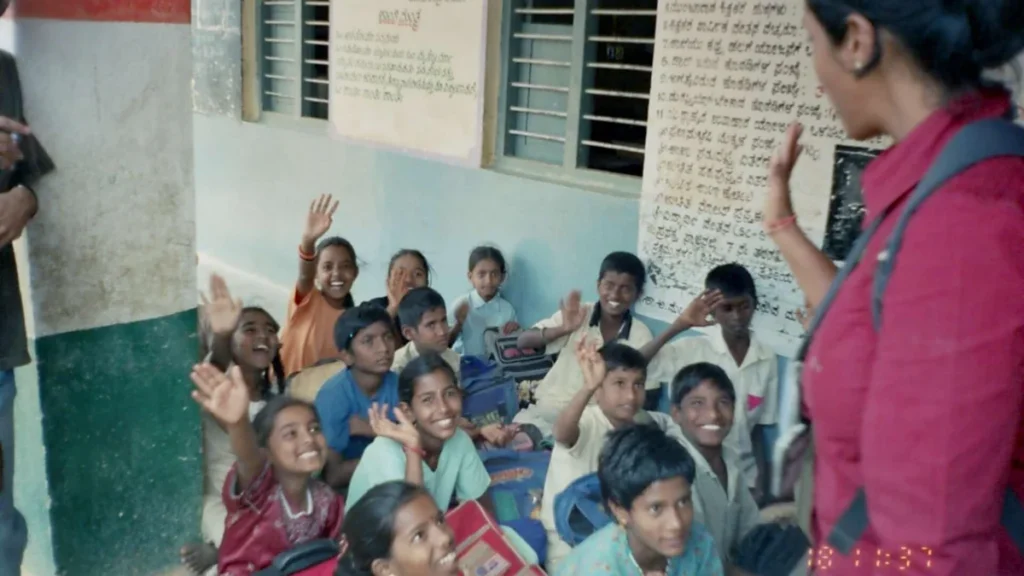
Two children get the same quota seat. Ria sits in the back row, copies notes from the board and is soon called ‘struggling’. Sahil’s school welcomes him; he shines in class, in sports and on stage. Same law, same seat, very different lives. The difference is inclusion, which means making a child feel a full part of the class.
- About 50 lakh disadvantaged students have got private-school seats through the RTE quota so far.
- The study covered nine mid-to-high-cost private schools in Delhi; children did well where inclusion was a core value of the school.
- What fails: quota children drift to the edges, and overworked teachers see them through a ‘deficit lens’, that is, they notice only what the child lacks.
- What works: mixed seating, a ‘zero period’ for doing homework together, group learning, and lessons drawn from the child’s own life, like teaching area through a family paddy field.
- India does not measure inclusion. The writer asks States to pay schools on time and reward inclusive schools.
What is the RTE Act and its 25% quota?
The Right of Children to Free and Compulsory Education Act, 2009 (RTE Act) came into force on 1 April 2010. It makes free and compulsory schooling a right for every child aged 6 to 14, under Article 21A, added by the 86th Constitutional Amendment of 2002.
Section 12(1)(c) asks private unaided schools (schools that take no government grant) to reserve 25% of seats in the entry class for children from weaker and disadvantaged groups. The State pays the school back for each such child; this is called reimbursement.
The Supreme Court upheld the quota in 2012, saying its aim is social integration, which means children of different backgrounds learning together. In 2014 it exempted minority schools.
Admission versus inclusion
| Point | Admission (what the law tracks) | Inclusion (what the child needs) |
|---|---|---|
| Measured by | Seats filled, money reimbursed | Seating, participation, friendships |
| Teacher’s role | Teach the syllabus | Notice and include every child |
| Result when missing | Child is enrolled | Child feels left out and may drop out |
Which laws and Articles apply?
- Article 21A: free and compulsory education for children aged 6 to 14 (86th Amendment, 2002).
- RTE Act, 2009, Section 12(1)(c): 25% entry-level seats in private unaided schools.
- School Management Committees under the RTE Act can monitor schools.
- NCTE: sets teacher qualifications under the RTE Act (UPSC 2018).
Why does RTE inclusion matter?
| Angle | What to note |
|---|---|
| Real purpose | The quota is meant to mix children of all backgrounds; a back-row seat defeats it. |
| Dropouts | A child who feels left out is more likely to leave school. |
| Public money | Poor inclusion wastes reimbursement paid by the State. |
| What gets measured | Surveys track enrolment and learning, not belonging. |
What are the problems with RTE inclusion?
- No data on inclusion, so no one is held to account.
- Delayed reimbursement makes schools unwilling.
- Teachers lack training in social and emotional needs.
- Labels like ‘struggling’ stick and lower expectations.
What should be done next on RTE inclusion?
- Simple inclusion benchmarks on seating, participation and peer interaction.
- Teacher training on social and emotional cues, not just remedial classes.
- Use School Management Committees and parent networks to monitor.
- Pay reimbursement on time and reward inclusive schools.
What can Prelims ask on RTE inclusion?
- Section 12(1)(c): 25% seats in private unaided schools.
- RTE Act in force from 1 April 2010; covers ages 6 to 14.
- NCTE sets teacher qualifications (UPSC 2018).
- Minority schools exempt from the quota (2014).
How to write about RTE inclusion in Mains
Practice question (15 marks, 250 words): The RTE Act’s 25% quota has opened private school gates, but inclusion inside the classroom remains weak. Analyse and suggest measures.
- Intro: 50 lakh seats filled; the Ria and Sahil contrast.
- Why inclusion matters: the quota’s social-integration purpose.
- Gaps: no metric, teacher bias, late reimbursement.
- Fixes: benchmarks, teacher training, SMCs, timely payment.
- Conclusion: what gets measured gets valued.
Ready lines for your answer
- “What gets measured gets valued. Inclusion remains deeply undervalued because India lacks the metrics to track it.”
- “Mere entry alone does not guarantee social integration”; inclusion needs benchmarks, teacher training and timely reimbursement.
Quotable data pointAbout 50 lakh disadvantaged students have got private-school seats through the RTE 25% quota.
Exam angle
Prelims: Article 21A, 86th Amendment, Section 12(1)(c), NCTE. · Mains GS-II: education, social justice, inclusion (Mains 2022 asked on the RTE Act).
Practice MCQs
Original practice questions (not PYQs).
Section 12(1)(c) of the Right to Education Act, 2009 requires private unaided schools to:
Answer (a) & explanation
Private unaided schools must admit at least 25% of the entry class from weaker and disadvantaged groups; the State reimburses the school.
Article 21A (right to education) was inserted into the Constitution by the:
Answer (c) & explanation
The 86th Amendment, 2002 inserted Article 21A, changed Article 45 and added the duty in Article 51A(k).
Questions students ask about this
What is the 25% quota under the RTE Act?
Section 12(1)(c) asks private unaided schools to reserve 25% of entry-class seats for children from weaker and disadvantaged groups.
Which amendment made education a Fundamental Right?
The 86th Constitutional Amendment Act, 2002, which added Article 21A.
Why is admission alone not enough?
Children admitted under the quota can still be left out in class; inclusion decides whether they learn and stay.
Who sets the qualifications for teachers under the RTE Act?
The National Council for Teacher Education (NCTE).