
Blind faith can lead to authoritarianism: Supreme Court judge
Our Constitution asks every citizen to develop a scientific temper, which means thinking with reason and evidence. Supreme Court judge Justice Ujjal Bhuyan said this habit must grow in universities, not just in labs, and warned that a society that fears questions can fall for false news and slide into authoritarian rule. Read it to revise Article 51A(h) and Fundamental Duties.
- Speaker
- Justice Ujjal Bhuyan, Supreme Court
- Venue
- University of Science and Technology, Meghalaya
- Duty
- Article 51A(h)
- Added by
- 42nd Amendment, 1976
The scientific temper: what happened?
Scientific temper is not about being a scientist. It means asking “How do we know this?” before believing or sharing something.
- Justice Ujjal Bhuyan spoke at the University of Science and Technology, Meghalaya.
- He warned that a society that accepts claims without evidence and treats tradition as beyond question becomes open to misinformation and authoritarianism.
- He said scientific temper is a Fundamental Duty under Article 51A and should shape how young people think as citizens.
- He urged students to demand evidence when public debate runs on emotion.
- His remarks came amid student anger over the NEET 2026 paper leaks, protests from IIT Bombay to National Law Schools, and a call for student union polls at Jamia Millia Islamia.
What are Fundamental Duties?
Fundamental Duties are in Part IVA, Article 51A, of the Constitution. They were added by the 42nd Amendment in 1976 on the advice of the Swaran Singh Committee, taking the idea from the former USSR’s constitution.
There were 10 duties at first. The 86th Amendment (2002) added an eleventh: parents must give their children aged 6 to 14 a chance to get education.
Article 51A(h) asks citizens to develop the scientific temper, humanism and the spirit of inquiry and reform.
Fundamental Duties cannot be enforced in court by themselves, but courts use them to interpret laws. Voting and paying taxes are not listed as Fundamental Duties.
Which laws and Articles apply?
- Article 51A(h): scientific temper, humanism, spirit of inquiry and reform.
- Article 51A(k): duty of parents to educate children aged 6 to 14 (86th Amendment, 2002).
- 42nd Amendment, 1976: added Part IVA.
- Article 19(1)(a): freedom of speech, which protects questioning and debate.
Why does the scientific temper matter?
| Angle | What to note |
|---|---|
| Democracy | Citizens who question make leaders accountable. |
| Misinformation | Evidence-based thinking resists fake news. |
| Education | Universities must encourage debate, not fear. |
| Ethics | Links reason with humanism and reform. |
What are the problems with the scientific temper?
- Duties are not enforceable, so they often stay on paper.
- Rote learning in schools does not build questioning.
- Superstition and false health claims still spread widely.
- Students may fear speaking up on campuses.
What should be done next on the scientific temper?
- Teach critical thinking and media literacy from school.
- Protect free debate and student voices on campuses.
- Encourage science communication in local languages.
- Use Article 51A in public campaigns against superstition.
What can Prelims ask on the scientific temper?
Prelims probability: Expect a question on Article 51A(h): the duty to develop the scientific temper, humanism and the spirit of inquiry; voting is not a Fundamental Duty.
- Article 51A(h): scientific temper, humanism, spirit of inquiry and reform.
- Fundamental Duties: Part IVA; added by 42nd Amendment (1976); Swaran Singh Committee.
- Now 11 duties; 11th added by 86th Amendment (2002).
- Idea taken from the former USSR’s constitution.
- Voting is NOT a Fundamental Duty.
How to write about the scientific temper in Mains
Practice question (GS-IV / Essay, 10 marks, 150 words): “A society that fears questions invites authoritarianism.” Discuss the role of scientific temper in a democracy.
- Intro: Justice Bhuyan’s remarks.
- Article 51A(h) and its meaning.
- Link to democracy, accountability, misinformation.
- Barriers: rote learning, fear, superstition.
- Conclusion: education for questioning citizens.
Ready lines for your answer
- Questioning is a civic duty, not disrespect.
- Scientific temper is democracy's immune system.
Quotable data pointFundamental Duties were added by the 42nd Amendment, 1976; there are now 11.
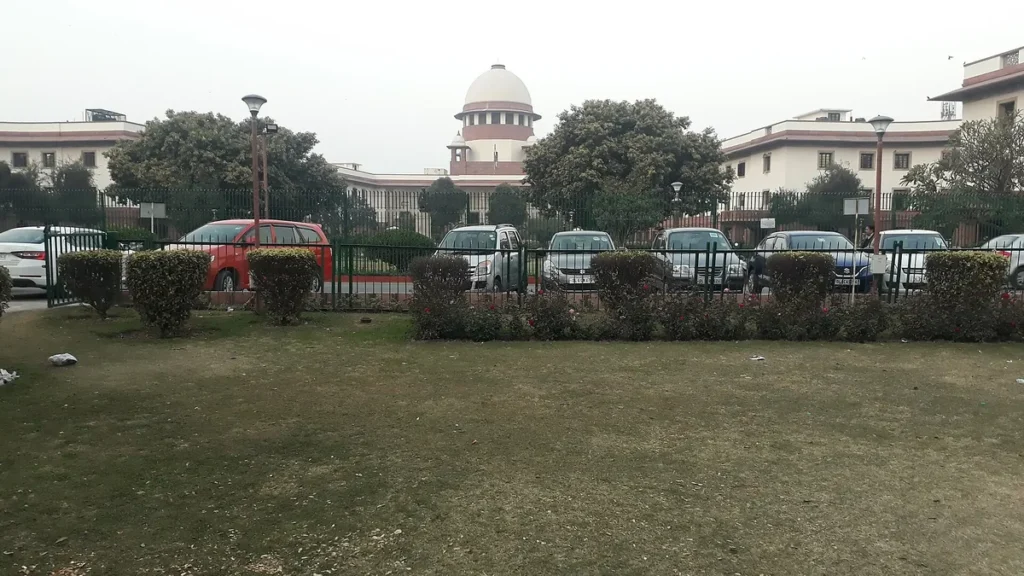
Photo: Pinakpani, CC BY-SA 4.0, via Wikimedia Commons
Exam angle
Prelims: Article 51A(h), 42nd and 86th Amendments. · Mains GS-II/GS-IV: Fundamental Duties, scientific temper, ethics.
Practice MCQs
Original practice questions (not PYQs).
Consider the following statements:
1. Fundamental Duties were added by the 42nd Amendment on the advice of the Swaran Singh Committee.
2. Voting in elections is a Fundamental Duty under Article 51A.
3. Developing the scientific temper, humanism and the spirit of inquiry is a Fundamental Duty.
How many of the above statements are correct?
Answer (b) & explanation
Statements 1 and 3 are correct. Voting is not listed among the Fundamental Duties.
Questions students ask about this
Which Article asks citizens to develop the scientific temper?
Article 51A(h).
When were Fundamental Duties added to the Constitution?
By the 42nd Amendment in 1976.
How many Fundamental Duties are there now?
Eleven. The eleventh was added by the 86th Amendment in 2002.
Is voting a Fundamental Duty?
No. Voting is not listed among the Fundamental Duties.