
Chief Justice asks why people rush to Supreme Court
Chief Justice of India Surya Kant said people are going to the Supreme Court just to get their High Court cases heard early. He asked High Courts to make case listing more open and use technology. Read it to revise pendency figures, vacancies and the writ powers under Articles 32 and 226.
- High Court cases
- 65,54,788 pending
- Supreme Court cases
- 97,201 pending
- High Court vacancies
- 292 of 1,122
- SC strength
- Raised from 34 to 38
Rush to the Supreme Court: what did the CJI say?
A person waiting years for a High Court date may knock on the Supreme Court’s door just to be heard sooner. That adds to the top court’s load too.
- Chief Justice Surya Kant spoke at the Kerala High Court’s platinum jubilee.
- He flagged a growing trend: people ask the Supreme Court to get their High Court cases listed early.
- He said this was not criticism of High Courts but a shared duty.
- He asked whether listing can be made more open and whether technology can help.
- 65,54,788 cases are pending in High Courts; the Supreme Court has 97,201.
- The 25 High Courts had 292 vacant posts against 1,122 sanctioned (6 October 2026).
Why are so many cases pending?
India has 25 High Courts. Their judges are appointed under Article 217, and the President can appoint additional judges under Article 224.
The Supreme Court’s strength is set by Parliament. It rose from 34 to 38 judges, but pendency kept rising.
‘Listing’ means putting a case on the day’s list of hearings. Who gets listed, and when, decides how fast justice comes.
Article 32 lets people go straight to the Supreme Court for Fundamental Rights. Article 226 gives High Courts wider writ powers, for any legal right.
How big is the backlog?
| Court | Pending cases | Note |
|---|---|---|
| High Courts | 65,54,788 | 292 posts vacant |
| Supreme Court | 97,201 | Strength 38 |
Which laws and Articles apply?
- Article 32: Supreme Court writs for Fundamental Rights.
- Article 226: High Court writs for Fundamental and other legal rights.
- Article 217 and 224: High Court judges and additional judges.
- Article 124: Supreme Court; Parliament fixes the number of judges.
Why does High Court pendency matter?
| Angle | What to note |
|---|---|
| Access to justice | Delay is denial of justice. |
| Workload | Listing pleas add to Supreme Court pendency. |
| Vacancies | Over a quarter of High Court posts are empty. |
| Technology | E-courts can make listing open and fair. |
What are the problems with High Court pendency?
- Vacancies stay unfilled for long periods.
- Listing is often not transparent, so lawyers seek special mentions.
- More judges alone has not cut pendency.
- Frequent adjournments slow cases.
What should be done next on High Court pendency?
- Fill High Court vacancies on time.
- Use automated, rule-based listing.
- Limit adjournments and set timelines.
- Strengthen e-courts and case management.
What can Prelims ask on High Court pendency?
Prelims probability: Expect a question on writs: both the Supreme Court (Article 32) and High Courts (Article 226) issue writs; the writ of prohibition stops a lower court’s proceedings.
- Article 32: writs by the Supreme Court; Article 226: writs by High Courts (wider scope).
- Five writs: habeas corpus, mandamus, prohibition, certiorari, quo warranto.
- Prohibition stops a lower court’s proceedings; certiorari quashes an order already made.
- Parliament fixes the Supreme Court’s strength.
- High Court pendency: about 65.5 lakh cases.
How to write about High Court pendency in Mains
Practice question (15 marks, 250 words): Judicial pendency is as much a problem of management as of numbers. Discuss.
- Intro: CJI’s remark; 65.5 lakh cases.
- Causes: vacancies, listing, adjournments.
- Numbers alone fail: SC strength rose, pendency too.
- Way forward: vacancies, tech listing, timelines.
- Conclusion: timely justice.
Ready lines for your answer
- Justice delayed is justice denied.
- Open listing is the first step to fair listing.
Quotable data point65,54,788 cases pending in High Courts.
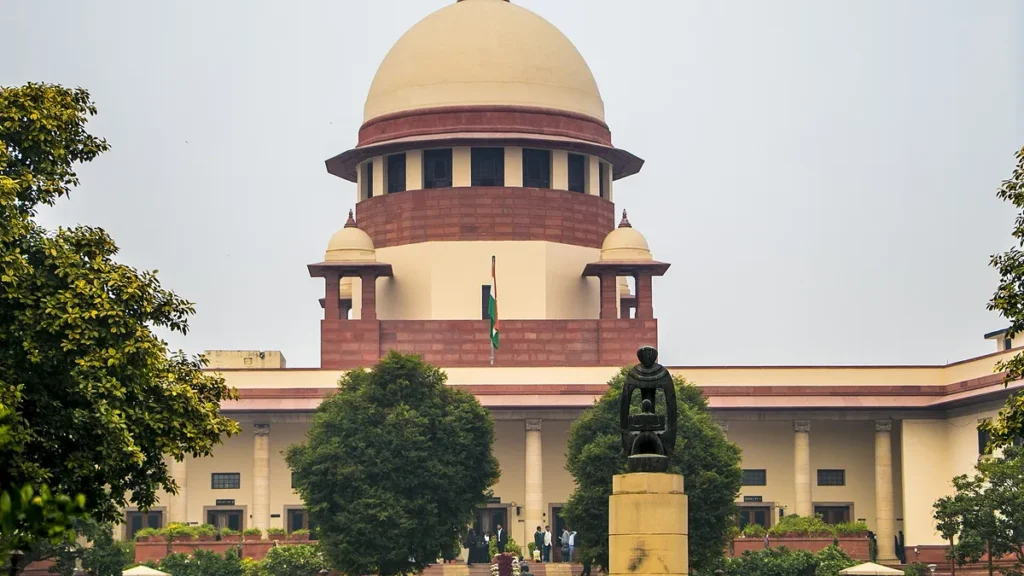
Photo: Subhashish Panigrahi, CC BY-SA 4.0, via Wikimedia Commons
Exam angle
Prelims: writs, Articles 32 and 226. · Mains GS-II: judicial pendency and reforms.
Practice MCQs
Original practice questions (not PYQs).
Which writ is issued by a higher court to stop a lower court or tribunal from acting beyond its jurisdiction?
Answer (d) & explanation
Prohibition stops a lower court or tribunal from going beyond its powers while a case is still pending.
Consider the following statements:
1. The right to move the Supreme Court under Article 32 is itself a Fundamental Right.
2. High Courts can issue writs under Article 226 only for the enforcement of Fundamental Rights.
3. Only the Supreme Court can issue the writ of quo warranto.
How many of the above statements are correct?
Answer (a) & explanation
Only statement 1 is correct. Article 226 lets High Courts issue writs for Fundamental Rights 'and for any other purpose', and both the Supreme Court and High Courts can issue quo warranto.
Questions students ask about this
How many cases are pending in High Courts?
65,54,788 cases, as cited by the Chief Justice.
Which Article gives High Courts writ powers?
Article 226. It is wider than Article 32 because it covers any legal right.
What is the writ of prohibition?
An order from a higher court stopping a lower court or tribunal from going beyond its powers.
How many High Court posts are vacant?
292 of 1,122 sanctioned posts as of 6 October 2026.