
Siang mega-dam: buffer against China, fear for locals
Arunachal Pradesh plans the 11,200 MW Siang Upper Multipurpose Project as a buffer against China’s 60 GW mega-dam on the same river in Tibet. But local communities say they were never consulted about their land. Read it to revise the Brahmaputra system, India-China water issues and the rights of local people.
- Project
- Siang Upper Multipurpose
- Capacity
- 11,200 MW
- China’s dam
- 60 GW, in Tibet
- Stage
- Pre-feasibility survey
The Siang dam row: what happened?
China is building the world’s biggest dam upstream. India wants a big dam downstream to store water and absorb floods, but locals fear losing their land.
- Arunachal Pradesh plans the 11,200 MW Siang Upper Multipurpose Project.
- Only a pre-feasibility survey is under way; the Chief Minister says ‘no decision has been made’.
- A farmers’ forum alleges over-counted households; there was arson in Pasighat on 23 October.
- Local communities say they were never consulted about their land.
What is China’s dam and why does India worry?
China is building a 60 GW dam on the Yarlung Tsangpo in Tibet, with five power stations over a 2,000-metre fall in 50 km.
India fears China could divert water in dry months or release floods into Arunachal Pradesh and Assam.
The Yarlung Tsangpo becomes the Siang in Arunachal Pradesh, the Brahmaputra in Assam and the Jamuna in Bangladesh.
What is the Brahmaputra called along its course?
| Region | Name |
|---|---|
| Tibet | Yarlung Tsangpo |
| Arunachal Pradesh | Siang (Dihang) |
| Assam | Brahmaputra |
| Bangladesh | Jamuna |
Which laws and Articles apply?
- No water-sharing treaty between India and China on the Brahmaputra; only data-sharing pacts.
- Forest Rights Act, 2006: consent of forest-dwelling communities.
- Environment Impact Assessment needed before large dams.
- Sixth Schedule and customary laws shape land rights in parts of the North-East.
Why does the Siang dam matter?
| Angle | What to note |
|---|---|
| Water security | A buffer against Chinese diversion or floods. |
| Local rights | Consultation and consent of the Adi people. |
| Ecology | High seismic zone and rich biodiversity. |
| Energy | Large hydropower potential. |
What are the problems with the Siang dam?
- Locals say they were not consulted.
- The area is earthquake-prone.
- Big dams displace villages and harm fish and forests.
- No treaty with China to manage the river.
What should be done next on the Siang dam?
- Hold open consultations with local communities.
- Do a full environment and earthquake study.
- Push China for better data sharing.
- Fair compensation and resettlement.
What can Prelims ask on the Siang dam?
Prelims probability: Expect a map question on the Brahmaputra: its names along the course and its tributaries such as Dibang, Lohit and Subansiri.
- Brahmaputra names: Yarlung Tsangpo, Siang, Brahmaputra, Jamuna.
- Tributaries: Dibang, Lohit, Subansiri.
- Project: 11,200 MW.
- China’s dam: 60 GW in Tibet.
- Pasighat is in East Siang district.
How to write about the Siang dam in Mains
Practice question (15 marks, 250 words): The Siang Upper Multipurpose Project is a strategic need but a local worry. Examine.
- Intro: project and China’s dam.
- Strategic need: buffer storage.
- Local concerns: land, consent.
- Ecological risks.
- Conclusion: consent-based development.
Ready lines for your answer
- A dam built without consent stores anger along with water.
- Upstream power needs a downstream plan.
Quotable data pointChina's 60 GW dam vs India's planned 11,200 MW.
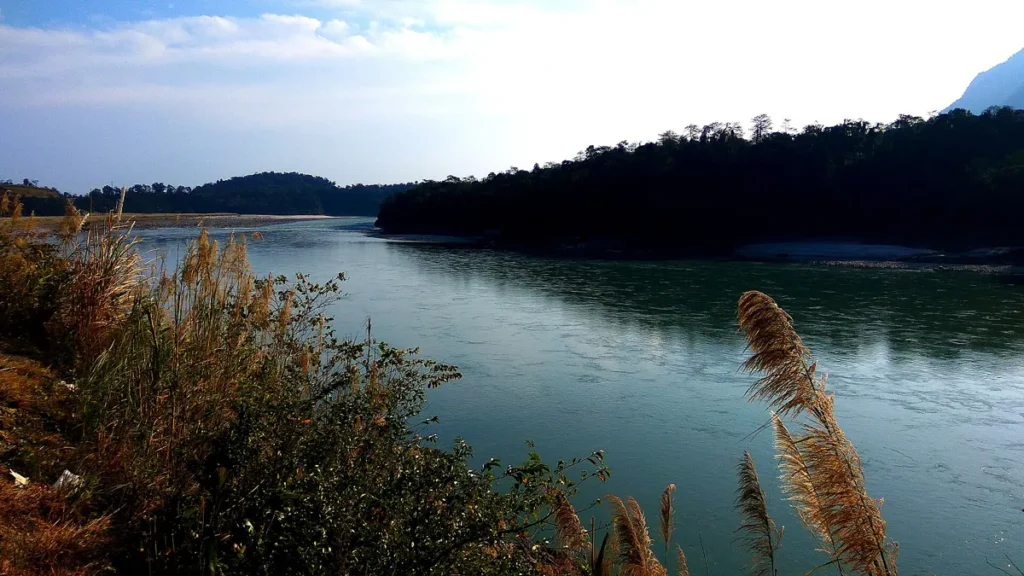
Photo: ঈশান জ্যোতি বৰা, CC BY-SA 4.0, via Wikimedia Commons
Exam angle
Prelims: Brahmaputra names and tributaries. · Mains GS-III: dams, environment, security.
Practice MCQs
Original practice questions (not PYQs).
Arrange the names of the Brahmaputra river from its source to its mouth:
Answer (d) & explanation
The river is the Yarlung Tsangpo in Tibet, the Siang (or Dihang) in Arunachal Pradesh, the Brahmaputra in Assam and the Jamuna in Bangladesh.
Questions students ask about this
What is the Siang Upper Multipurpose Project?
A planned 11,200 MW dam in Arunachal Pradesh, meant as a buffer against China's dam upstream.
What is the Brahmaputra called in Tibet?
Yarlung Tsangpo.
Why are locals protesting?
They say they were not consulted about their land, and a farmers' forum alleges over-counted households.
Has the project been approved?
No. Only a pre-feasibility survey is under way.