
Ancient mound at Kesariya declared of national importance
The Ministry of Culture has declared the Ranivas Mound at Kesariya in Bihar’s East Champaran district a site of national importance. The Archaeological Survey of India (ASI) will now protect it. Kesariya is already famous for one of India’s largest Buddhist stupas. Read it to revise the AMASR Act and Buddhist sites.
- Site
- Ranivas Mound, Kesariya, East Champaran
- Area
- 1.63 acres
- Notified
- Gazette of 4 November 2026
- ASI sites in India
- 3,686 (70 in Bihar)
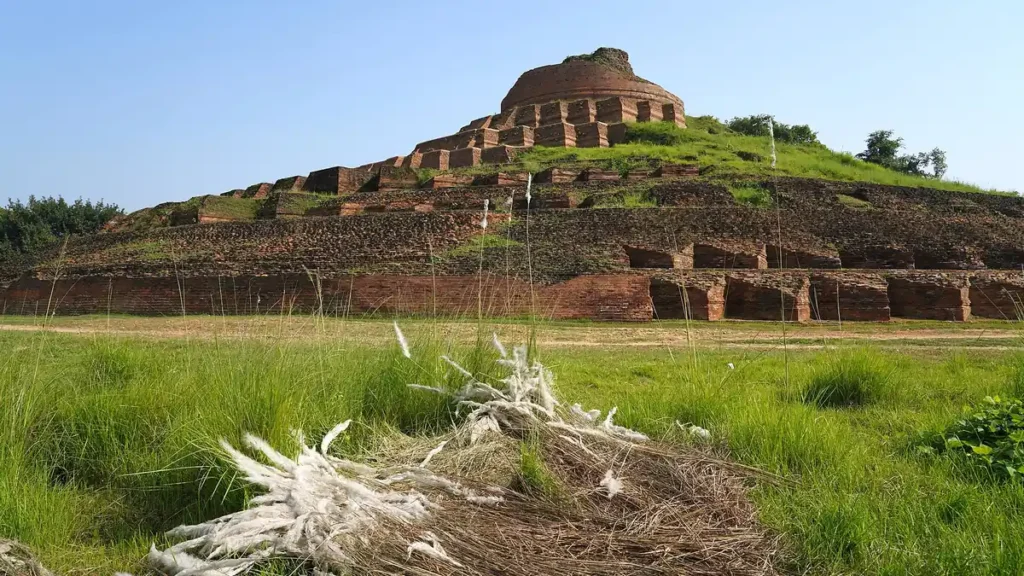
The Kesariya mound: what happened?
Under an ordinary-looking mound in Bihar may lie stories more than 2,000 years old. Now the Centre will guard it.
- The Ministry of Culture has declared Ranivas Mound at Kesariya an archaeological site of national importance.
- The 1.63-acre site, owned by the Bihar government, was notified in a gazette notification dated 4 November.
- The order uses powers under the Ancient Monuments and Archaeological Sites and Remains (AMASR) Act, 1958.
- The site now comes under central protection.
- The ASI cares for 3,686 sites across India, 70 of them in Bihar, the Centre told Parliament in February 2026.
What is Kesariya known for?
Kesariya is famous for the Kesariya Stupa, one of the largest Buddhist stupas in India. A stupa is a dome-shaped mound built over relics of the Buddha or to mark a holy event.
Tradition links Kesariya to the Buddha’s last journey, where he is said to have given his alms bowl to the Licchavis of Vaishali.
An ‘archaeological mound’ is raised ground formed by the remains of old buildings and settlements, layer upon layer.
Which laws and Articles apply?
- AMASR Act, 1958: lets the Centre declare ancient monuments and sites of national importance.
- Under the Act, a 100-metre prohibited area and a further 200-metre regulated area are set around protected monuments.
- Article 49 (Directive Principle): the State must protect monuments of national importance.
- Article 51A(f): citizens’ duty to value and preserve our composite culture.
Why does the Kesariya mound matter?
| Angle | What to note |
|---|---|
| Heritage | Protects Buddhist history for future generations. |
| Tourism | Strengthens the Buddhist circuit in Bihar. |
| Soft power | Links India with Buddhist countries. |
| Prelims | AMASR Act, Kesariya, stupas. |
What are the problems with the Kesariya mound?
- Encroachment and farming often damage mounds before protection.
- The ASI is short of staff and funds for so many sites.
- Building limits near sites can upset local people.
- Many Buddhist sites lack good roads and facilities.
What should be done next on the Kesariya mound?
- Excavate scientifically and publish findings.
- Fence and mark the site clearly.
- Involve local people as heritage guardians and guides.
- Link Kesariya to the Buddhist circuit with better access.
What can Prelims ask on the Kesariya mound?
Prelims probability: Medium. Past-question trend: the stupa concept (2023) and kingdoms of the Buddha (2015). Freshness: new national-importance notification. Static link: Ancient Monuments and Archaeological Sites and Remains Act, 1958. Testable fact: 3,686 sites are under the Archaeological Survey of India; 70 in Bihar.
- AMASR Act: 1958; amended in 2010 for prohibited and regulated areas.
- ASI: set up in 1861, first Director-General Alexander Cunningham.
- Kesariya: East Champaran district, Bihar.
- Article 49: protection of monuments (DPSP).
- ASI protects 3,686 sites; 70 in Bihar.
How to write about the Kesariya mound in Mains
Practice question (15 marks, 250 words): Protecting archaeological sites needs more than a notification. Discuss with reference to India’s heritage laws.
- Intro: Kesariya mound declared.
- AMASR Act and ASI role.
- Challenges: encroachment, staff, funds.
- Way forward: community, tech, tourism.
- Conclusion: heritage as a living asset.
Ready lines for your answer
- A mound of earth can hold a library of history.
- Heritage survives best when local people see it as their own.
Quotable data pointRanivas Mound, 1.63 acres, notified 4 November 2026; ASI sites 3,686, Bihar 70.
Photo: Amitabha Gupta, CC BY 4.0, via Wikimedia Commons
Exam angle
Prelims: AMASR Act, Kesariya, ASI. · Mains GS-I: heritage conservation.
Practice MCQs
Original practice questions (not PYQs).
Consider the following statements:
1. Kesariya is in the East Champaran district of Bihar.
2. Under the Ancient Monuments and Archaeological Sites and Remains Act, 1958, the area up to 100 metres around a protected monument is a prohibited area.
3. The Archaeological Survey of India functions under the Ministry of Culture.
How many of the above statements are correct?
Answer (c) & explanation
All three are correct; a further 200 metres beyond the prohibited area is the regulated area.
Who was the first Director General of the Archaeological Survey of India?
Answer (a) & explanation
Alexander Cunningham founded the Archaeological Survey of India in 1861 and became its first Director General.
Questions students ask about this
What does 'national importance' mean?
The Centre protects the site under the AMASR Act, 1958, and the ASI looks after it.
Where is Kesariya?
In East Champaran district of Bihar.
What is Kesariya famous for?
The Kesariya Stupa, one of the largest Buddhist stupas in India.
How many sites does the ASI protect?
3,686 across India, including 70 in Bihar.
Can people build near a protected site?
No building within 100 metres; building within the next 200 metres needs permission.