
Ten years after note ban, cash use has not fallen
On 8 November 2016, ₹500 and ₹1,000 notes — about 86% of India’s cash — stopped being legal money overnight. Ten years later, Reserve Bank of India (RBI) data show people hold slightly more cash than before, compared with the size of the economy. Digital payments, though, have exploded. Read it to revise legal tender, currency with the public and UPI.
- Date
- 8 November 2016
- Notes withdrawn
- ₹500 and ₹1,000 (about 86% of cash)
- Cash-to-GDP
- 11.9% (2015-16) → 12.1% (2026)
- Fake notes per crore
- 70.1 → 13.4
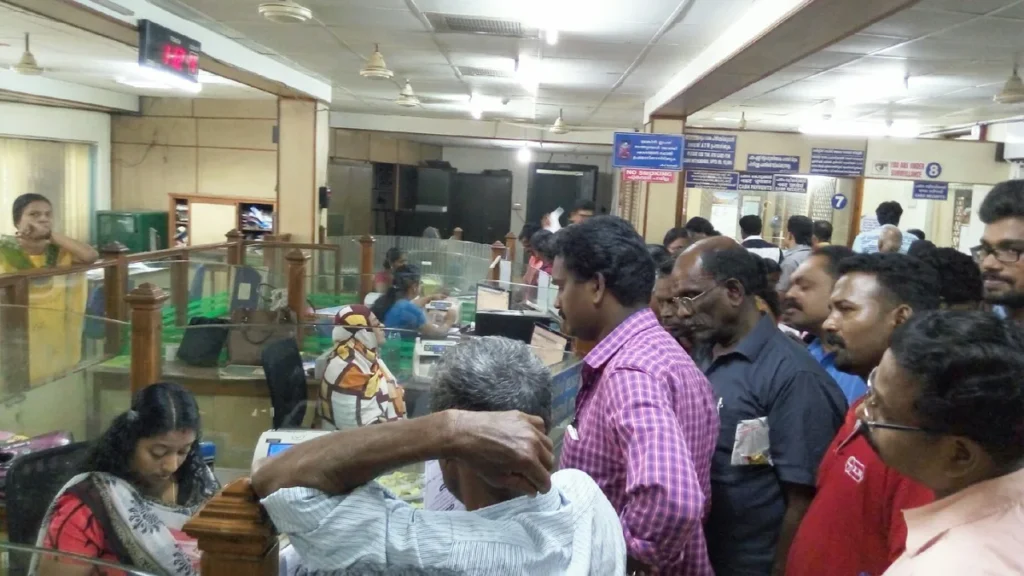
Note ban at ten: what do the numbers say?
Remember the long ATM lines of November 2016? Ten years on, Indians still hold just as much cash as before.
- 8 November 2026 marks ten years of demonetisation (the note ban).
- RBI data: currency with the public was 11.9% of Gross Domestic Product (GDP, the total value of everything the country produces in a year) in 2015-16.
- On 31 March 2026 it was 12.1%. So cash use has not fallen.
- But UPI (Unified Payments Interface, the app-to-app money transfer system) grew from almost nothing in 2016-17 to payments worth nearly 91% of GDP in 2025-26.
- Fake notes found per crore notes fell from 70.1 to 13.4. Yet detection of fake ₹500 notes, and earlier of ₹2,000 notes, shot up.
- Whether that means more fake notes or better checking is not clear from the data.
What is demonetisation?
Demonetisation means the government declares that certain notes are no longer ‘legal tender’ — money that everyone must accept for payment. Old notes then have to be deposited in banks.
In 2016 the stated aims were to cut black money (income hidden from tax), stop fake notes that fund terror, reduce corruption and push people towards a less-cash economy.
India had done this before too, in 1946 and 1978, but only for very high-value notes that few people used. In 2016 it hit the notes most people carried.
Did the note ban meet its goals?
| Goal | What the data shows |
|---|---|
| Less cash | Not met: cash-to-GDP rose from 11.9% to 12.1% |
| More digital payments | Met: UPI near 91% of GDP |
| Fewer fake notes | Mixed: overall rate fell, fake ₹500 detection rose |
| End black money | Doubtful: almost all old notes came back to banks |
Which laws apply?
- RBI Act, 1934, Section 22: only the RBI can issue bank notes.
- RBI Act, Section 26(2): the Centre, on the RBI’s recommendation, can declare a series of notes no longer legal tender. This was used in 2016.
- Specified Bank Notes (Cessation of Liabilities) Act, 2017: ended the government’s and RBI’s liability on the old notes.
- Coins are issued by the Government of India under the Coinage Act, 2011; notes by the RBI.
Why does demonetisation matter?
| Angle | What to note |
|---|---|
| Economy | Cash, money supply and the informal sector. |
| Digital India | UPI and fintech growth. |
| Security | Fake notes and terror funding. |
| Prelims | Legal tender, RBI Act, currency with the public. |
What are the problems with demonetisation?
- Cash use bounced back, so the ‘less cash’ goal failed.
- Almost all banned notes returned, so black money was mostly held in property and gold, not cash.
- Small traders, farmers and daily-wage workers were hit hardest in 2016-17.
- Rising fake ₹500 detection shows counterfeiting has not ended.
What should be done next on demonetisation?
- Target black money where it sits: property, gold and political funding.
- Keep UPI cheap, safe and easy for the elderly and rural users.
- Use better note security features and faster fake-note tracking.
- Judge big reforms by data, as this ten-year review does.
What can Prelims ask on demonetisation?
Prelims probability: High. Past-question trend: legal tender (2018), black money (2021) and money supply (2020) are all asked. Freshness: tenth anniversary with new Reserve Bank of India data. Static link: currency with the public, narrow and broad money. Testable fact: about 86% of cash was demonetised; cash-to-Gross Domestic Product ratio 11.9% then, 12.1% now.
- Note ban date: 8 November 2016; ₹500 and ₹1,000 notes.
- Earlier note bans: 1946 and 1978.
- RBI Act Section 26(2) allows a note series to be declared not legal tender.
- Notes are issued by the RBI; coins by the Government of India.
- UPI is run by the National Payments Corporation of India (NPCI).
How to write about demonetisation in Mains
Practice question (15 marks, 250 words): Ten years after demonetisation, critically examine how far it met its stated objectives.
- Intro: 8 Nov 2016, 86% of cash withdrawn.
- Cash: 11.9% to 12.1% of GDP, so not reduced.
- Digital: UPI boom, a lasting gain.
- Fake notes and black money: mixed results.
- Conclusion: steady reforms beat one-time shocks.
Ready lines for your answer
- A one-time shock cannot fix a structural habit like cash use.
- Demonetisation's lasting gift was digital payments, not less cash.
Quotable data pointCash-to-GDP: 11.9% (2015-16) vs 12.1% (31 March 2026); UPI near 91% of GDP in 2025-26.
Photo: Fotokannan, CC BY-SA 4.0, via Wikimedia Commons
Exam angle
Prelims: legal tender, RBI Act, currency with the public. · Mains GS-III: demonetisation outcomes, digital payments.
Practice MCQs
Original practice questions (not PYQs).
Consider the following statements:
1. The demonetisation of 8 November 2016 withdrew the legal tender status of ₹500 and ₹1,000 notes.
2. The withdrawn notes formed about 86% of the currency in circulation by value.
3. India had never demonetised currency notes before 2016.
How many of the above statements are correct?
Answer (b) & explanation
Statements 1 and 2 are correct. India had earlier demonetised high-value notes in 1946 and 1978.
As per Reserve Bank of India data cited in the report, currency with the public as a share of Gross Domestic Product on 31 March 2026 was closest to:
Answer (c) & explanation
It was 12.1% in 2025-26 against 11.9% in 2015-16, so cash use has not fallen ten years after demonetisation.
Questions students ask about this
Did demonetisation reduce cash in India?
No. Cash with the public was 11.9% of GDP in 2015-16 and is 12.1% in 2026.
Which notes were banned in 2016?
Old ₹500 and ₹1,000 notes, about 86% of the cash in use by value.
Was 2016 India's first note ban?
No. India also demonetised high-value notes in 1946 and 1978.
Who can declare a note invalid?
The Central Government, on the RBI's recommendation, under Section 26(2) of the RBI Act, 1934.
What did the note ban achieve?
It sped up digital payments like UPI, and the overall fake-note rate fell, but cash and black money goals were not met.