
Uttar Pradesh police show little regard for rights: High Court
The Allahabad High Court has ordered the release of a man from Bijnor who was picked up by police two days before his arrest was officially shown. It refused the excuse that CCTV footage was missing, and called the state of civil liberty in Uttar Pradesh ‘shameful’. Read it to revise arrest rights under Articles 21 and 22.
- Court
- Allahabad High Court (Division Bench)
- Judges
- Justices Atul Sreedharan and Achal Sachdev
- Costs ordered
- ₹20,000 within seven days
- District
- Bijnor
The Bijnor detention case: what happened?
He was picked up on 5 September. On paper, he was arrested on 7 September. Those missing two days made the High Court angry.
- A family said plain-clothes police picked up a man outside Nangal police station in Bijnor district on 5 September.
- His formal arrest was shown only on 7 September.
- The State said CCTV footage was not available because of a malfunction. The Bench said such an excuse cannot be accepted in alleged unlawful detention cases.
- The court ordered his release and ₹20,000 in costs within seven days.
- ‘The situation that exists in the State of Uttar Pradesh relating to the civil liberty is shameful,’ the Bench said.
What rights does an arrested person have?
Article 22 says an arrested person must be told why, can consult a lawyer, and must be produced before a magistrate within 24 hours.
Showing a later arrest date on paper hides illegal custody and breaks this 24-hour rule.
Habeas corpus (Latin for ‘you may have the body’) is a writ asking the State to bring a detained person before the court and justify the detention.
Key rules on arrest
| Rule | Source |
|---|---|
| Told reason for arrest | Article 22(1) |
| Right to a lawyer | Article 22(1) |
| Before magistrate in 24 hours | Article 22(2); BNSS Section 58 |
| CCTV in police stations | Supreme Court, 2020 |
Which laws and Articles apply?
- Article 21: no one can lose life or personal liberty except by a fair procedure of law.
- Article 22: safeguards on arrest, including the 24-hour rule.
- D. K. Basu v State of West Bengal (1997): arrest memo, informing family, medical check.
- Paramvir Singh Saini v Baljit Singh (2020): CCTV cameras in all police stations, with footage kept safely.
- Article 226: High Courts can issue writs like habeas corpus.
Why does the Allahabad High Court ruling matter?
| Angle | What to note |
|---|---|
| Rights | Liberty is the core of Article 21. |
| Police reform | Exposes gaps in accountability. |
| Judiciary | Courts as guardians of liberty. |
| Prelims | Articles 21, 22, habeas corpus, D. K. Basu. |
What are the problems with the Allahabad High Court ruling?
- Arrests shown later on paper hide illegal custody.
- CCTV is often ‘not working’ when it matters most.
- Police are overworked and poorly trained in rights.
- Few officers face action for illegal detention.
What should be done next on the Allahabad High Court ruling?
- Make CCTV failures a matter for inquiry, not an excuse.
- Strictly follow D. K. Basu rules for every arrest.
- Set up independent police complaints bodies.
- Train police in rights-based policing.
What can Prelims ask on the Allahabad High Court ruling?
Prelims probability: Medium for the national paper; High for Uttar Pradesh papers. Past-question trend: judicial custody (2021) and writs (Uttar Pradesh Public Service Commission 2019). Freshness: strong High Court remark. Static link: Articles 21 and 22, D. K. Basu. Testable fact: an arrested person must be produced before a magistrate within 24 hours.
- Article 22(2): produce before a magistrate within 24 hours.
- D. K. Basu case: 1997.
- Paramvir Singh Saini case: 2020, CCTV in police stations.
- Habeas corpus: ‘you may have the body’.
- Article 226: writ powers of High Courts.
How to write about the Allahabad High Court ruling in Mains
Practice question (15 marks, 250 words): Custodial safeguards exist on paper but fail in practice. Discuss with reference to recent judicial remarks.
- Intro: Allahabad HC’s ‘shameful’ remark.
- Safeguards: Articles 21, 22, D. K. Basu.
- Gaps: hidden detention, CCTV excuses.
- Reforms: accountability, training.
- Conclusion: liberty must be real, not on paper.
Ready lines for your answer
- A right without a remedy is only a promise.
- Liberty is measured at the police station, not in the Constitution's text.
Quotable data pointPicked up 5 Sept, arrest shown 7 Sept; ₹20,000 costs; release ordered.
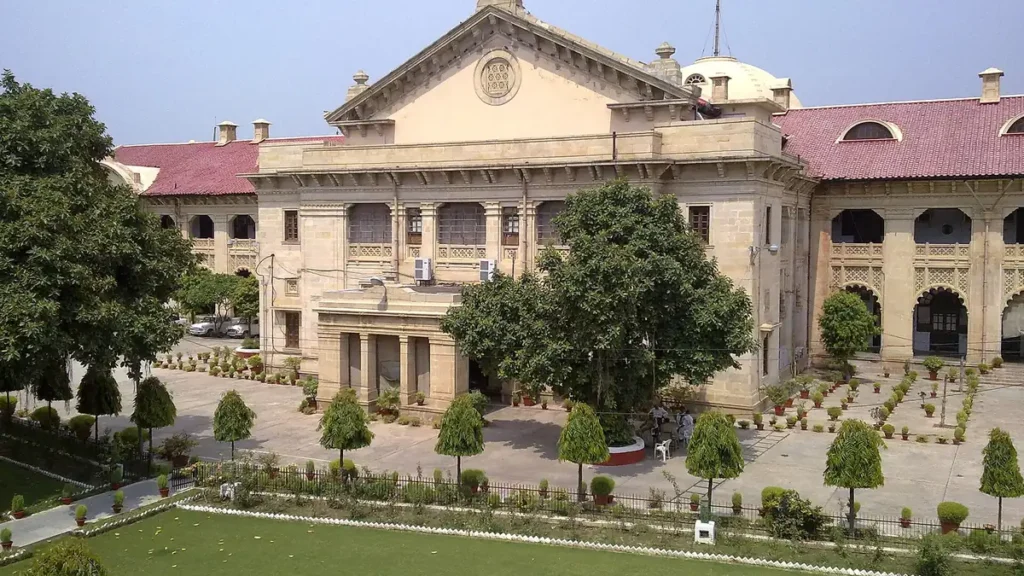
Photo: Vroomtrapit at English Wikipedia, CC0, via Wikimedia Commons
Exam angle
Prelims: Articles 21, 22, writs. · Mains GS-II: police reforms, rights.
Practice MCQs
Original practice questions (not PYQs).
Which writ is issued to have a detained person produced before a court?
Answer (d) & explanation
Habeas corpus ('to have the body') protects personal liberty under Article 21; it can be issued by the Supreme Court under Article 32 and High Courts under Article 226.
Questions students ask about this
Why did the High Court order the man's release?
Police picked him up on 5 September but showed the arrest on 7 September, a sign of illegal detention.
Within how many hours must an arrested person see a magistrate?
24 hours, under Article 22(2).
What is habeas corpus?
A writ asking the State to produce a detained person before the court and justify the detention.
Must police stations have CCTV?
Yes. The Supreme Court ordered it in the Paramvir Singh Saini case (2020).
What are the D. K. Basu guidelines?
Rules from 1997 on arrest, like an arrest memo, telling the family and a medical check.