
Forest nod for power project in tiger corridor
The Forest Advisory Committee has recommended in-principle approval to divert 511 hectares of forest for the 1,800 megawatt Panari Pumped Storage Project in Satna and Panna districts of Madhya Pradesh. About 211.7 hectares fall in the North Eastern Tiger Corridor of Panna Tiger Reserve, which links it to Ranipur Tiger Reserve in Chitrakoot, Uttar Pradesh. Read it to revise tiger corridors, Ken-Betwa and pumped storage.
- Project
- 1,800 MW Panari pumped storage
- Forest diversion
- 511 hectares
- Corridor share
- About 211.7 ha in Panna–Ranipur corridor
- Trees at risk
- About 1.32 lakh
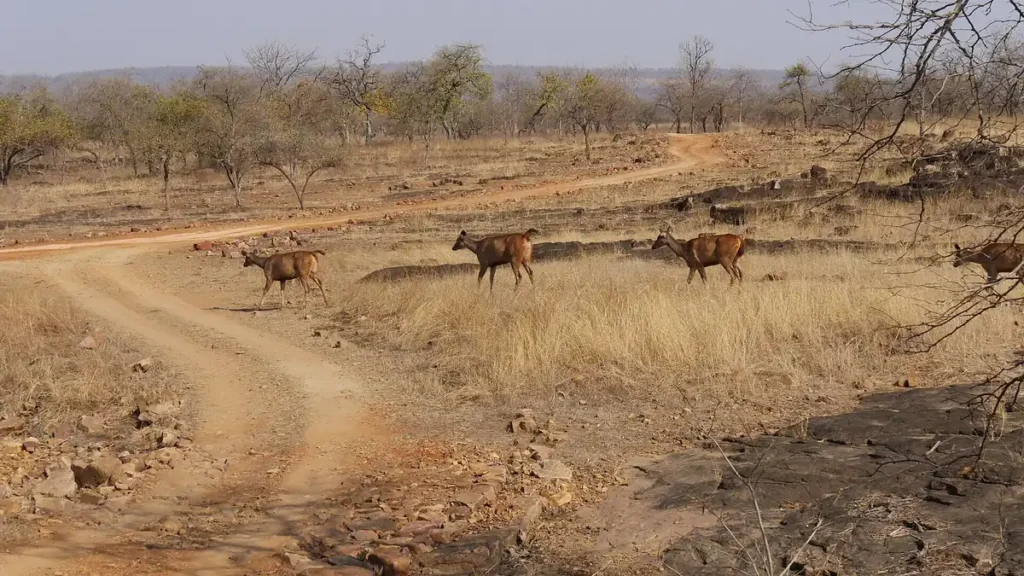
Panna–Ranipur corridor project: what happened?
Clean power needs storage — but a tiger corridor is not empty land.
- A tiger corridor is a strip of forest that lets tigers move between reserves so populations mix and do not get cut off.
- The Union Environment Ministry’s Forest Advisory Committee has recommended in-principle approval to divert 511 hectares of forest for the 1,800 megawatt Panari Pumped Storage Project in Satna and Panna districts of Madhya Pradesh.
- About 211.7 hectares fall in the North Eastern Tiger Corridor of Panna Tiger Reserve, which links it to the Ranipur Tiger Reserve in Chitrakoot, Uttar Pradesh.
- Ranipur was notified in 2022 to make up for forest that the Ken-Betwa river linking project will drown in Panna’s core zone; about 1.32 lakh trees may now be felled.
- The Standing Committee of the National Board for Wildlife cleared it in July with conditions, including three 30-metre-wide wildlife overpasses over the Baghain river.
- Two new reservoirs will be built: water is pumped up when demand is low and released through turbines at peak hours; Madhya Pradesh has offered 531.84 hectares for compensatory afforestation.
What is pumped storage and why does the corridor matter?
In pumped storage, water is pumped to an upper reservoir when demand is low and released down through turbines to generate power at peak demand — it does not work the other way round.
The National Tiger Conservation Authority is a statutory body for Project Tiger.
From west to east, major Yamuna tributaries include the Chambal, Sindh, Betwa and Ken.
Compensatory afforestation aims to offset diverted forest, but plantations are not the same as natural corridor forest.
Key numbers
| Item | Figure |
|---|---|
| Capacity | 1,800 MW |
| Forest diversion | 511 ha |
| In tiger corridor | About 211.7 ha |
| Compensatory afforestation offered | 531.84 ha |
Which bodies and laws apply?
- Forest Advisory Committee under forest-clearance rules.
- National Board for Wildlife Standing Committee conditions.
- National Tiger Conservation Authority (statutory).
- Compensatory Afforestation Fund framework.
Why does the Panna–Ranipur corridor project matter?
| Angle | What to note |
|---|---|
| Energy | Storage for solar and wind peaks. |
| Wildlife | Corridor links Panna to Ranipur (UP). |
| UP angle | Ranipur in Chitrakoot; Ken-Betwa link. |
| Prelims | Pumped storage direction, NTCA, Yamuna tributaries. |
What are the problems with the Panna–Ranipur corridor project?
- Overpasses may not fully replace a continuous corridor.
- Cumulative impact with Ken-Betwa is large.
- Tree felling and reservoir footprint are heavy.
- Field officers had warned of corridor break-up.
What should be done next on the Panna–Ranipur corridor project?
- Enforce wildlife overpasses before heavy works.
- Monitor tiger movement with camera traps and NTCA oversight.
- Prefer quality corridor restoration over thin plantations.
- Publish cumulative impact findings publicly.
What can Prelims ask on the Panna–Ranipur corridor project?
Prelims probability: High, especially relevant. Trend: pumped storage (2024), National Tiger Conservation Authority (2014), compensatory afforestation (2019), Ken and Betwa (the State 2020). Testable fact: corridor links Panna to Ranipur, Chitrakoot.
- Ranipur Tiger Reserve: Chitrakoot, UP (2022).
- Pumped storage: pump up off-peak, release at peak.
- FAC in-principle nod for 511 ha.
- Yamuna tributaries west to east: Chambal, Sindh, Betwa, Ken.
- NTCA is a statutory body.
How to write about the Panna–Ranipur corridor project in Mains
Practice question (15 marks, 250 words): Linear and clean-energy projects increasingly cut wildlife corridors. Discuss how India can balance energy storage with tiger conservation, using the Panari project.
- Intro: FAC nod in Panna–Ranipur corridor.
- Why pumped storage matters.
- Corridor and Ken-Betwa context.
- Mitigation: overpasses, monitoring.
- Conclusion: landscape planning.
Ready lines for your answer
- Storage for the grid should not store isolation for tigers.
- A corridor is a living road, not spare hectare.
Quotable data point1,800 MW; 511 ha; 211.7 ha corridor; Ranipur in Chitrakoot.
Photo: tjabeljan, CC BY 2.0, via Wikimedia Commons
Exam angle
Prelims: pumped storage, NTCA, Ken-Betwa, Yamuna tributaries. · Mains GS-III: environment–energy trade-off.
Practice MCQs
Original practice questions (not PYQs).
Consider the following statements:
1. Ranipur Tiger Reserve is located in Chitrakoot district of Uttar Pradesh.
2. The National Tiger Conservation Authority is a statutory body.
3. A pumped storage project generates power by releasing water from a lower reservoir to an upper reservoir.
How many of the above statements are correct?
Answer (b) & explanation
Statements 1 and 2 are correct. Water is pumped up to the upper reservoir when demand is low and released down through turbines to generate power at peak demand.
Arrange the following tributaries of the Yamuna from west to east: 1. Betwa 2. Ken 3. Sindh 4. Chambal
Answer (a) & explanation
Chambal is the westernmost, then Sindh, Betwa and Ken; the Ken-Betwa link moves Ken water to the Betwa basin.
Questions students ask about this
Where is Ranipur Tiger Reserve?
In Chitrakoot district of Uttar Pradesh.
How does pumped storage generate power at peak hours?
By releasing water from the upper reservoir through turbines; water is pumped up when demand is low.
How much forest diversion is proposed?
511 hectares, including about 211.7 hectares in the tiger corridor.
What is the project's capacity?
1,800 megawatt.
Is the NTCA a statutory body?
Yes.