
Renewable energy’s next test is reliability
India has about 308 gigawatt of non-fossil power capacity, the world’s third-largest renewable base. Energy expert Arunabha Ghosh writes that the question now is whether the grid can absorb it all. India had only about 9 gigawatt-hours of battery storage in mid-2026, but 54 million smart meters. Read it to revise storage, grids and the 500 GW by 2030 goal.
- Non-fossil capacity
- About 308 GW
- World renewables added 2025
- 692 GW
- India battery storage (mid-2026)
- About 9 GWh
- Smart meters
- About 54 million
Renewables’ next test: what happened?
India can build solar farms. The harder job is making the lights stay on when the sun sets.
- India has about 308 gigawatt of non-fossil power capacity, the world’s third-largest renewable base.
- The world added 692 gigawatt of renewables in 2025, nearly all solar and wind; China added about two-thirds and Africa only 1.6%.
- Three hurdles stand out: grids built for fossil-fuel plants, clean-technology supply chains held by a few, and rising power demand from artificial intelligence.
- The answer offered: make renewables reliable, secure and digital; India had only about 9 gigawatt-hours of battery storage in mid-2026, but 54 million smart meters.
What is the reliability challenge?
Solar and wind are variable; storage, flexible demand and stronger grids keep supply matched to need.
Green hydrogen is produced by electrolysis of water using renewable electricity.
The International Solar Alliance is headquartered in Gurugram, India.
India aims for 500 gigawatt of non-fossil capacity by 2030.
Where India stands
| Item | Status |
|---|---|
| Non-fossil capacity | About 308 GW |
| Battery storage (mid-2026) | About 9 GWh |
| Smart meters | About 54 million |
| 2030 non-fossil aim | 500 GW |
Which policies apply?
- National solar, wind and green hydrogen missions.
- Target of 500 GW non-fossil capacity by 2030.
- International Solar Alliance (Gurugram).
- Power-market reforms so storage and flexibility are paid for, not only kilowatt-hours.
Why does renewable reliability matter?
| Angle | What to note |
|---|---|
| Energy security | Cheap capacity idle without grids and storage. |
| Climate | Reliability unlocks deeper fossil displacement. |
| Industry | Supply chains for cells, wafers and batteries. |
| Prelims | 308 GW, ISA HQ, green hydrogen, 500 GW. |
What are the problems with renewable reliability?
- Grids and contracts still favour always-on coal plants.
- Battery storage is far behind need.
- Clean-tech supply chains are concentrated.
- AI data centres add new peak demand.
What should be done next on renewable reliability?
- Scale battery and pumped storage.
- Reform tariffs to reward flexibility.
- Diversify manufacturing of cells and critical minerals.
- Use smart meters for demand response.
What can Prelims ask on renewable reliability?
Prelims probability: High. Trend: distributed energy (2024), green hydrogen (2023, 2026), International Solar Alliance (the State 2025). Freshness: the climate summit’s 35-by-35 goal. Testable fact: about 308 gigawatt non-fossil capacity. Hook: 500 gigawatt by 2030.
- Non-fossil capacity about 308 GW.
- Battery storage about 9 GWh mid-2026.
- ISA headquarters: Gurugram.
- Green hydrogen: electrolysis with renewables.
- 500 GW non-fossil by 2030.
How to write about renewable reliability in Mains
Practice question (15 marks, 250 words): India’s renewable push must now focus on reliability. Discuss the challenges of grids, storage and supply chains.
- Intro: 308 GW and the absorption problem.
- Why grids and contracts lag.
- Storage and smart meters.
- Secure supply chains.
- Way forward to 500 GW.
Ready lines for your answer
- Capacity without flexibility is a solar farm at midnight.
- Smart meters count; storage keeps the count useful.
Quotable data pointAbout 308 GW non-fossil; about 9 GWh storage; 54 million smart meters; 500 GW by 2030.
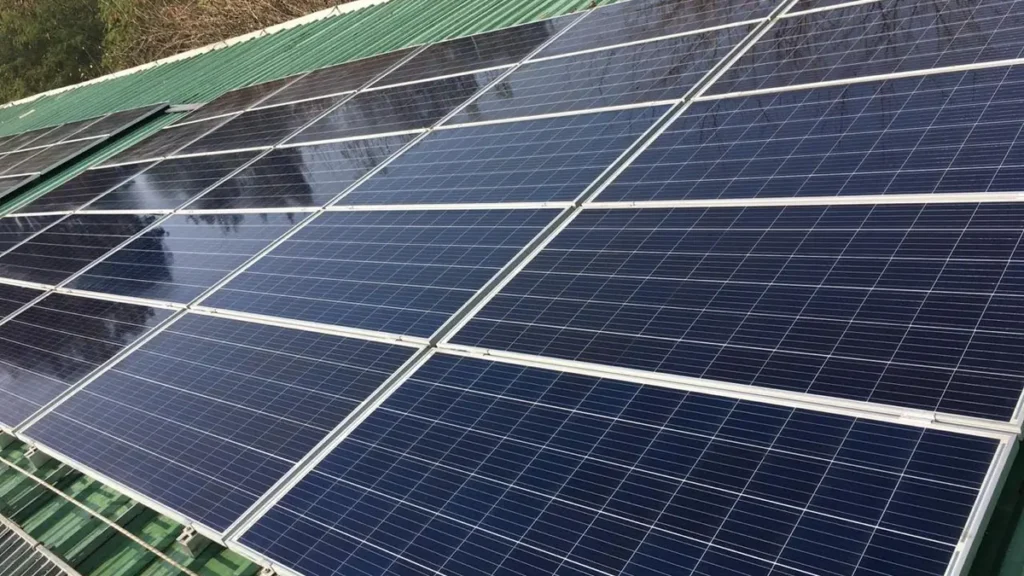
Photo: Anureza, CC BY-SA 4.0, via Wikimedia Commons
Exam angle
Prelims: ISA, green hydrogen, 500 GW. · Mains GS-III: energy transition.
Practice MCQs
Original practice questions (not PYQs).
Consider the following statements:
1. Battery storage and rooftop solar units are examples of distributed energy resources.
2. Green hydrogen is produced by electrolysis of water using renewable electricity.
3. The International Solar Alliance has its headquarters in Paris.
How many of the above statements are correct?
Answer (b) & explanation
Statements 1 and 2 are correct. The International Solar Alliance is headquartered in Gurugram, India.
Questions students ask about this
How much non-fossil capacity does India have?
About 308 gigawatt.
How much battery storage did India have in mid-2026?
About 9 gigawatt-hours.
Where is the International Solar Alliance headquartered?
Gurugram, India.
What is green hydrogen?
Hydrogen made by electrolysing water with renewable electricity.
What is India's 2030 non-fossil target?
500 gigawatt of non-fossil capacity.