
Indian aquanauts dive 5,002 metres; deep-sea mission advances
Union Minister Dr Jitendra Singh, chairing a meeting of the Earth System Sciences Council on 10 November, reviewed work from ocean technology to weather and polar research. Under the Deep Ocean Mission, India is building Matsya-6000, a crewed submersible able to reach 6,000 metres; Indian aquanauts have already dived to 4,025 metres and 5,002 metres in the French submersible Nautile. Read it to revise the Deep Ocean Mission, seabed minerals, the International Seabed Authority and India’s polar stations.
- Submersible
- Matsya-6000, rated to 6,000 metres
- Aquanaut dives
- 4,025 m and 5,002 m in the French submersible Nautile
- Mission
- Deep Ocean Mission, Ministry of Earth Sciences
- ESSC institutes
- NIOT, INCOIS, NCESS, IITM, NCPOR
Deep-sea mission: what happened?
Indian aquanauts have now been more than five kilometres under the sea — and a home-built craft is being readied to go even deeper.
- Union Minister Dr Jitendra Singh chaired the second general body meeting of the Earth System Sciences Council and reviewed the work of its five institutes, from ocean technology to weather and polar research.
- Under the Deep Ocean Mission, India is building Matsya-6000, a crewed submersible able to reach 6,000 metres; Indian aquanauts have already dived to 4,025 metres and 5,002 metres during an Indo-French expedition in the French submersible Nautile.
- The National Institute of Ocean Technology also reported desalination plants for Lakshadweep, offshore fish cages, deep-sea mineral exploration and ocean thermal energy conversion.
- The minister asked scientists to explain such work in simple language, and proposed a mission-mode approach for polar and solid earth sciences. NCPOR reported the 45th Indian Antarctic Expedition, with 95 members, and the 16th Indian Arctic Expedition.
What is the Deep Ocean Mission?
The Deep Ocean Mission, under the Ministry of Earth Sciences, aims at crewed deep-sea exploration, ocean technology and the study of living and non-living ocean resources, including polymetallic nodules.
The International Seabed Authority was set up under the United Nations Convention on the Law of the Sea. India holds an exploration licence for polymetallic nodules in the Central Indian Ocean Basin.
India’s polar footprint is led by the National Centre for Polar and Ocean Research. Himadri is India’s research station in the Arctic; Maitri and Bharati are the Antarctic stations.
The five ESSC institutes are the National Institute of Ocean Technology, the Indian National Centre for Ocean Information Services, the National Centre for Earth Science Studies, the Indian Institute of Tropical Meteorology and NCPOR. INCOIS issues marine advisories for fishers and coastal communities.
What was reviewed
| Body / asset | Role |
|---|---|
| Matsya-6000 | Crewed submersible, 6,000-metre rating |
| Nautile dives | Indian aquanauts to 4,025 m and 5,002 m |
| NIOT | Desalination, cages, minerals, ocean thermal energy |
| NCPOR | 45th Antarctic and 16th Arctic expeditions |
Which missions and treaties apply?
- Deep Ocean Mission of the Ministry of Earth Sciences.
- United Nations Convention on the Law of the Sea and the International Seabed Authority.
- India’s exploration licence for polymetallic nodules in the Central Indian Ocean Basin.
- Polar programmes led by NCPOR: Himadri in the Arctic; Maitri and Bharati in Antarctica.
Why does the Deep Ocean Mission and Matsya-6000 matter?
| Angle | What to note |
|---|---|
| Science | A crewed 6,000-metre craft is a leap in ocean technology. |
| Resources | Seabed minerals sit under international law, not a free-for-all. |
| Climate | Polar and Southern Ocean work feeds climate science. |
| Prelims | Matsya-6000, Nautile, ISA, Himadri, Lakshadweep desalination. |
What are the problems with the Deep Ocean Mission and Matsya-6000?
- Matsya-6000 is still under development; the record dives were in a French craft.
- Deep-sea mining raises environmental risks that are not yet settled.
- Science communication still lags, as the minister himself noted.
- Polar and solid-earth work can stay project-wise rather than mission-mode.
What should be done next on the Deep Ocean Mission and Matsya-6000?
- Finish and test Matsya-6000 on a public timeline.
- Keep seabed exploration within ISA rules and environmental safeguards.
- Explain ocean and polar science in plain language for citizens and fishers.
- Take polar and solid-earth research into a mission-mode programme, as proposed.
What can Prelims ask on the Deep Ocean Mission and Matsya-6000?
Prelims probability: Medium. Trend: seabed licences (2021), IndARC (2015). Freshness: dives to 5,002 metres. Static link: International Seabed Authority, Blue Economy. Testable fact: Matsya-6000 depth rating of 6,000 metres.
- Matsya-6000: crewed submersible rated to 6,000 metres.
- Indian aquanauts dived to 4,025 m and 5,002 m in Nautile.
- International Seabed Authority: set up under UNCLOS.
- Himadri is India’s Arctic station; India has a CIOB nodule licence.
- Five ESSC institutes: NIOT, INCOIS, NCESS, IITM, NCPOR.
How to write about the Deep Ocean Mission and Matsya-6000 in Mains
Practice question (15 marks, 250 words): Discuss the significance of the Deep Ocean Mission for India’s science, resources and climate research, with reference to Matsya-6000 and recent aquanaut dives.
- Intro: dives to 5,002 metres; Matsya-6000 under development.
- Mission aims: exploration, technology, minerals.
- ISA, UNCLOS and the Central Indian Ocean Basin licence.
- Polar stations and climate science.
- Way forward: finish the craft, protect the seabed, explain the science.
Ready lines for your answer
- Five kilometres down is still only a rehearsal for 6,000 metres.
- The seabed is a legal commons, not a vacant plot.
Quotable data pointMatsya-6000 at 6,000 m; dives 4,025 and 5,002 m; 45th Antarctic Expedition, 95 members.
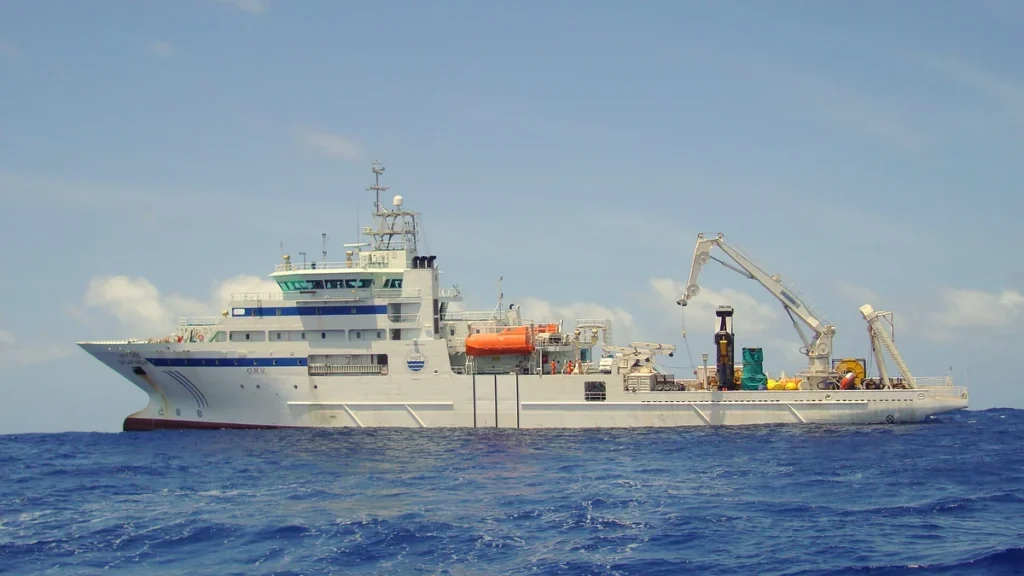
Photo: Raphodon, CC BY-SA 4.0, via Wikimedia Commons
Exam angle
Prelims: Matsya-6000, 5,002 m, ISA, Himadri. · Mains GS-III: ocean science and the blue economy.
Practice MCQs
Original practice questions (not PYQs).
Matsya-6000, recently in the news, is:
Answer (a) & explanation
Matsya-6000 is India's crewed submersible under the Deep Ocean Mission; Indian aquanauts have dived to 5,002 metres in the French submersible Nautile.
Consider the following statements:
1. The International Seabed Authority was set up under the United Nations Convention on the Law of the Sea.
2. Himadri is India's research station in the Arctic.
3. India holds an exploration licence for polymetallic nodules in the Central Indian Ocean Basin.
How many of the above statements are correct?
Answer (c) & explanation
All three are correct.
Questions students ask about this
What is Matsya-6000?
India’s crewed submersible under the Deep Ocean Mission, designed to reach 6,000 metres.
How deep have Indian aquanauts dived so far?
To 4,025 metres and 5,002 metres, in the French submersible Nautile.
What is the International Seabed Authority?
A body set up under the United Nations Convention on the Law of the Sea to govern mineral activity in the international seabed.
Which is India’s Arctic research station?
Himadri.
Which five institutes come under the Earth System Sciences Council?
NIOT, INCOIS, NCESS, IITM and NCPOR.